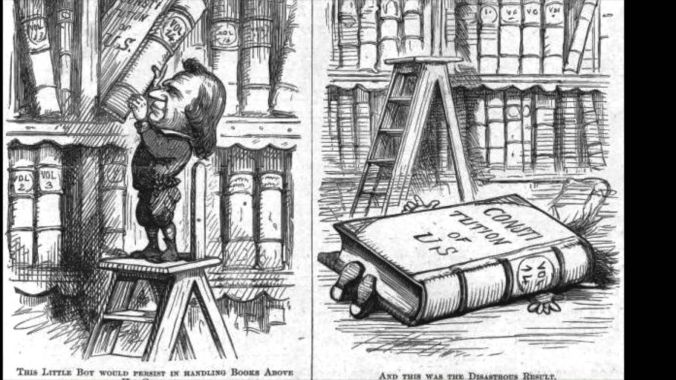
The press wanted Andrew Johnson impeached, too…
This section of Turley’s masterpiece covers the various “obstruction of justice” claims. The conclusion:
“Basing impeachment on this obstruction theory would itself be an abuse of power. . . by Congress. It would be an extremely dangerous precedent to set for future presidents and Congresses in making an appeal to the Judiciary into “high crime and misdemeanor.”
Boy, Turley did a terrific job…
B. Obstruction of Justice
Another crime that was sporadically mentioned during the House Intelligence hearings was obstruction of justice or obstruction of Congress. Once again, with only a few days to prepare this testimony and with no public report on the specific allegations, my analysis remains mired in uncertainty as to any plan to bring such a claim to the foundational evidence for the charge. Most of the references to obstruction have been part of a Ukraine-based impeachment plan that does not include any past alleged crimes from the Russian investigation. I will therefore address the possibility of a Ukraine-related obstruction article of impeachment. However, as I have previously written, I believe an obstruction claim based on the Mueller Report would equally at odds with the record and the controlling case law. The use of an obstruction theory from the Mueller Report would be unsupportable in the House and unsustainable in the Senate. Once again, the lack of information (just weeks before an expected impeachment vote) on the grounds for impeachment is both concerning and challenging. It is akin to being asked to diagnose a patient’s survivability without knowing his specific illness.
Obstruction of justice is a more broadly defined crime than bribery and often overlaps with other crimes like witness tampering, subornation, or specific acts designed to obstruct a given proceeding. There are many federal provisions raising forms of obstruction that reference parallel crimes. Thus, influencing a witness is a standalone crime and also a form of obstruction under 18 U.S.C. 1504. In conventional criminal cases, prosecutions can be relatively straightforward, such as cases of witness intimidation under 18 U.S. 1503. Of course, this is no conventional case. The obstruction claims leveled against President Trump in the Ukrainian context have centered on two main allegations. First, there was considerable discussion of the moving of the transcript of the call with President Zelensky to a classified server as a possible premeditated effort to hide evidence. Second, there have been repeated references to the “obstruction” of President Trump by invoking executive privileges or immunities to withhold witnesses and documents from congressional committees. In my view, neither of these general allegations establishes a plausible case of criminal obstruction or a viable impeachable offense.
In the Mueller report, Assistant Attorney General found no cognizable case was presented for an allegation of obstruction of justice. Many members of this Committee heralded the selection of Rosenstein as a consummate and apolitical professional who was responsible for the appointment of the Special Counsel. He reached this conclusion on the record sent by Mueller and, most importantly, the controlling case law. As with the campaign finance allegation discussed in this testimony, an article based on obstruction in the Russian investigation would seek the removal of a President on the basis of an act previously rejected as a crime by the Justice Department. Many of us have criticized the President for his many comments and tweets on the Russian investigation. However, this is a process that must focus on impeachable conduct, not imprudent or even obnoxious conduct. Continue reading

 Ethics Alarms