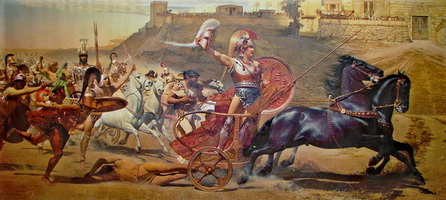
Death Photo Ethics

Even before Achilles dragged the corpse of Hector behind his chariot through the dust around the walled city of Troy, the tradition of demoralizing the enemy by degrading and displaying the bodies of its dead heroes was well-established. The United States was horrified when this was done to our fallen servicemen in Somalia, and it is one of the most barbaric and unnecessary practices of war.  While the Geneva Convention doesn’t mention the displaying of enemy corpses, a 2005 publication by the Red Cross called Customary International Humanitarian Law does. It was written to address issues that international treaties omitted, and its Rule 113 reads:

“Each party to the conflict must take all possible measures to prevent the dead from being despoiled. Mutilation of dead bodies is prohibited. Continue reading

Further Ethical Musings on Ko-Ko’s Little List’s “Eliminationist Rhetoric”: the Duty to Fight the Insanity

The more I think about the controversy over the Montana production of “The Mikado,” which I discussed in the previous post, the more it bothers me.

The fact that some conservative Missoulans were disturbed by Sarah Palin’s inclusion on the iconic “little list” carried by the fictional Ko-Ko, the Lord High Executioner in Gilbert and Sullivan’s classic musical comedy “The Mikado” is disturbing. The fact that the Missoula Community Theater actually caved-in to ignorance and hypersensitivity and removed the lyric is more so.  but the fact that some sensible commentators, like the Wall Street Journal’s usually perceptive and witty James Taranto, have had their brains addled by the current attempt at language, metaphor and humor purging by politically correct hysterics is genuinely terrifying. Continue reading