The Henry Higgins Syndrome And Me

“An Englishman’s way of speaking absolutely classifies him!  The moment he talks he makes some other  Englishman despise him!”

—Alan J. Lerner, writing for Henry Higgins in “My Fair Lady,” in the song, “Why Can’t The English Teach Their Children How To Speak?”

Today’s latest “Let’s hate the President!” item from the news media was the leaked news that Trump can’t stand how AG Jeff Sessions speaks. Politico reported yesterday that Trump has griped “to aides and lawmakers”  “that Sessions isn’t a capable defender of the President on television — in part because he ‘talks like he has marbles in his mouth.’”

As usual, the fact that some un-named source says something doesn’t make it true, or, for that matter, legitimate to reports as news, by hey, it’s Donald Trump, so fairness, ethical journalism and professionalism are suspended, right? If you hate the man, here’s more non-substantive, unproven stuff to believe and complain about on line, and if your business is to try to define and encourage standards of societal and workplace ethics, here’s one more chance to be vilified on Facebook as a “Trump supporter” by pointing out that it is wrong for anyone to be subjected to hearsay snipe attacks like that.

In this case, however, there is another factor. There are a lot of speech habits and styles that I have a visceral dislike of too. Some I can defend, some are just a matter of taste, regional influences and upbringing, and some are genuine impediments to my treating people fairly.

Here’s one that my Facebook friends will love, for example: the way Donald Trump talks drives me crazy. His repetitive vocabulary–every thing is “great,” “strong,” “weak,” “stupid,” “smart,” “sad” or “tough; everyone is a “loser,” a “moron” “out of control,” or “dangerous”–signals “uneducated simpleton” to me. I’ve read all of the scholarly examinations of Trumps communications style and why it is effective, and I understand the theories. They are probably right. Where I come from, however, size, precision and variety of vocabulary is deemed a reliable way of gauging intellectual capacity. Continue reading

Morning Ethics Warm-Up, 4/26/18: Sorry Trump-a-Phobics, It’s A President Trump Morning!

Good Morning!

1. Wake up with President Trump! By sheer chance, I surfed by Fox and Friends just as the three goofs (or two goofs and a random blonde from the stable in a tight party dress) on the sofa were having a spontaneous phone interview with President Trump, just like in the good old days in 2015, when CNN and NBC let the crazy old reality star and eccentric real estate mogul blather on while they smirked and nodded because it was great for ratings and  might even saddle the evil Republican Party with a Presidential candidate that Hillary Clinton could squash like a bug, finally leading to the Great Progressive Awakening in America, with open borders, no more guns, free college, a ban on fossil fuel, and Harvey Weinstein as a White House regular.

Observations:

  • Say what you will about Trump, this was just after 8 AM, I could hardly utter a coherent sentence, and the President was sounding like Harold Hill doing “Trouble in River City.” Either he had 20 cups of coffee or was hooked up to an electric generator.  I have a lot of energy, but Trump is older than I am, and he was energetic, engaged, and, for him, articulate.
  • His performance this morning highlights how disgusting the “Trump has dementia, let’s use the 25th Amendment to get rid of him” plot was, with the news media in full complicity. It made it hard for me to focus on what the President was saying on Fox, frankly. That particular post-election, anti-democratic attack—it was Ethics Alarms’ Plan E on the alphabetical list of “the resistance’s” ongoing efforts to overturn the election, if you recall—makes me furious every time I think about it.
  • Nevertheless, I will never get used to having a President who talks like he does.  It isn’t statesman-speak, or even demagoguery. It’s pure salesman patter, again, like Harold Hill,  or any infomercial spokesman. It’s almost hypnotic. What Trump-Whisperer Scott Adams would say, indeed has said many times, is that this is a talent and a skill, and we aren’t going to see it become commonplace among Presidents because most people just can’t do it well. No, it’s not Presidential, and will never be. But it works.
  • I also realized, once again, how much class bigotry is involved in the extreme hostility to President Trump from the “elites,” and yes, I count myself in that group. Never mind what schools Trump went to: he’s Fred Trump’s son, and unlike the Kennedy boys, never polished off the rough spots passed along to him through his humble, street-smart, back-alley forebears. I just watched the film of “My Fair Lady” again after many years, and found myself thinking about Henry Higgins’ theories while I was listening to Trump: if he spoke like Barack Obama, how differently would the news media and his adversaries treat him? Yet how many of his supporters would then regard him as just another one of “them”?

Why can’t the English teach their children how to speak?
This verbal class distinction, by now
Should be antique
If you spoke as she does, sir
Instead of the way you do
Why, you might be selling flowers, too!

An Englishman’s way of speaking absolutely classifies him
The moment he talks he makes some other Englishman despise him! Continue reading

The Strange, Unique, Sort-Of Unethical Movie Career Of Marnie Nixon, a.k.a. Deborah Kerr, Natalie Wood, And Audrey Hepburn

"Heeeeere's MARNI!"

“Heeeeere’s MARNI!”

Marni Nixon died last month at 86, and I have been intending to write about her ever since.  An accomplished soprano with perfect pitch and a rare gift for mimicry, Nixon secretly dubbed in the songs for Deborah Kerr as Anna in “The King and I,” Natalie Wood as Maria in “West Side Story” and Audrey Hepburn as Eliza Doolittle in “My Fair Lady,” three of the most successful and honored Hollywood adaptations of Broadway musicals. In doing so she was assisting in the perpetration of a fraud on critics and audiences, but one that had, and indeed has, some legitimate ethical arguments, and rationalizations too, to justify it. Why is using a stunt singer any more dishonest than using a stunt man? Isn’t film about making the audience accept illusions in pursuit of art? If an audience member will be more likely to enjoy a film thinking that a major star can really sing, why is it wrong to make it possible for them to believe that, at least for a while?

The reasoning would have more power if long before Marnie did her secret singing Hollywood hadn’t already made a classic musical, “Singin’ in the Rain,” that pronounced the practice fraudulent. Marni Nixon was a real life Cathy Seldon, the Debbie Reynolds contract player forced to supply the singing and speaking voice for a talentless silent film superstar, Lina Lamont, whose real voice would make dogs run for refuge and men claw off their ears, and whose continued status as a money-making asset for the studio depended on making her successful in talkies.

Ironically,  even “Singin’ in the Rain” engaged in the same fraud it was ridiculing. Debbie Reynolds was a competent singer, but a richer, more mature voice was needed to match the image of Jean Hagen, the terrific comic actress playing Lina. So when Debbie was shown secretly replacing Lina’s nightmarish singing voice with her own, another singer was secretly used, uncredited, to dub Debbie. Her voice fit Lina perfectly, because the voice put in Debbie’s mouth while she was supposedly putting her voice into Lina’s was the real voice of… Jean Hagen. Continue reading

The Perplexing Ethics Of Shorts In Courts

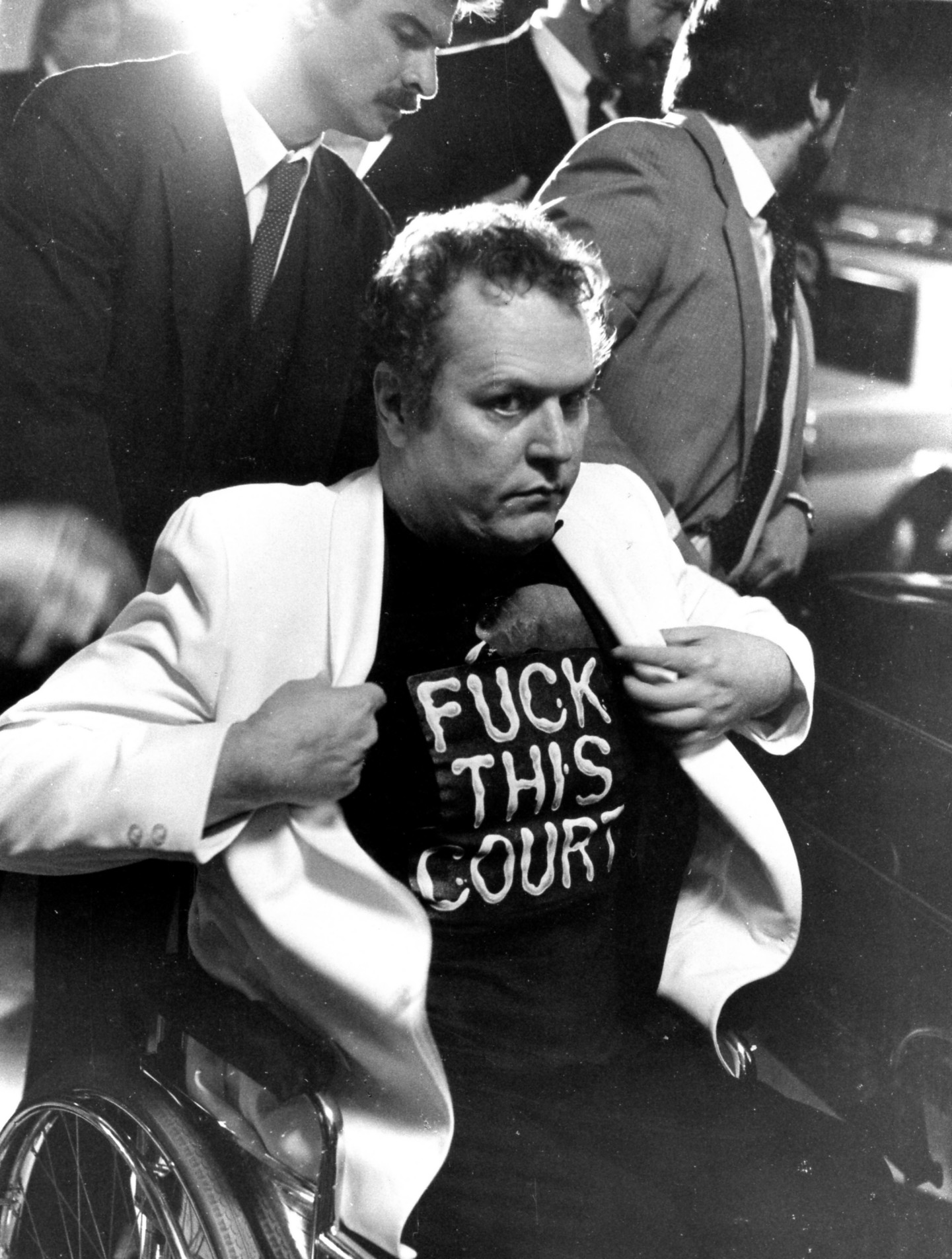
Interestingly, the words aren't necessary. The tee shirt is enough.

Interestingly, the words aren’t necessary. The tee shirt is enough.

The New York Daily News thought it was newsworthy that a North Carolina judge objected to a man appearing in court for a hearing dressed in a tee shirt and shorts. “Why are you going to show up to court dressed like that based on these charges?” the judge asked. Not getting what she felt was an appropriate response, she postponed the hearing. The offense involved was a particularly horrific one:Matthew Deans, 28, of Wilmington, N.C.,was charged with two misdemeanor counts of death by vehicle and two other charges in connection with the crash. He is free on $10,000 bail while awaiting trial.

On May 23, Deans’ commercial box truck allegedly ploughed into the back of the car belonging to Hadley and Gentry Eddings,, who were stopped at a traffic light. The Eddings’ 2-year-old son was killed in the crash, and an infant delivered by emergency ceasarian section in the hours after the wreck died as well.

For reasons that are not germane to this post, I’ve been in court a lot lately. When I was taking criminal defense cases, I carefully monitored the in-court attire of my clients, emphasizing that it was crucial for them to display respect for the judge and the system, as well as appropriate appreciation of the seriousness of the offenses charged. Almost without exception, defendants appearing in court today are in casual, often sloppy attire. This shows the stupidity of those appearing, the incompetence of their attorneys, and irresponsible upbringing, schooling and socialization. Continue reading

Comment of the Day: “And The Solution To This Phenomenon Is Simply Ethics. Why Is That So Hard?”

Sir Galahad

Sir Galahad

Reader Aaron Paschall was on a roll today, and his two-part comment on the thread regarding a woman’s lament about the sexual harassment she faces every day constitutes one of the best and most eloquent Comments of the Day Ethics Alarms has ever recognized with the honor. Here is Aaron’s perspective on the post “And The Solution To This Phenomenon Is Simply Ethics: Why Is That So Hard?”:

“Certainly it’s a sad state of affairs when a woman (or man) has to keep to the well-lit areas in order to avoid the dangers lurking in the dark. If Emily’s post is a lamentation that it would be wonderful if people needn’t fear the darkness, then I agree wholeheartedly. If Emily’s post is intended as a screed about how unfair it is that she can’t go walking down dark alleys as she would like because of all the nasty, brutish men lurking in the shadows, I can only laugh and say that I can’t walk down those alleys, either. Nor would I wish to, because I’m wiser than that. Continue reading