Forget Gosnell: This Case Highlights The Real Abortion Issues

John Andrew Weldon, and the mother of his baby, and her property.

John Andrew Weldon, and the mother of his baby, and her property.

John Andrew Welden is being held on first degree murder charges for tricking his girlfriend, pregnant with his child, into taking an abortion bill ( Cyotec, a drug used to induce labor) that she thought was an antibiotic, because he had tampered with the label. The fetus, nearly seven weeks old, miscarried as a result. You can read this ugly story here.

She wanted to have the baby, he didn’t. He arranged his own abortion, deceiving her, betraying her, mistreating her terribly. But how did he commit murder? What he tricked her into aborting wasn’t a human being. NARAL says so. Sandra Fluck says so. President Obama says so.

The ethical and logical problem with our abortion laws, as well as the rhetoric and conduct surrounding them, is that they lack integrity and embarrassingly so. A seven week fetus is not treated as a human life if a mother chooses to have an abortion, and a doctor performs it. This must mean, in any sane, fair and ethical system, that it is not a human life. If it is not a life if a doctor aborts it, it isn’t a life if a boyfriend tricks the mother into aborting it. How can it be? The fetus hasn’t changed, and the conduct hasn’t changed. All that has changed is the agent, and there are only a few ways that can alter the act. “A deceptive killing?” A killing without authority,” perhaps. But the agent can’t make eliminating something first degree murder, if it wasn’t a human being that was eliminated. Continue reading
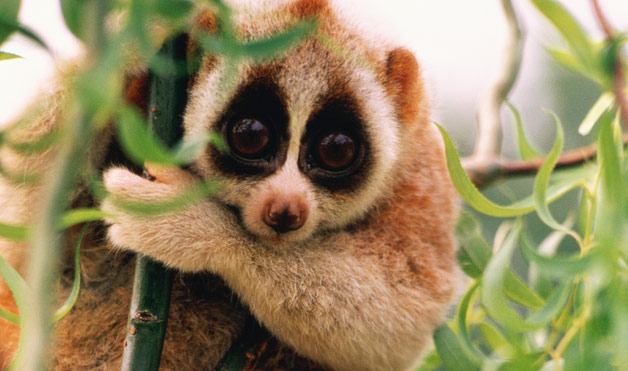
Slow Loris Ethics: Great, Now Even The Smithsonian is Hyping!

Slow Loris

If we can’t even trust the Smithsonian not to lie to us, what hope is there?

The February issue of the Smithsonian magazine arrived, full of articles about origins and evolution. I immediately gravitated to the essay about komodo dragons, whose bite, as those of you who have been bitten by one know, is poisonous. In a colorful sidebar to the main article was a smaller note about the wide range of other animals that poison their victims, titled “Pick Your Poison.”

“The komodo dragon may be the newest addition to the elite corps of predators that kill with chemistry, but the venomous world is already more diverse than people realize,” it began. The note was illustrated by photos of a duck-billed platypus (owner of a leg spur with a poison gland that gives the thing quite a kick); the tiny Pacific cone snail, which can kill a human; the black mamba, the snake that had a co-starring role as an assassin in “Kill Bill, Part 2,” and…a slow loris???

The little, big-eyed, furry, cute Asian primate is venomous? That was a surprise. The article included no details, just noting that the slow loris was the only “venomous primate.” I managed to pass along this information as fact to my wife and two friends before bedtime (it takes so little to excite me these days!), and this morning dived into the web to learn the details of the slow loris’s poison. What I discovered was even more shocking than the original note. The Smithsonian magazine was hyping, and badly at that.

To begin with, there is a difference between venomous animals and poisonous ones. “Venomous” means that the creature injects toxin into its prey, through a sting, a bite, or other means. “Poisonous” means that the animal carries some kind of toxin that the prey ingests, absorbs or inhales, occasionally fatally. The Smithsonian article ignores this distinction for sensational purposes, as the title “Pick Your Poison” suggests. But the slow loris, which is definitely not venomous,. and  it isn’t really poisonous either. Continue reading

Oprah and the Icons: the Ethics of Lying to Make a Difference

Kitty Kelley’s unauthorized, rip-the-mask-off-the-icon bio is out, and now Oprah Winfrey must weather the inevitable de-construction of some of her meticulously self-created image. Oprah is pretty much untouchable now; I was a guest at her “O” Magazine Expo last Fall in Kansas City, and it was clear that her status with he legion of followers is somewhere between a guru and a goddess. There aren’t many revelations, short of proving that she is secretly Dick Cheney in an elaborate disguise, that could do much to reduce her cultural influence or undo her popularity.

Still, it used to be that heroes, celebrities and cultural icons could count on the whole truth about their personal and career embellishments to surface only late in life, or more often, long after death. Thus it has been a standard tool of rising figures in America to carefully craft an inspiring story and an appealing persona that excite and engage the public, and the truth has had little to do with it. It’s worked, too. Continue reading

Remember Davy Crockett (and thank you, Fess Parker!)

If you don’t remember Fess Parker, who died this week as an 85-year-old winery owner, you missed the Fifties. Parker played Davy Crockett in Walt Disney’s TV miniseries about the lively Tennessee frontiersman, and did it with such sincerity and style that he not only turned coonskin caps into a national craze, he also rescued Davy Crockett from creeping obscurity. Continue reading