
The High School Football Slaughter

The winning team’s players weren’t really that much bigger; they just seemed that way.

The last time I wrote about the topic of high school football routs (I think) was here. In that post from 2013, I discussed a  “vengeful father who watched his son’s hapless football team get the just desserts of all hapless teams—losing badly” who filed a formal complaint accusing the winning team of “bullying.” The Aledo High School  (Fort Worth, Texas) should have “laid up, he claimed, and not doing so was poor sportsmanship.”

This guy apparently moved to Long Island, and bullied legislators there into adopting his concept of sportsmanship. Nassau County has a policy designed to prevent lopsided results in high school football games, decreeing that if a team wins a game by more than 42 points, the winning coach must explain to a special committee why such an outsize margin could not be avoided. If the coach is not sufficiently convincing, woe be unto him.

So when the  Plainedge Red Devils made a fourth-quarter touchdown against the previously unbeaten South Side Cyclones, making the final score 61-13, a 48 point margin, Plainedge coach Robert Shaver was called on the metaphorical carpet. His explanation wasn’t good enough, apparently, so he was given a one-game suspension.

From the Times account: Continue reading

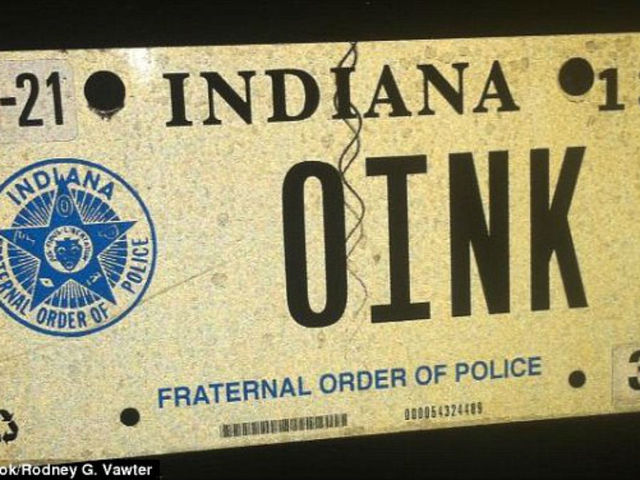
Law vs. Ethics: A Snatched Bar Mitzvah Gift, A Leaky AG, An Embarrassing Scoreboard, and”OINK”

Oink

I try to keep my legal ethics seminars up-to-the-minute, so while preparing for yesterday’s session with the Appellate Section of the Indiana Bar, I came across a bunch of entertaining stories in which the ethics were a lot clearer than the law, or vice-versa. All of them could and perhaps should sustain separate posts; indeed, I could probably devote the blog entirely to such cases.

Here are my four favorites from the past week’s legal news, involving a mother-son lawsuit, a brazenly unethical attorney general, a college scoreboard named after a crook, and police officer’s sense of humor: Continue reading

Facebook Wars II: More School Abuse of Power and Privacy

"Hello? ACLU? Anybody there?"

In January, Ethics Alarms weighed in on reports from Illinois and New York about students being disciplined by their high schools for postings on Facebook about the sexual proclivities of female students in the community. The ethics verdict: the schools were abusing their power and the students’ privacy:

“When did schools suddenly acquire disciplinary control over what students do when they aren’t at school? There is no question that the websites involved were inappropriate, disrespectful, cruel and hurtful, just as the rumors and insults included in high school graffiti were, in those glorious days before the internet. Students so abused need to complain to parents, and parents need to talk to the parents of the offending students, and if they can’t or won’t address the problem, then the courts or law enforcement may need to become involved.”

The rationale offered by the schools at the time was that the students had violated rules against cyber-bullying, that ever-vague plague, although there is no more legitimate authority for a school to decree what a student can say about another student on a personal website than there is for a school to restrict what a kid can say at the dinner table.

Naturally, when an institution exceeds the natural limit on its authority, there is nothing to keep it from even more egregious abuse. Thus two Georgia students were just suspended and one another was expelled for negative Facebook postings about a teacher. Continue reading

Comment of the Day: “Facebook Wars: Parental Abdication, School Abuse of Power”

The Comment of the Day is from Joshua, from the lively thread on the post “Facebook Wars: Parental Abdication, School Abuse of Power.” Continue reading

Facebook Wars: Parental Abdication, School Abuse of Power

Student Facebook pages were much in the news yesterday. One student was suspended from an Illinois school for posting a list of girls at his high school ranked by appearance and sexual proclivities, while another school, Uniondale High, contacted authorities in Nassau County who prevailed upon Facebook to take down a similar page posting provocative comments about high school girls in various area high schools. Uniondale says it has a “no tolerance” policy toward cyber-bullying.

When did schools suddenly acquire disciplinary control over what students do when they aren’t at school? Continue reading

The Ethics of Non-Voting Candidates

Meg Whitman, the former eBay  C.E.O. making a run at the California State House from the Republican side, didn’t bother to register to vote until 2002.  Nassau County’s candidate for attorney general, Kathleen Rice, registered 18 years before Whitman sis, but still didn’t bother to go to a polling place or cast a ballot until the same year, 2002. She calls this repeated lapse, which ended when she was 37 years old, a “youthful mistake.”

No, it was a series of the same “mistake” repeated over and over again from youth, though young adulthood, into early middle age. Continue reading