Ethics Dunce: NBA Coach Jason Kidd

"Clean up on Court One!"

“Clean up on Court One!”

Needing a time out with his team trailing in a close NBA game with the L.A. Lakers, Brooklyn Nets coach Jason Kidd used a trick he had apparently learned as a player at the knee of another cheating coach. Kidd “accidentally on purpose” spilled his cup of Coke on the basketball court. Naturally, play had to be halted so the mess could be mopped up, giving Kidd that time-out he needed to set up the next play. (His Nets lost anyway. Good.)

Later, Kidd insisted that his spill was accidental.  “Cup slipped out of my hand I was getting Ty,” Kidd told reporters. “Sweaty palms. I was never good with the ball. In the heat of the battle, you’re trying to get guys in and out of the game, and the cup fell out of my hand.” Then video showed Kidd telling a player, “Hit me!” to force the spill. That sparked a $50,000 fine from the NBA, but no acknowledgment of wrongdoing by the coach. Later he admitted that he “probably” shouldn’t have done it, “it” being “cheating,” but that he was just trying to win the game. “It’s about trying to win and those guys in that locker room, and I tried to put those guys in a position to get a basket, a good look and we did,” he said. Continue reading

Ethics Quiz: Michael Wilbon’s Politically Incorrect Confession

mike_wilbon

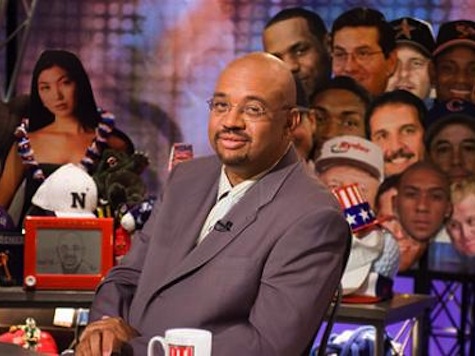
Sportswriter Michael Wilbon, Tony Kornheiser’s African-American foil on the fluffy ESPN show “Pardon the Interruption” and hardly a rabble-rouser, shocked his audience this week when he announced that he is an aficionado of the word “nigger” (but not in public), and objects to being told that there is something wrong with that, especially by white folks. The issue came up regarding an uproar over a tweet, since deleted, from an NBA player using the word to criticize his team mates. [ Aside: It is funny how frequently a single post on Ethics Alarms  about a topic—say political correctness, word censorship, civility and the morass of related ethical issues—seems to trigger an explosion of news stories in the same area. Undoubtedly it is because the proximity of the post itself influences my judgment regarding which events deserve comment, but it sure doesn’t feel that way. This is similar to the phenomenon where you think you have heard a word or phrase for the first time, and suddenly you’re aware of it everywhere.] Wilbon said, unapologetically,

“People can be upset with me if they want, I, like a whole lot of people, use the N-word all day, every day, my whole life … I have a problem with white people framing the discussion for the use of the N-word.”

Your Ethics Alarms Ethics Quiz this weekend is this:

Is Wilbon’s defense of using the word “nigger”ethical? Continue reading

Sports Commentary Ethics And Bigotry: ESPN Should Tell Chris Broussard To Shut Up

Yes, I have a question, Chris: Who cares what your religious beliefs are?

Yes, I have a question, Chris: Who cares what your religious beliefs are?

ESPN has raised some eyebrows for the sports network’s unequivocal support of Chris Broussard, one of its NBA reporters, who in response to a request for his reaction to Jason Collins’ announcing that he was gay, becoming the first active NBA player ever to do so, said this on the ESPN show, “Outside the Lines”:

“I’m a Christian. I don’t agree with homosexuality. I think it’s a sin, as I think all sex outside of marriage between a man and a woman is,” he said (transcript via Blazers Edge’s Ben Golliver). “L.Z. [Granderson, a gay sportswriter and ESPN contributor] knows that. He and I have played on basketball teams together for several years. We’ve gone out, had lunch together, we’ve had good conversations, good laughs together. He knows where I stand, and I know where he stands. I don’t criticize him, he doesn’t criticize me, and call me a bigot, call me ignorant, call me intolerant. In talking to some people around the league, there’s a lot of Christians in the NBA, and just because they disagree with that lifestyle, they don’t want to be called bigoted and intolerant and things like that. That’s what L.Z. was getting at. Just like I may tolerate someone whose lifestyle I disagree with, he can tolerate my beliefs. He disagrees with my beliefs and my lifestyle, but true tolerance and acceptance is being able to handle that as mature adults and not criticize each other and call each other names….

“Personally, I don’t believe that you can live an openly homosexual lifestyle or an openly premarital sex between heterosexuals, if you’re openly living that type of lifestyle, then the Bible says you know them by their fruits, it says that’s a sin. If you’re openly living in unrepentant sin, whatever it may be, not just homosexuality, adultery, fornication, premarital sex between heterosexuals, whatever it may be, I believe that’s walking in open rebellion to God and to Jesus Christ. I would not characterize that person as a Christian because I do not think the Bible would characterize them as a Christian.”

ESPN diplomatically responded, In a statement, ESPN said: “We regret that a respectful discussion of personal viewpoints became a distraction from today’s news. ESPN is fully committed to diversity and welcomes Jason Collins’ announcement.”

I find it difficult to believe that ESPN would regard similar sentiments about the sinfulness of women failing to be subordinate to their husbands or inter-racial marriage as “a respectful discussion of personal viewpoints.” Continue reading

Musings On The Jason Collins Announcement

Jason-Collins

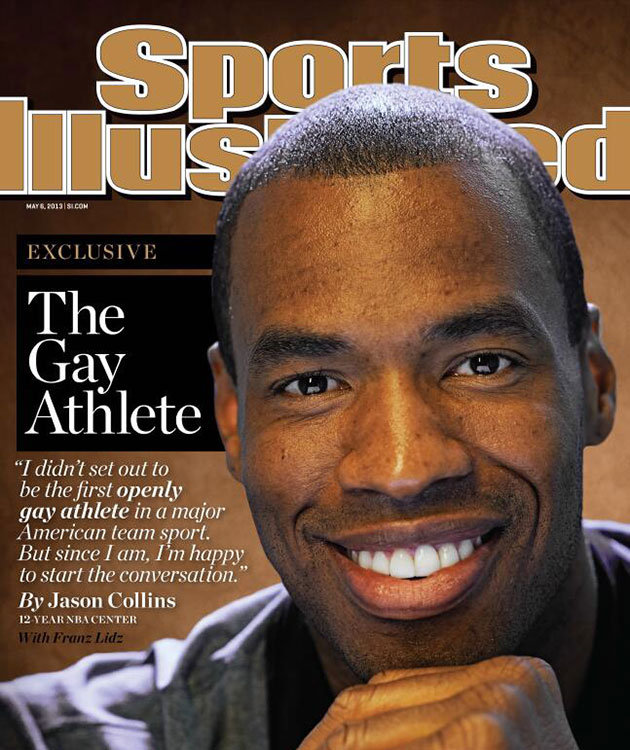
Jason Collins, a reserve NBA center, became a huge news story as well as symbol of increasing gay acceptance in America when he announced his sexual orientation in a Sports Illustrated cover story this week. This made him,technically at least, the first active athlete in one of the U.S’s major professional sports to “come out.” Since his team is not in the NBA play-offs, and since Collins is a free agent going into 2014, the NBA has yet to see its first openly gay player take the floor in a game, and Collins may not be the one who does it.

What does it all mean?

  • Collins is courageous.
  • I hate the fact that the state of celebrity economics, fame and popular culture makes me think like this, but it does: How can we know that Collins, a borderline and largely obscure NBA player nearing the end of his career, didn’t see a chance at the kind of fame, stardom and popularity, not to mention guest appearances, sponsorships and endorsements that have eluded him in his playing career, and grabbed it? We don’t. This was the kind of act that has nothing but good results whatever the motives of the actor, and so it is an ethical act by definition. Was it a truly selfless act, as it is being portrayed? I think Collins deserves the benefit of the doubt, but I sure have some. Continue reading

Comment of the Day: “Ethical If We Want It To Be: NBA Flopping and Fooling the Ref”

This is a wonderful comment by Dwayne N. Zechman, which goes to the heart of what makes sports ethics so perplexing. Let me leave it to Dwayne now, and I’ll have some comments at the end. Here is his Comment of the Day on the post Ethical If We Want It To Be: NBA Flopping and Fooling the Ref:

“I admit I’m having a little trouble with this one.

“If I understand correctly, your premise is that each sport has its rulebook, and what’s ethical or not is mostly determined by what’s in that rulebook. The outside margins of “mostly” come from long-standing traditions, and de facto rules related to safety or practicality. The game isn’t life–it’s a distinct “closed system” if you will, and the rules about life might not apply. Or perhaps it’s better to say that we can choose to declare (in the rulebook or through tradition) that certain rules of life do not apply within the game and that’s okay. Doing so diminishes neither the ethical rule nor the game itself.

“So the beginning of my trouble is that this smacks a little of a combination of “Everybody does it”, “If it isn’t illegal, it’s ethical”, and The Compliance Dodge. Okay, I can accept that, though, because we’ve already stipulated that specific ethical principles can be exempted from a game/sport.

“Next comes my own dissonance in trying to reconcile this article with other recent articles here on Ethics Alarms about pro football, where the same exemption of ethical principles is applied, but somehow shouldn’t be. Okay, I can accept this, too. There is a distinction in that an ethical principle shouldn’t be exempted from the game when there are clear, demonstrable consequences to the player that persist after the game is over and the player’s real life resumes. In a situation such as that, it’s impossible to exempt an ethical principle JUST for the game because the exemption itself renders the game no longer a “closed system”. Continue reading

Ethical If We Want It To Be: NBA Flopping and Fooling the Ref

“And in the category of Best Feigned Foul in An NBA Play-Off Game, the nominees are….”

Once again, the issue of players in professional sports intentionally deceiving the referees is enlivening the sports pages. I welcome it: the intersection of sports and ethics is always fascinating. This particular intersection is as old as sports itself. Is deceiving the referee (or umpire) for the benefit of one’s team competitive gamesmanship or cheating? Is it an accepted tactic, or poor sportsmanship? In short, is it ethical or unethical?

The current version of this controversy has broken out in the National Basketball Association, where  Commissioner Daniel Stern  has declared war on “flopping”—the maneuver where a player draws an undeserved foul on an opposing player by acting as if minor contact or even no contact at all was near-criminal battery. Stern has suggested that the NBA needs to start handing out major fines for these performances, which in the heat and speed of the game are often only detectable with the aid of slow-motion replay after the fact Continue reading

Kobe Bryant’s Two-Word Ethics Train Wreck

"Fucking" + "faggot"= ?

In the heat of an NBA game, Los Angeles Laker star Kobe Bryant shouted a two-word epithet at a NBA ref, estimated to be the 9,675,987, 555, 321,005, 349,674, 021st time a player has insulted a ref in hoops since they started keeping count in 1973. Unfortunately, the two words were “fucking faggot.”

And it was picked up by the TV microphones.

In rapid succession, the Gay Lesbian Transgendered advocates were all over the NBA,  calling a foul; Bryant was apologizing, and the NBA was fining Bryant $100,000.

Ethics train wreck. It’s a train wreck because whatever happens at this point, the result has ethical problems, and the lesson is ethically muddled. There is no question at all that if the remark by Bryant hadn’t been picked up by the mics, there would be no issue, no controversy. But it was, which means that a comment intended for one individual (if that) became a national display of incivility (or worse.) Continue reading

Ethics Dunce: Los Angeles Clippers Forward Blake Griffin

Harry gave credit for HIS slam dunks!

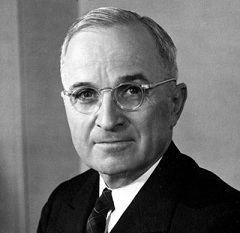
My favorite Harry Truman quote, and one of my favorite quotes generally, is

“It is amazing what you can accomplish if you do not care who gets the credit.”

It is a fair assumption that Los Angeles Clippers forward Blake Griffin has never heard of it, or if he has, he has no idea what Harry was talking about.

The  2011 NBA Slam Dunk Contest over the weekend featured a spectacular  dunk by Griffin, jumping over the hood of a car and slamming the ball through the hoop after it was fed to him, mid-air,  through the sunroof. His contest winning dunk was a sensation, and Griffin can be expected to reap both publicity and dollars from it over and above his contest prize.

But fan Michael Scrivner is calling a foul on Griffin, telling the media that he gave the star the idea for the dunk and deserves some thanks and credit. And he is 100% right. Continue reading

Good-bye and Good Riddance to Bush’s Unethical “Conscience Clause”

The Obama Administration has deep-sixed a controversial Bush Administration rule that permitted a wide variety of health care workers to  refuse to administer treatments they found morally repugnant, what the Bush administration termed workers’ “right of conscience.”

Hospitals and clinics faced a loss of federal funds if they failed to uphold the rule, which itself was ethically repugnant. Kudos, thanks and hosannas to President Obama for getting rid of the Federal variety; some states, regrettably, still have them.

The American Medical Association’s position on the matter, embodied in a resolution passed by its membership, is clear and well-reasoned. Its reasoning applies to health care workers though the specific subject of the resolution was pharmacist conscience clauses.

The AMA’s resolution, “Preserving Patients’ Ability To Have Legally Valid Prescriptions Filled,” states: Continue reading

LaBron, Steinbrenner, and Warped Sports Ethics

Sports ennoble us through the  symbolic exploits of latter-day mythic heroes, who use their amazing skills and talents to exemplify courage, grace under adversity, loyalty, accountability, sacrifice, and, of course, sportsmanship.

Or so they say.

Sometimes it works out that way, but just as often an extraordinary athlete like LeBron James will choose to use his prominence to promote less attractive character traits, like greed, vanity, disloyalty, cruelty and boorishness. For some reason, the mega-millions LeBron was going to receive for fleeing Cleveland as an NBA free agent was not sufficient booty: the basketball star felt that “branding” required that he tease as many cities and franchises as possible, rub Cleveland’s loss in the faces of his previously worshipful fans in that city, and then announce his final choice of new employers in an ESPN TV special that embarrassed his sport and his species. James is not alone, of course; he has lots of company among college and professional athletes whose preening and selfishness make it impossible to use their names and “role model” in the same sentence.

But for the use of sport to warp ethical priorities, nothing quite matches the nauseating accolades being heaped on the late George Steinbrenner, whose ownership of  the New York Yankees was a decades-long advertisement for the principle that the end justifies the means, and as long as you win, nothing else really matters. Continue reading