The DEI-ing of Major League Baseball’s Statistics: Oh. Wait, WHAT?

Major League Baseball’s absurd and self-wounding decision to lump all of the old Negro League season and career statistics in with those of its own players is impossible to defend logically or ethically. Ethics Alarms discussed this debacle of racial pandering here, three days ago. What is interesting—Interesting? Perhaps disturbing would be a better word—is how few baseball experts, statisticians, historians, players and fans are defending this indefensible decision or criticizing it. As to the latter, they simply don’t have the guts; they are terrified of being called racists. Regarding the former, there is really no good argument to be made. MLB’s groveling and pandering should call for baseball’s version of a welter of “It’s OK to be white” banners and signs at the games. Instead, both the sport and society itself is treating this “it isn’t what it is” classic like a particularly odoriferous fart in an elevator. Apparently it’s impolite to call attention to it.
Continue reading

So It’s Come To This: Baseball Destroys Its Hallowed History and Statistics To Signal Its Abject Wokeness, DEI Complaince and White Guilt

How sad. How transparent. How self-destructive.

Major League Baseball announced yesterday that it is now incorporating statistics of the Negro Leagues and the records of more than 2,300 black players who played during the 1920s, 1930s and 1940s into its own record books. This, of course, makes no sense at all: it is The Great Stupid at its dumbest. It is the epitome of DEI fiction and manipulating history. And, naturally, when everyone wakes up and realizes how brain-meltingly stupid this was, it cannot be reversed.

Because doing that would be “racist.”

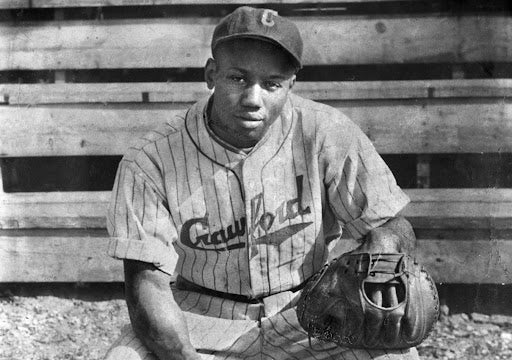
Thus, lo and behold, legendary catcher Josh Gibson (above) becomes Major League Baseball’s career leader with a .372 batting average, surpassing Ty Cobb’s .367. Gibson’s .466 average for the 1943 Homestead Grays became the season standard, followed by the immortal (I’m kidding) Charlie “Chino” Smith’s .451 for the 1929 New York Lincoln Giants. These averages surpasse the .440 by hit Hugh Duffy for the National League’s Boston team in 1894.

Gibson also becomes the career leader in slugging percentage (.718) and OPS (1.177), moving ahead of Babe Ruth (.690 and 1.164). Gibson’s .974 slugging percentage in 1937 is now the MLB season record, with Barry Bonds’ .863 in 2001 dropping to fifth (that stat is also corrupted, but for a different reason). Bonds now trails legendary (kidding again) Mules Suttles’ .877 in 1926, Gibson’s .871 in 1943 and Smith’s .870 in 1929. Bonds’ prior OPS record of 1.421 in 2004 dropped to third behind Gibson’s 1.474 in 1937 and 1.435 in 1943.

Continue reading

Obligation or Charity: Retired Baseball Player Pensions and Fairness

It is an old ethical problem: what is “fair”?  If you help someone, are you obligated to help everyone? Does charity have to be consistent to be fair? Does a potential beneficiary of generosity have a right to demand it? It is obviously good for those who are fortunate and successful to share the benefits of their success with the unfortunate and less successful, but is it unethical if they choose not to?

These are some of the ethics issues being raised in a controversy launched by the major league baseball veterans, now retired, who played  between 1947-1979. In those days, when free agency was just beginning and top players made six-figure salaries rather than seven or eight as they do now, a player needed four full years of  time on a big league roster to qualify for  medical benefits and an annuity. In 1980, however, new rules put in place by the Major League Baseball Players Association  granted health insurance benefits to those with just one day of service, and a pension after merely six weeks. The new benefits were not retroactive. Continue reading