
Monday Ethics Warm-Up, 7/29/19: Reverse Racism And Listening To Dead People

“Life is just one damn thing after another.”Will Rodgers.

1. “Dear White People.” Yes, that’s the name of what “Entertainment” calls an eagerly awaited Netflix series. The title is racist. Whites, however, are supposed to ignore constant efforts to stereotype them by skin shade, “otherize” them by designating people of non-color as “you people” (the term the NAACP erupted in outrage over when Ross Perot used it to describe their members), and generally employ the same demeaning rhetoric that if used in the other direction would be attacked as racist.

The  proposed rule appears to be that males and whites, and especially white males, should capitulate to this demeaning double standard, concur that they are twin blights on civilization, and if they do not, and find themselves driven into the arms of the national elected leader and the political party that does not accept the rigged “principles” that constitute consent to be bullied, persecuted and insulted, that means they are “white supremacists” and misogynists.

The gamble, I suppose, is that whites and men are really, really stupid and cowardly, and this divisive hypocrisy will prevail.

I could be wrong, but I think it’s a bad bet.

Post script: From the Babylon Bee: “Ilhan Omar Introduces Resolution Condemning Racism, White Men, And The Jews.”

Bingo. Continue reading
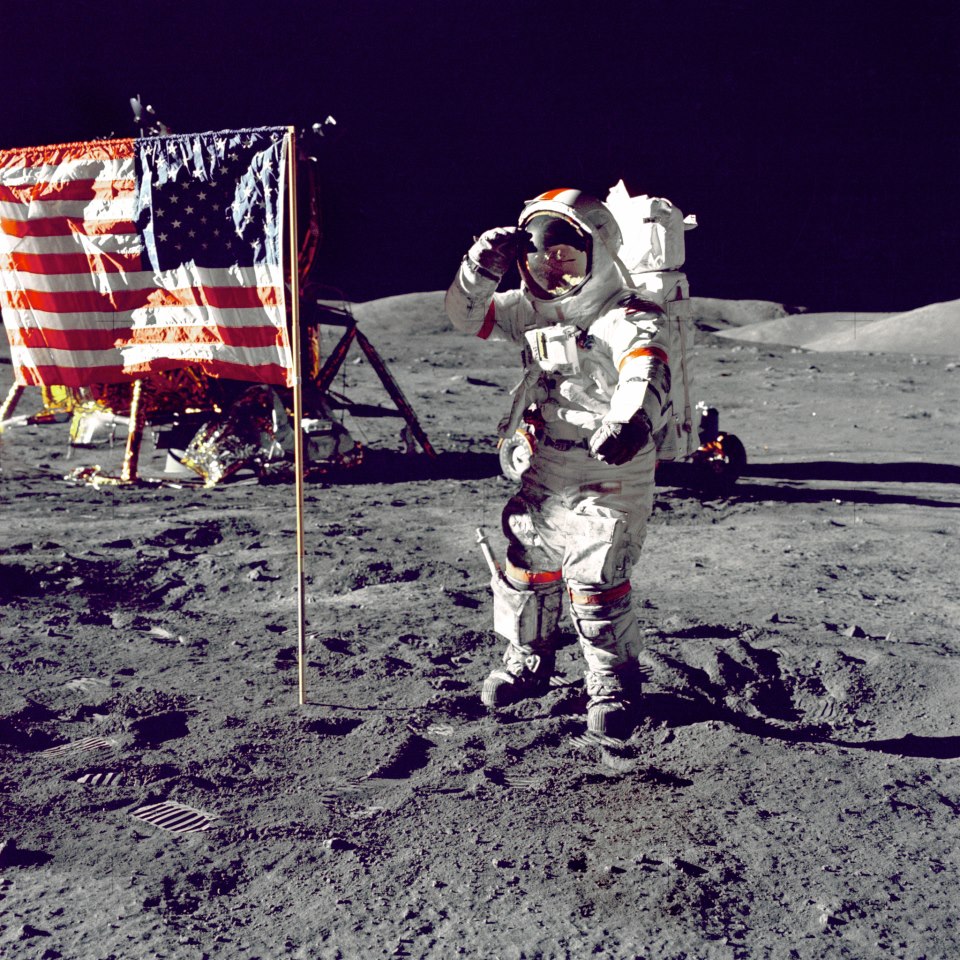
Moonwalk Ethics: One Small Word

Neil-Armstrong-on-the-Moon-in-1969July 20 will be the 45th anniversary of Neil Armstrong’s first step on the moon, a day of achievement, hope and pride for Americans that seems very long ago and far away in the bleak cynicism of 2014. As I was pondering how to note the landmark in an ethics context, I remembered a section of a post on the Ethics Scoreboard that dealt with the controversy surrounding Armstrong’s famous quote upon placing his foot on the moon’s surface. Here it is, my earliest foray into what has become a frequent theme on Ethics Alarms, “print the legend”  ethics:

“When the legend becomes truth, print the legend.”

This cynical endorsement of our culture’s preference for soothing fantasy over harsh historical truth was the intentionally disturbing message of John Ford’s film, “The Man Who Shot Liberty Valence.” But rejecting Ford’s grizzled old newspaper editor’s warped ethic does not justify the equally objectionable modern practice of using spurious logic to substitute one dubious historical account for another. Even more ethically suspect is the common practice of replacing an accepted, well-supported version of an historical event with a “new improved” version that exists less because of its accuracy than because of its advocates’ biases….

An Australian computer programmer says he has discovered that Neil Armstrong’s first words after he stepped onto the moon in 1969, “One small step for man, one giant leap for mankind” were misquoted by NASA, misheard by millions of listeners around the world, and printed incorrectly in the history books. For decades, wags have criticized Armstrong for botching his iconic moment, since “man” and “mankind” mean the same thing, so the literal meaning of his famous words would be “One small step for man, one giant leap for man.” Armstrong has sometimes grudgingly acknowledged his gaffe and at other times maintained that he thought he included the elusive “a.” He hasn’t fought the consensus verdict very vigorously, as represented by NASA’a transcript:

109:24:48 Armstrong: That’s one small step for (a) man; one giant leap for mankind. (Long Pause)… Continue reading