Return to “Ozark”

In 2018, I included a brief note about the Netflix streaming series “Ozark” in a morning “warm-up.” I wrote,

“Call me an old ethics fogey, but I don’t think these kinds of TV series are culturally healthy. I’ve been watching the Netflix series “Ozark,” and hating myself for it. The show is well acted and even has its ethics dilemmas, but like “Breaking Bad,” which was obviously its inspiration, there are no admirable characters, and the “heroes” are criminals. In the Golden Age of TV, there were unwritten (and sometimes written) rules that shows could not rationalize, trivialize or romanticize illegal, immoral or unethical behavior, and needed to reaffirm positive values. In “Ozark,” “Breaking Bad” and “Better Call Saul,” the latter’s spin-off, as well as “House of Cards,” and “Shameless,” among others, there are virtually no admirable characters at all. I have been watching “Ozark” in part because I like the actors, in part because there’s nothing I want to watch anywhere else except baseball, and, yes, in part because of voyeurism. Still, it makes me want to take a shower, and I felt that the increasing tendency of Hollywood to portray everything and everyone as corrupt makes a “the ends justify the means” rationalization seem like a matter of survival.”

Well, that was a shallow and unfair analysis, I am now compelled to say. Living alone with non-work time being a constant challenge between baseball seasons and disappointed by so many other series, I have returned to some old ones that I recalled as at least consistently excellent in scripting and performances, including consensus classics like “The Sopranos,” “Six Feet Under,” “Ray Donovan” and the best of them all, “Lonesome Dove.”

My reaction to “Ozark” the second time through has been completely different from the first time. For one thing, there is so much of it I don’t remember that I have to believe that I didn’t give the show my complete attention on the first viewing. Secondly, I realize now that “Ozark” is an ethics series as much as “The Walking Dead” is an ethics series, and for a similar reason. A normal family is thrust by a confluence of events beyond its control into a set of extreme circumstances beyond their experience and comprehension. They find themselves in a true Bizarro World ethical environment where what is considered ethical in a normal culture will not work, requiring the acceptance of new values and the mastering of new skills, with the alternative being death.

Continue reading

Encore: “Regarding ‘Athlete A’….”

[I watched “Athlete A,” the infuriating Netflix documentary for the second time, and completely forgot that I had written about it here when it first came out. (I’m sure glad I checked.) It is gratifying, I guess that most of what I was prepared to write today was what I wrote in 2020. I was not, however, emphatic enough about the implications of the multi-level failures of ethics decency, responsibility and accountability that allowed this disaster to occur. For in addition to Larry Nassar, the sick, manipulative doctor who used his position to sexually molest hundreds of young girls for more than 20 years, this mass crime was inflicted by stunning corruption and cruelty by key officials in the U.S. Olympic Committee, gymnastic coaches, Michigan State officials (where Nassar worked when he wasn’t sexual assaulting female gymnasts) and—is this even shocking any more?—the FBI. Then there are the parents of the gymnasts, who shipped their daughters off to be cared for by strangers who often abused them.

I suppose this story bothered me more this week than it did in 2020 because we have finally learned the truth about the Russian collusion hoax, the multi-level failure of integrity and trust that marred the 2020 election, and the horrific betrayal by so many institutions that inflicted the pandemic lockdown on us with the incursion on basic liberties that it involved, the discovery that schools are secretly pushing their students into life-altering gender confusion, while Big Tech and social media platforms conspire with the government to censor speech. I confess that I am less inclined to look at the Larry Nassar scandal as an anomaly today than three years ago. Now I am thinking: if we can’t trust our institutions to have sufficient ethics alarms that their leaders and key personnel choose the health and welfare of young girls over power, profit and selfish personal agendas, how can we trust them at all?]

Athlete A,” the Netflix documentary that tells the awful story of USA Gymnastics doctor Larry Nassar’s decades of sexually abusing young female gymnasts—perhaps as many as 500 of them—, how he was allowed to continue his crimes after complaints from parents and others, and the young women who finally sent him to prison with their testimony, is both disturbing and depressing. I watched it last night with my wife, who was horrified that she didn’t know the Nassar story.

Ethics Alarms wasn’t as much help as it should have been. Its first full post about the scandal was this one, which, in grand Ethics Alarms tradition, slammed the ethics of the judge who sentenced Nassar to 60 years in prison, essentially a “Stop making me defend Dr. Nassar!” post. I’ll stand by that post forever, but it didn’t help readers who are link averse to know the full extent of Nassar’s hobby of plunging his fingers and hands into the vaginas and anuses of trusting young girls while telling them that it was “therapy.”

The second full post, in August of last year,  was more informative regarding Nassar, but again, it was about the aftermath of his crimes, not the crimes themselves. That post  focused on the the Senate hearings following the July 30 release of the report of an 18-month Senate investigation  that found that the U.S. Olympic Committee and others failed to protect young female athletes from Nassar’s probing hands, detailing “widespread failure by the U.S. Olympic and Paralympic Committee (the “Committee”) and other institutions to keep athletes safe.”  Then there was this: Continue reading

If Cleopatra Was Black, Maybe I Am Too!

Netflix is telling its subscribers that Cleopatra was black, but both Cleopatra and I come from Greek stock, so if she was black, I must be too. This is just the break I have been waiting for after seeing my legal ethics training business torn to pieces by the stupid Wuhan virus lockdown, and income reduced to trickle that cannot be restored to its previous whoosh! Now that I can market my services as one of the very few blacks in the field, whole new vistas are open to me. Thanks, Netflix!

But I’m getting ahead of myself. Sorry, I’m just giddy.

A new Netflix new docu-series, “African Queens: Queen Cleopatra,” stars black British actress Adele James as the fabled Egyptian ruler. Producer Jada Pinkett Smith (yes, she’s the one her husband slapped Chis Rock over) has said that “she wanted to tell the story because ‘”we don’t often get to see or hear stories about black queens.” Somebody should tell Jada that one reason for that is that they prefer to tell the stories of white queens and pretend they are black, as when the very white second wife of King Henry the VIII was cast as being black in 2021 British mini-series. As I pointed out in the linked post, this kind of fantasy revisionism is considered benign—DEI, man!—-while casting a white women to play a black one would be “whitewashing” and racist. Similarly, casting a black actress to play the red-haired, fishy-white Little Mermaid in Disney’s life action version of the animated classic is hunky-dory, but using computer magic to make the black version of whitefish Ariel white again is racist. Clear?

I sure hope not.

Continue reading

“Hatchet Wielding Hitchhiker” Ethics

This week Netflix offered another true crime documentary, “The Hatchet Wielding Hitchhiker.” It tells the weird tale of Kai Lawrence (his real name  is Caleb McGillvary) who went from viral celebrity to convicted murderer in less than a year. It is a very disturbing story, and not just because of the murder. What I found most illuminating if not surprising was the eager exploitation of an obviously disturbed young man with violent tendencies by media types who gave no thought to the likely consequences of their actions.

In  2013, McGillvary, aka “Kai” was a homeless pot-smoking vagrant, living on the streets and depending on the kindness of strangers.  Hitchhiking in the Fresno (California) area, he was picked up by Jett McBride, who, Kai revealed later, he had given a cigarette laced with a hallucinogenic drug. Perhaps as a result, McBride ran down a pedestrian  When a woman rushed to the pedestrian’s aid, McBride, apparently bonkers, assaulted her. This is where “hatchet-wielding” comes in: Kai got out of the car and stopped McBride’s attack by hitting him three times over the head with a hatchet he had in his bag.

Yes, he became a hero by striking a man with a hatchet. The woman felt Kai had saved her life, and a local reporter on the scene quickly grabbed the long-haired, handsome young man for an interview. The reporter was obviously amused and delighted by Kai’s spontaneity and affinity for the camera. At one point McGillvary turned directly to viewers and delivered a well-rehearsed call for all human beings to be “respected for who they are.” The reporter was charmed, even though anyone with open eyes should have known then that they were witnessing the act of seasoned grifter. Continue reading

Streaming Ethics Reflections

There is a lot of fodder for ethics analysis, consideration, enlightenment and confusion out there on the streaming platforms. For example,

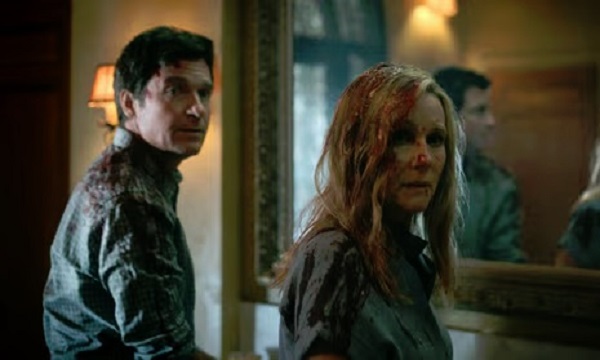
  • “Ozark” has returned for it’s 4th season and presumably its last, with a half-season with a cliff-hanger. The sordid tale about an accountant (Jason Bateman) who runs for his life to the Ozarks as an involuntary  money-launderer for a drug cartel, in the process corrupting his easily corrupted wife (Laua Linney, who learns fast) and his previously innocent children, who make the Soprano kids seem like naifs, could be used to illustrate so many rationalizations, it’s mind-boggling. One persistent theme is the Ruddigore Fallacy, as the Byrds (not the rock band) constantly plan to do enough good through various schemes to make up for all the crimes they have committed and the people they’ve gotten killed.

Another persistent theme is perhaps the most perplexing and abused of the ethical values, loyalty. Continue reading

Trans Activist Ethics Train Wreck Update: The Dave Chappelle “Hate Speech” Hypocrisy

From the New York Times front page today:

“Netflix…the tech company that revolutionized Hollywood, is now in an uproar as employees challenge the executives responsible for its success and accuse the streaming service of facilitating the spread of hate speech and perhaps inciting violence.”

Observations:

1. It’s time—way past time, in fact—to emphatically define what “hate speech” is. First of all, hate speech, whatever it is, is 100% protected speech. It is Constitutional, First Amendment, lawful, beyond all argument speech. Second, I use “whatever it is” because the phase is deliberately vague and subjective so those seeking to censor discourse, advocacy, non-conforming points of view, satire and insults can place the expression of ideas by someone else into a category that suggests malign agency and intent.Then, those crying “hate speech” can advocate silencing whatever it was they are labeling.

We’re on to them, or should be by now. Calling something “hate speech” is like the Southern Poverty Law Center’s dishonest “hate group” label. It’s a cheat.

2. Hate is not a good thing in human relations (there are exceptions), but it is legal and, like all emotions, not unethical. Acting on the hate may be unethical, but not hate itself.

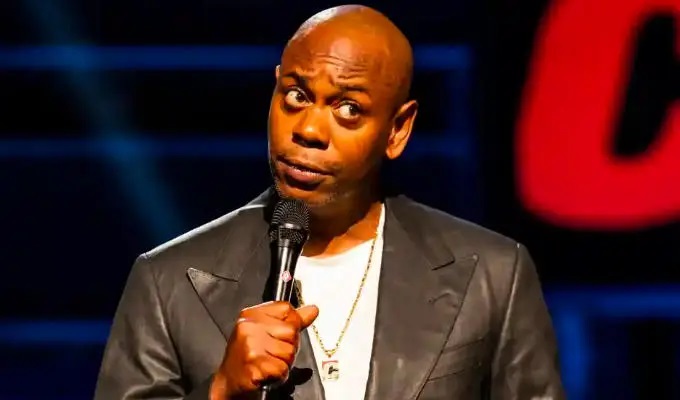
3. I have watched “The Closer,”Dave Chappelle’s Netflix special now under fire, twice. There is nothing hateful in it, unless one thinks that all mockery, satire and jokes with an edge are hate.

I don’t think “The Closer” is very good, especially by Chappelle’s standards. It’s not especially funny, for instance. It’s also not very smart, and Chappelle, if nothing else, is smart and usually shows it. It’s not smart because the controversy over how society should regard transgender individuals is interesting, perhaps difficult, raises interesting ethical and practical issues, but in the grand scheme of things, it’s just not as important as the attention paid to it makes it seem. This is a tiny minority: yes, these issues are important to them. But Chappelle’s show is like a deliberate employment of the Streisand Effect: he’s obviously annoyed about having to deal with trans issues, so he spends a whole, high-profile special complaining, explaining, and riffing regarding it. Since he’s a comedian, this could be justified if he mined it for comedy gold, but he doesn’t.

If he isn’t going to be funny, then he has to be profound, or he’s wasting our time. Not only is the thing not profound, it’s barely coherent. Not that there’s anything wrong with that: stand-up is a high wire act, and the best comics sometimes fall hard. But the contrived controversy over “The Closer” is giving the performance more significance than it deserves, and allowing Chappelle to accept accolades for a performance that was really subpar.

Continue reading

Ethics Alarms Officially Designates Trangender Activism An Ethics Train Wreck [Updated And Expanded]

dc-dave-chappelle-closer

An ethics train wreck is an ethics-fraught situation or event that manages to make virtually everyone involved, on all sides of the issues, behave unethically or express unethical positions. I should have identified the Transgender Activism Ethics Train Wreck much earlier, of course: I was asleep at the switch.

The tipping point that prompted this is the Dave Chappelle Netflix special, “The Closer,” the latest in a series of stand-up concerts by the talented, often perceptive and intentionally politically incorrect comedian. (I haven’t watched it yet, but I will, possibly tonight.) The show is under attack by LGTBQ activists because Chappelle jokes at the expense of transgender individuals, and this is, they say, hate speech. As I said, I haven’t seen this concert, but I have seen others, and Chappelle has targeted trans people before. I can’t say his anti-trans material isn’t sometimes funny: a lot of his jokes provoke the dual “I can’t believe he said that!”/ “Ha! Oh, no, I hate myself for laughing!” response. This is because he is good at what he does. Nevertheless, I regard such jokes as punching down. Chappelle should be better than that.

I also have two transsexual friends, one a former neighbor, the other a young man I have known since he was a child. I find nothing funny or ridiculous about either of them.

Continue reading

Ethics Agenda, 10/1/2021: Netflix Edition

I am finally ready to set up the first Ethics Alarms Zoom meeting. The topic will be the Netflix series “Clickbait,” which is an ethics cornucopia. I am looking at the period of October 7-21, in the evening, and need to know which days and times are preferred, as well as who and how many visitors here are interested. I’d prefer to facilitate discussion rather than have to dominate it, so I would also like to hear from you if there is a particular ethics issue raised by the story about which you would like to present your views to kick off discussion. I’m envisioning a 90 minute session, but it could be longer. You can respond on this post, or to me via email, jamproethics@verizon.net.

1. Great moments in “It isn’t what it is”…This week, a student attending an event with Vice President Harris opined that Israel was conducting “ethnic genocide” in Palestine. Harris responded, “Your voice, your perspective, your experience, your truth cannot be suppressed, and it must be heard.” For some strange reason, Israel’s press had a problem with this, and so did many American Jews and supporters of Israel. “VP Harris to student who accused Israel of ‘genocide’: Your truth must be heard,” was the headline in The Jerusalem Post. The Times of Israel said: “Kamala Harris doesn’t reject US student’s ‘ethnic genocide’ claim against Israel.” Harris’s flacks represented the episode as one big misunderstanding. Her office assured critics that the Veep’s “commitment to Israel’s security is unwavering” and that she “strongly disagrees with the George Mason student’s characterization of Israel.”

Of course she does! I know I always describe statements that I strongly disagree with as “the truth.”

Continue reading

“The Queen’s Gambit” Gambit

the-queens-gambit-8b97b1d

In the final episode (mercifully) of the inexplicably popular Netflix series“The Queen’s Gambit,” an announcer delivering chess commentary while the show’s annoying fictional heroine, portrayed by Anya Taylor-Joy (above right), competes in a climactic tournament in Moscow says,“The only unusual thing about her, really, is her sex, and even that’s not unique in Russia.There’s Nona Gaprindashvili, but she’s the female world champion and has never faced men.”

That wasn’t true. Nona Gaprindashvili, the first woman to be named a grandmaster, faced and defeated many male players. Now 80 years old and living in Tbilisi, Georgia, Nona is furious about the false representation of her career. She’s suing Netflix in Federal District Court in Los Angeles, seeking millions of dollars in damages for what her lawyers claim is a “devastating falsehood, undermining and degrading her accomplishments before an audience of many millions.”

Continue reading

Evening Ethics Cool-Down, 9/16/2021: On Idiots, The Donner Party, Statistical Reparations And The Evil NFL

Frozen Statue

I had to get out of bed to write this; I’ve been exhausted all day. I better not be getting old. That will really tick me off…

***

I’m working on a post called “Cannibal Ethics,” and this obviously led me to the Donner Party, the group of doomed pioneers who had to eat each other to survive when they were caught in a storm in the Sierra Nevadas in 1846. If I knew that they had come to their fate because of a negligent author, I had forgotten it: a fake expert named Lansford Hastings had written “The Emigrant’s Guide to Oregon and California” recommending a short-cut (which actually increased the trip’s mileage) to the Promised Land (this was before the two areas were ruined by reality-free politics)He had never actually traveled the new trail when he published the book. He did finally do it shortly before the Donner party set out, and helped sealed its fate by leaving paper notes along the way that further misled them. One told the already desperate wagon train they could cross Utah’s Great Salt Lake desert in a faction of the time it actually took. The group ran out of water in the middle of the salt plain about half-way across.

If I compiled a list of U.S. Ethics Villains throughout history—I’ve considered it—Hastings would be on it. After he left the U.S. for Brazil following the Civil War, he wrote a sequel of sorts to the book that killed so many of the Donner Party: “The Emigrant’s Guide to Brazil.” (1867).

1. Tales of The Great Stupid, Headline Division. From the Boston Globe: “How did Boston miss its moment to elect a Black leader?” The reporter, Stephanie Ebert just can’t imagine why he three Black candidates in the mayoral primary were eliminated in favor of Michelle Wu, the daughter of Taiwanese immigrants and Annissa Essaibi George, whose father was a Tunisian Arab Muslim. But, Ebert complains, there won’t be “any candidate who knows the weight of being Black in a city with deep racial scars.”

Maybe the three black candidates were not seen as skilled, experienced, or qualified as the primary’s winners. Or is Ebert saying that being black should be enough to qualify someone to be mayor?

Continue reading