“The Keepers,” The Catholic Church, And Bishop Fulton J. Sheen

I began watching Netflix’s new “true crime” series “The Keepers” last night. I may not last through all seven episodes. In addition to the documentary story-telling methodology, which moves at the pace of a slug-race, the story of how unsolved murder of a Baltimore nun might  be part of  (yet another) horrific cover-up by the Catholic Church made me so angry and frustrated that I quit in the middle of the third episode. The series makes the case that the nun, Sister Catherine “Cathy” Cesnik, was killed because she was about  to reveal ongoing sexual abuse of young teenage girls by the priest running the Archbishop Keough High School for girls.

The abuse and the extent of it is not speculation. As in so many other places, the Catholic Church in Baltimore eventually paid millions in damages to multiple victims of multiple predator priests who the Church moved around the  region—so they could molest and assault new victims—rather than handing them over to law enforcement. It is hard to imagine any priest worse than Father Joseph Maskell, however, if even some of the allegations against him are true. Victims say he used student files and illicit police connections to target teenage girls who were already being sexually abused. He manipulated them using a sick combination of religion, guilt, hypnotism and intimidation, sexually abused them, and even delivered some over to members of the Baltimore police department for more abuse.

The documentary focuses on the school’s Class of ’69, though there must have been equally abused girls before and after. The conspiracy of silence began to crack in 1992, when an especially  victimized member of the class suddenly realized that she had repressed memories of horrible experiences, and finally complained to the Baltimore Archdiocese, setting off the kind of despicable Church defensive strategies too familiar to anyone who has seen “Spotlight.”

This documentary isn’t good for my state of mind. It makes me wonder not only if all is lost, but also if all wasn’t lost long ago. I was raised in a largely Catholic community. I am not religious, but as an ethicist I recognize the important, civilizing role religion has played in teaching and enforcing moral principles for the majority of the public for whom ethical analysis is too challenging. Episodes like the Father Maskell scandal raise questions that I rebuke myself for asking, like “How can this be?” “Jane Doe,” the star witness in the documentary, is still a devout Catholic. Her immediate response to every dilemma is to pray. I don’t get it. She was savaged, threatened and abused by a priest that she knows the Church allowed to prey on the vulnerable students entrusted to him. Why would she still trust the Catholic Church?

Why would anyone? Continue reading

“Black Mirror” Ethics

black-mirror

I finally am getting around to examining “Black Mirror,” the British anthology series that explores, sometimes in a science fiction context, ethics issues involving technology. It is a critical hit, and has just had its  third season posted on Netflix.

Technology ethics is a dynamic and crucial topic. I sure hope the series is better than the  first episode, “National Anthem.”

If you are going to do a series about ethics, knowing something about ethics is mandatory. This episode is so absurd and its resolution so idiotic that it’s barely worth analyzing, No spoiler alert necessary, because I’m only going to reveal what would be in any preview synopsis. The Royal Family’s princess is kidnapped by terrorists—I think that’s a fair description—and they release a video on YouTube in which the terrified young woman announces that she will be executed unless the Prime Minister has live sex with a pig, on all TV networks.

The rest of the episode’s 60 minutes involves the PM’s “ethical dilemma” as social media weighs in and his staff and family apply various kinds of pressure. I wouldn’t waste an Ethics Quiz on this alleged “dilemma.” Continue reading

“Grace And Frankie” Ethics

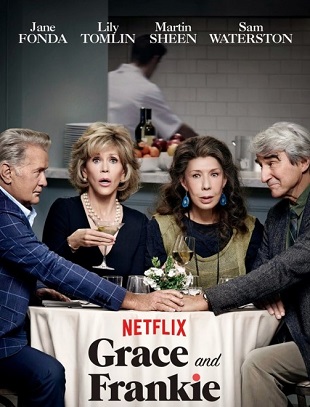
“Grace And Frankie”Grace_and_Frankie_Season_1_poster_9 is a mostly fun Netflix series featuring Jane Fonda (as creepily “Death Becomes Her”- like,  70-going on 40-looking Grace Hanson) and Lilly Tomlin (Frankie Bergstein, an old, adorable hippie) as an odd couple of septuagenarians  brought together when their respective lawyer husbands, Robert ( Martin Sheen, looking very old) and Sol (Sam Waterson) declare that they have been carrying on a 20 year gay love affair. It’s now Season Two, both couples are divorced but friendly, and Robert and Sol are preparing an elaborate wedding.

Ah, but at the end of last season, cleaning out their old house and being soaked in photos, regrets and fond memories, Sol and Frankie had one last sexual fling (they had a kid: this was not unprecedented). The final episode saw Sol in anguish, feeling like he had betrayed the love of his life (that is, Robert) and not knowing how or whether to confess that he cheated with his former wife.

As Season Two gets underway, Robert has a heart attack, so the wedding is much reduced in grandeur with him still recuperating. Frankie officiates, having received her legal authority to do so over the internet. All is romantic bliss until Sol, after Robert, now recovered has prepared a romantic dinner and they have belatedly exchanged rings, can’t hold his terrible secret back any longer. He tells Robert about his one-night stand. [As he should. Everyone else in the extended family knows about his dilemma, and Robert and Grace’s children urge him to never reveal a secret that can only cause unhappiness. Sol, correctly, asserts that he can’t begin a marriage with secrets and lies. For better or worse, he has to come clean.]

And Robert throws him out! Continue reading

A Proposed Guide To Spoiler Ethics

"It SINKS??? You spoiled the ending!!!"

“It SINKS??? You spoiled the ending!!!”

I was just admonished on Facebook by a friend (a real friend, not just the Facebook variety), for referencing the end of the last episode of Season One of “Orange is the New Black.”  He hadn’t finished viewing the season yet, and this was a breach of spoiler ethics. Or was it?

Ever since I encountered for real someone who was angry with me for “spoiling” the end of “Thirteen Days,” ( “Yes, World War III started and everybody died”), I have been dubious about spoiler etiquette. The advent of DVDs and Netflix has made this all the more annoying. If I’m in a group of five, and one individual hasn’t kept up with “House of Cards,” are the rest of us obligated to censor our discussion? As a devotee and fanatic devourer of popular culture, I admit that my first instinct is to say, “Keep up, get literate, or pay the price.” If I actually live by that rule, however, I will be a walking, talking, writing, spoiler machine.

Chuck Klosterman, “The Ethicist” in the world of the New York Times, recently pronounced himself an anti-spoiler absolutist:

“I’m an anti-spoiler fascist. I don’t believe that any conversation, review or sardonic tweet about a given TV show is more valuable than protecting an individual’s opportunity to experience the episode itself (and to watch it within the context for which it was designed). I’ve never heard a pro-spoiler argument that wasn’t fundamentally absurd.”

Even Klosterman, however, excepted sporting events (the question posed involved mentioning World Cup scores to a friend who was annoyed that the game had been “spoiled” for him) from his fascism, writing, reasonably:

“I must concede that live, unrehearsed events are not subject to “spoiler” embargoes A live event is a form of breaking news. It’s not just entertainment; it’s the first imprint of living history. …Because this guy is your buddy, you might want to avoid discussing the games’ outcomes out of common courtesy — but not out of any moral obligation. It’s his own responsibility to keep himself in the dark about current events.”

For once I agree with Chuck. But what are reasonable ethics rules for dealing with the other kind of spoiler, involving literature and entertainment?

Luckily, this is not new territory, though it is evolving territory. The underlying ethical principles include fairness, trust, consideration, compassion, and empathy, which means that the Golden Rule is also involved.

Back in 2010, an erudite blogger calling himself The Reading Ape proposed a draft “Guide to Responsible Spoiling.” That blog is defunct; the promised successor is not around, and so far, I haven’t been able to discover who the Ape is. Whoever he is (Oh Aaaaape! Come back, Ape!) , he did a very good job, though some tweeks might  improve his work, especially in light of the emergence of Netflix.  (I have edited it slightly, not substantively…I hope he doesn’t mind, or if he does, that he’s not a big ape.) His approach is to frame the problem as an ethical conflict, in which two competing ethics principles must be balanced. I think that’s right.

Here is his “draft”—what do you think?

“A Brief Guide to Responsible Spoiling”

by The Reading Ape (2010)

The objective is to balance two ethical principles:

I. The Right to Surprise: The inherent right of any viewer or reader to experience the pleasure of not knowing what’s
going to happen next.

II. The Right to Debate: The inherent right of any viewer or reader to engage in public discourse about the content of
a given work of narrative art.

Part 1: When Spoiling is Fair Game

In the following circumstances, one can discuss crucial plot details and reveal endings with a clear conscience. Continue reading

Emmy’s Transgender Nomination: Important, Inspiring, and a Breach of Integrity

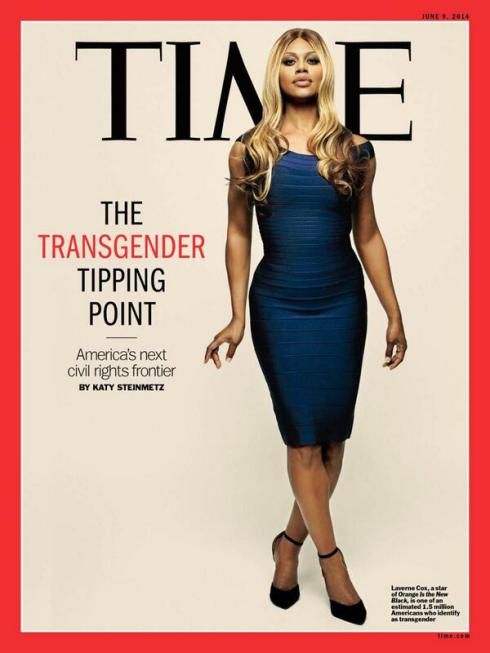
laverne-cox-timeThe Emmys made cultural history yesterday, nominating Netflix’s “Orange Is the New Black” actress Laverne Cox, who plays Sophia Burset in the prison drama, in the category of outstanding guest actress in a comedy series. It is the first time an openly transgendered actress has been nominated for an Emmy.

She joined several of her colleagues  on the show who were also recognized in various acting categories: stars Taylor Schilling, Kate Mulgrew, Uzo Aduba and Natasha Lyonne.

The problem is that Cox received the nomination for political and social reasons unrelated to her performing skills. This will be denied, of course, and since all awards are subjective, no one will be able to prove this is the case. It is, however. In the large, uniformly superb ensemble cast, Cox’s role is relatively minor, and I have a difficult time believing that anyone would objectively identify her as a standout in the show based on her acting. (In the current season, which I have seen in its entirety, her character is almost invisible). This isn’t intended to diminish Cox in any way, for in the role she plays, I cannot imagine it being played better. Nevertheless, there are many un-nominated actresses in that show—as well as other shows— whose characters are more vivid, who have to show more range, and who are more deserving of a nomination once the process is stripped of irrelevant political baggage. Among them: Taryn Manning, whose transformation into the complex religious fanatic Tiffany “Pennsatucky” Doggett is frightening; Yael Stone, as the heartbreaking stalker Lorna Morello; Samara Wiley, as te alcoholic moralist Poussey Washington, and several others.

Everyone is thrilled for Cox, with Cox, reasonably, leading the way. “I’m on cloud nine. I’m through the roof,” said the actress, whose path to an award was  paved when she was featured on the cover of Time magazine.“What a wonderful, wonderful day for “Orange” and for black trans-women,” she said.

Undoubtedly. It’s not such a great day for the acting profession generally, the Emmys, or the principle that awards based on merit should be decided based on merit, and not social and political agendas. I would say, “But that’s Hollywood,” except that it isn’t just Hollywood. Continue reading

The Ethical Duty To Correct Stupidity

The Martin Luther King Memorial was unveiled without the commission responsible for it bothering to fix what has been almost unanimously condemned as an embarrassing mistake, a rephrased, out-of-context quote on the sculpture base (“I was a drum major for justice, peace, and righteousness”) that misrepresents Dr. King’s career and was also something he never said. This is inexcusable, but at least the boob who unilaterally made the decision spelled “righteousness” correctly. The sign above is emblematic of a different ethical problem, the widespread abdication of the shared obligation to speak up when one sees someone else making a really stupid mistake. Continue reading