Ugh. The old “public officials are responsible for keeping their wives in line” canard, which for some reason is only applied to conservatives by the mainstream news media. Or we could file this under “Hail Mary attempts to get the Supreme Court’s conservative Justices to recuse themselves so SCOTUS won’t strike down the totalitarian Left’s conspiracy to “get” Donald Trump by any means necessary, and law, ethics and democracy be damned.”
A New York Timesheadline yesterday shouted,“At Justice Alito’s House, a ‘Stop the Steal’ Symbol on Display.” Wow, what symbol was that? It was an upside-down American flag, seen flying over (much reviled, almost as much as Clarence Thomas) Supreme Court Justice Samuel Alito’s house for a few days in January 2021. Because the flag was up in the period between the January 6 riot at the Capitol Joe Biden’s inauguration, the Times infers that the flag meant that Alito thinks the 2020 election was stolen from former President Trump.
Of course the Times dredged up some unethical ethics experts to deceive their readers about the seriousness of this. “Judicial experts said in interviews that the flag was a clear violation of ethics rules, which seek to avoid even the appearance of bias, and could sow doubt about Justice Alito’s impartiality in cases related to the election and the Capitol riot,” writes the Times, ostentatiously avoiding mentioning the names of the experts who said, as I would have, “What? This is nothing!”
“It might be his spouse or someone else living in his home, but he shouldn’t have it in his yard as his message to the world,” said Professor Amanda Frost at the University of Virginia law school. This is “the equivalent of putting a ‘Stop the Steal’ sign in your yard, which is a problem if you’re deciding election-related cases,” she said.
Uh, no it’s not, but that analysis is the equivalent of the professor wearing an “I am a partisan hack!” sign on her forehead.
(But claims by Donald Trump that the election was “rigged” are “baseless” and supported by no evidence at all….).
Ben Smith, the former media columnist for the New York Times, is hardly an unbiased interviewer when it comes to his old employer. He’s a product of the Times culture, and the Times culture is, has been and continues to be corrupted and unethical. The message of his recent interview with newish executive editor Joe Kahn is that the Times is all better now and is objective again after a teeny dip, though it hasn’t been objective in my lifetime.
What is revealing about the interview, however, is that if one can wade through the doubletalk, careful caveats, avoidance of direct statements and verbosity, Kahn admits that the Times was in the tank for Biden and the Democrats in 2020 as the pandemic and Black Lives Matter hit, and that it was wrong for the Times to do that, and they are really, really sorry and promise not to do it again.
Strangely, the Times has not apologized to Donald Trump, Republicans, the American voters and the Founders for this. His statement also puts in perspective the rote talking point, every time the news media sneeringly refers to Trump’s insistence that the election was stolen from him, that the claim is “baseless.” That the leader of the U.S. news media still regarded as the role model for the rest deliberately abandoned its already partisan-biased version of journalism for pure advocacy and propaganda in the year of a national election is very much a “base.” Ethics Alarms, among others, has said so, and was saying so in 2020. Remember those scary (and fake) Hunan virus death charts with red spikes reaching through and above the mast head? Yeah, I think we got a little carried away, says Kahn.
Oh, well that’s okay then. Everybody makes mistakes….
The man is, in order, as expert at avoiding speaking plainly as any politician, infuriatingly equivocal, blatantly partisan, and a master of spin. Nonetheless, if you can pick your way through all the fog, the confession is there. Here are some key sections with some commentary by me):
Ben Smith: “Dan Pfeiffer, who used to work for Barack Obama, recently wrote of the Times: “They do not see their job as saving democracy or stopping an authoritarian from taking power.” Why don’t you see your job as: “We’ve got to stop Trump?” What about your job doesn’t let you think that way?”
Joe Kahn: “Good media is the Fourth Estate, it’s another pillar of democracy. One of the absolute necessities of democracy is having a free and fair and open election where people can compete for votes, and the role of the news media in that environment is not to skew your coverage towards one candidate or the other, but just to provide very good, hard-hitting, well-rounded coverage of both candidates, and informing voters. If you believe in democracy, I don’t see how we get past the essential role of quality media in informing people about their choice in a presidential election. To say that the threats of democracy are so great that the media is going to abandon its central role as a source of impartial information to help people vote — that’s essentially saying that the news media should become a propaganda arm for a single candidate, because we prefer that candidate’s agenda. It is true that Biden’s agenda is more in sync with traditional establishment parties and candidates. And we’re reporting on that and making it very clear. It’s also true that Trump could win this election in a popular vote. Given that Trump’s not in office, it will probably be fair. And there’s a very good chance, based on our polling and other independent polling, that he will win that election in a popular vote. So there are people out there in the world who may decide, based on their democratic rights, to elect Donald Trump as president. It is not the job of the news media to prevent that from happening. It’s the job of Biden and the people around Biden to prevent that from happening. It’s our job to cover the full range of issues that people have. At the moment, democracy is one of them. But it’s not the top one.”
Wow, what could possibly account for that? The man is paranoid!
I missed “Campaign Puts Trump and the Spy Agencies on a Collision Course” in the Times two weeks ago. Fortunately a non-Ethics Alarms-reading friend sent me this column by the usually astute and trustworthy Holman Jenkins at the Wall Street Journal. (Aside:I continue to wonder why so few of my friends and long-time associates read this blog, and none of my family members. It must be me, or as one friend who does read Ethics Alarms once said in a moment of self-doubt, “All my best friends hate me.”) His assessment of the significance of the piece tracks exactly with mine, and he seems to be coming from a similar point of view: he doesn’t have any illusions about Donald Trump, but he still finds the Times’ dishonest and biased coverage of him since Trump’s election despicable. Except this one initial arch comment—Gee, imagine not trusting intelligence agencies!—I’ll leave the commentary to Jenkins with a few footnotes from me:
Ethics Villain? “Bias makes you stupid”? “Nah, there’s no mainstream media bias!”? Unethical Quote of the Month? Oh, let’s start with that one:
“Donald Trump, who relentlessly undermined the justice system while in office and since, is enjoying the same protections and guarantees of fairness and due process before the law that he sought to deny to others during his term.”
—-The New York Times editorial board, in yesterday’s biased, manipulative, Trump-Deranged misinformation-fest titled,“Donald Trump and American Justice”
This is no more and no less that a “WE HATE YOU TRUMP! HATE HATE HATE!” statement. As President, Trump never did anything to “deny fairness and due process” to “others.” The claim to the contrary not journalism and it’s not punditry. It is just hurling accusations without support. Yet the Times editorial board never protested when President Obama used his “bully pulpit” to suggest that American citizens were guilty of crimes before they had been tried or even charged, as in the case of George Zimmerman. The editorial provides no examples or evidence to support the statement, because there aren’t any.
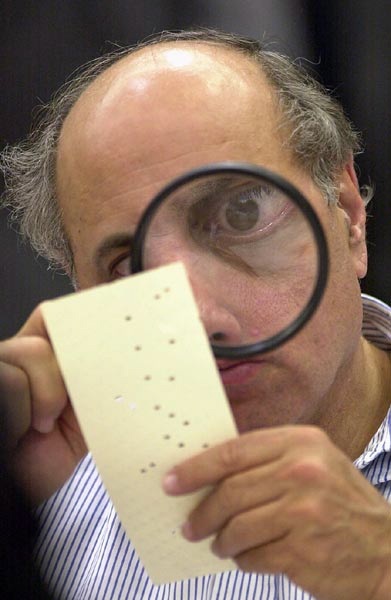
The just can’t help themselves. In “Revisiting Florida 2000 and the Butterfly Effect,” New York Times reporter reminds readers (or as I would prefer to ssay, “whines”) that “the evidence is strong that Al Gore would have won had it not been for an infamous ballot design in Palm Beach County.” The Times will not, when Jimmy Carter dies, reminisce that “the evidence is strong” that if Jimmy Carter had not used the single Presidential debate against Ronald Reagan to appeal to the authority of his then 13-year old daughter Amy regarding nuclear proliferation, Carter would have been elected to a second term,” but then that wouldn’t have given the hypocritical paper an opportunity to claim, falsely and with complete knowledge that the claim was false, that Reagan’s history-altering election wasn’t legitimate. Nate Cohn, one of the rising leftist propagandists in the Times stable of dishonest pundits, does pivot to that claim regarding George W. Bush’s election.
The fact that the Times is still doing this—that lie is one of the hoariest and most persistent in the whole ugly batch—means, quite simply, that the paper can’t be trusted. Simple as that. Its editorial policy is to lie about Donald Trump, and other things, of course, but if a news organization will lie about anything to forward an agenda, then it should never be trusted.
The conservative news media and punditry sites are exploding with criticism of the New York Times for publishing the op-ed on December 24 written by Yahya Sarraj, mayor of Gaza City. Sarraj was appointed mayor by Hamas, the terrorist organization that has ruled Gaza for more than a decade. The piece is self-evident proaganda that seeks to create outrage and sympathy for Gaza in the wake of Israel’s retaliation for the Hamas terrorist attacks in Israel on October 7 and its invasion of the Gaza Strip.
The Hamas-backed mayor writes in part…
“The Israelis have also pulverized something else: Gaza City’s cultural riches and municipal institutions. The unrelenting destruction of Gaza — its iconic symbols, its beautiful seafront, its libraries and archives and whatever economic prosperity it had — has broken my heart….Why did the Israeli tanks destroy so many trees, electricity poles, cars and water mains? Why would Israel hit a U.N. school? The obliteration of our way of life in Gaza is indescribable. I still feel I am in a nightmare because I can’t imagine how any sane person could engage in such a horrific campaign of destruction and death….The Gaza Zoo has been destroyed with many of its animals killed or starved to death, including wolves, hyenas, birds and rare foxes. Other casualties include the city’s main public library, the Children’s Happiness Center, the municipal building and its archive, and the seventh-century Great Omari Mosque. Israeli forces have also damaged or destroyed streets, squares, mosques, churches and parks.”
The clear and obvious answer to “why?” would seem to be “Because your government started a war, and this is what happens to places that start wars by massacring civilians, raping women, beheading babies and taking hostages.”
The bad news is that the platform for this powerful exposé is The Economist, which most Americans don’t read. Another problem is that the essay by former Times opinion editor James Bennet is prohibitively long: over 17,000 words. Nonetheless, everyone should read it, especially those who still hold on to the myth that “advocacy journalism” is journalism, that’s it’s healthy for our democracy, or that the New York Times can be trusted to convey facts rather than propaganda.
The piece is titled “When the New York Times lost its way,” and the author begins by focusing on the Senator Tom Cotton op-ed piece that he was forced to take down and that cost him his job. It is understandable that Bennet feels that way, but the fact that he would point to that episode and not many others that occurred before it shows his own blindness and bias. Apparently the Times announcing in late 2016 that it would henceforth frame the news to ensure that Hillary Clinton, or pushing the Hillary-seeded Russian collusion myth for two years didn’t qualify as signature significance of a corrupted paper, but pulling a conservative U.S. Senator’s op-ed because the Times staff disagreed with it does. Well, that one cost Benett his job, after all.
Ironically, Bennet’s biases enhance his credibility: in many ways he’s a classic Democratic, Trump-hating progressive, and yet he’s still blowing a very loud whistle on his colleagues. Is he a “disgruntled ex-employee”? Sure he is; Bennet is bitter and disillusioned, and maybe that’s why he felt it necessary to write such an exhaustive piece. Nonetheless, his argument is persuasive. If the Times was the newspaper it claims to be (and that Bennet shows it is not), it would have published his essay itself.
The article is here, and to encourage you to read it, I’ll point out some representative passages:
Former NYPD detective, Louis N. Scarcella has been shown to have rigged more than a dozen investigations leading to successful prosecutions and imprisonment. Scarcella was a legendary detective in the Brooklyn North homicide squad in the 1980s and ’90s. Before he retired in 1999, he was renowned for solving murder cases when his colleagues failed. Now it is becoming apparent how. He rigged the investigations, manufactured confessions and fabricated evidence.
Defense attorneys accused him of coaching witnesses, and not just coercing false confessions but sometimes inventing them. A Times investigation discovered that confessions by defendants in different cases contained identical language. Witnesses frequently changed their accounts after Scarcella met with them. But it was not before more than a decade had passed that his methods were fully exposed, along with many false convictions.
And ignore facts, history common sense and reality. Like so much of the Hamas-Israel Ethics Trian Wreck, this car has value unrelated to the war itself. Now we can understand why the Times op-eds are the way they are.
The Times just published a column by a recent edition to its stable of extreme woke pundits. Lydia Polgreen opines, in “This Photograph Demands an Answer,” that the news media should bombard the public with photographs that will flood readers’ minds with emotion, making rational, objective analysis difficult or impossible.
Many people may want to look away, to see the world as they prefer to see it. But what should we see when we see war? What should war demand all of us to see and understand? Given my experience in war zones, it is a rare thing for a violent image to stop me in my tracks. But I believe that this is an image that demands to be seen….And so I ask you to look at these children. They are not asleep. They are dead. They will not be part of the future. But know this: The children in the morgue photo could be any children. They could be Sudanese children caught in the crossfire between two feuding generals in Khartoum. They could be Syrian children crushed under Bashar al-Assad’s bombs. They could be Turkish children who died in their beds when a shoddily constructed apartment block collapsed upon them in an earthquake. They could be Ukrainian children slain by Russian shells. They could be Israeli children slaughtered in a kibbutz by Hamas. They could be American schoolchildren gunned down in a mass shooting. These children are ours.




 Ethics Alarms