Pre-Baseball Season Ethics Warm-Up, 4/6/2022 (Before I Am Distracted For the Next 7 Months)

The 2022 baseball season starts tomorrow; the Boston Red Sox will play the New York Yankees. This will elevate my mood and lessen my stress until the ned of October, absent unforeseen disasters. It will also provide yet undetermined fodder for ethics posts, for baseball is and ever has been an ethics cornucopia with relevance to the rest of the culture and society. I’ve often considered starting a baseball ethics blog—there isn’t one— but even fewer people would read that blog than this one.

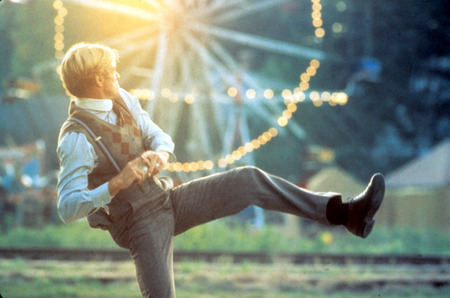
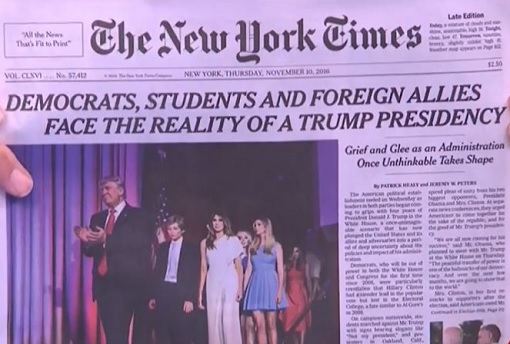
1. The Times spreads misinformation about the Wuhan virus while accusing a doctor of spreading misinformation about the Wuhan virus. Apparently the news media fearmongering about the pandemic will never end. In a front page article earlier this week, the Times told readers that the virus and its close family members have “now killed nearly one million people in the United States.” That’s an inflated figure, how much so we may never know. It does not distinguish between those who died from the virus and those who died with the virus” to the CDC, which set out to maximize fear of the infection so the government could take liberty-squelching measures and get away with it. The next day, the Times had another front page article that provided clues to the previous article’s deliberate deceit: Covid and Diabetes, Colliding in a Public Health Train Wreck. A married couple both got the virus; the woman recovered easily, the man is now confined to a wheelchair. He has diabetes, and the article tells us ” several studies suggest that 30 to 40 percent of all coronavirus deaths in the United States have occurred among people with diabetes.” Other studies find that that being obese my triple the likelihood of death during the pandemic. Here is the photo from the article:

I find the comparison with how the news media handled AIDs in the 80s fascinating. AID crippled the immune system, and sufferers were often killed by opportunistic infections that they would have fought off before acquiring the HIV virus. Yet these people were always described as AID victims, and their names added to the list of those who had perished “from” AIDS. But when a Wuhan virus infection adds to the health risks of diabetes or obesity, it’s the virus that gets credit for the death—because that’s what the the new media wants the public to fear. Continue reading

Comment Of The Day: “Additional Morning Thoughts: ‘Smith Vs. Rock At The Oscars'”

You never know.

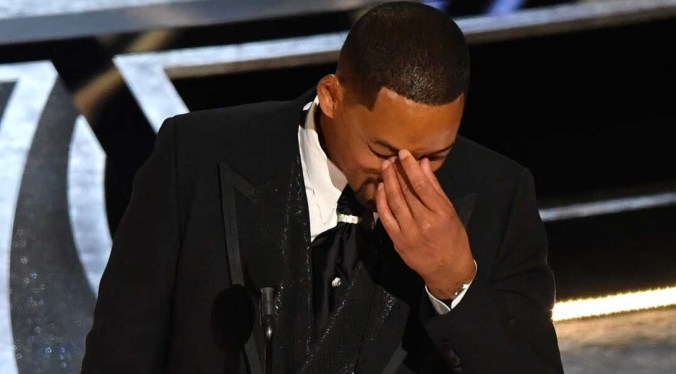
I assumed yesterday that I wouldn’t be writing anything about the Oscars, which have politicized and wokified the ceremony into irrelevance, and here we are with the third Oscars-related post, following my my earlier ones here and here. This, a Comment of the Day by one of Ethics Alarms’ most veteran (and most restrained) commenters, Tim LeVier, is also by far the best, delving fearlessly and perceptively into the ethical issues raised by Will Smith’s astounding physical attack on Chris Rock in front  of the Hollywood glitterati and an American TV audience of diminished but still significant numbers.

Before turning things over to Tim, I will mention here, because I may forget later, that my print version of the New York Times today included a story covering last night’s awards and broadcast that did not mention the Smith-Rock episode at all. How do you explain that? The story included Oscar fashions and the “historic” awards (apparently whoever plays Anita in “West Side Story” must get a statuette); it mentioned the three smug hosts’ infantile “Gay, gay, gay!” chant. But a major star attacking a major comic on stage in an iconic awards ceremony wasn’t deemed by the New York Times as “news.”

What a great newspaper. If anything called for the “Naked Gun” clip, this does...

Now, here is Tim’s Comment of the Day on the post, “Additional Morning Thoughts: ‘Smith Vs. Rock At The Oscars'”….

***

Honestly, I’m more interested in the public reaction than the event itself. People seem to have this immediate need for clear thinking and the next chapter of the story. It’s a problem in our society more commonly referred to as instant gratification. Most of the posts and hot takes are in this vein but with varying objectives.

The pearl clutchers are the worst. “Why didn’t a police officer go an arrest him?” “Why didn’t the show director eject him?” “Why didn’t security intervene?”

Police need a complaint. The director needs time. Security aren’t in on the performance and have a tough time knowing reality from fiction particularly when the assaulted party engages with the assaulter and the assaulter casually moves into position.

It will be interesting to hear from Glenn Wiess the director and any producer about the mental gymnastics they were doing to figure out how to proceed. In the moment, during that commercial break, I’m sure it was “Is everyone cooled down now?” “Can we get through the remainder of the program?” “Am I required to take action?” “What does Chris Rock have to say?”

It was an unprecedented moment for sure and I guarantee there are some figures having discussions this morning on how to treat this going forward. There will be bright line rules put in place for the future. Everyone has now considered this predicament. Should it happen again, that person will be ejected….and then we’ll get to hear about “double standards” and “hypocrisy”. Continue reading

Go Ahead, I Dare You, I Dare Anyone: Explain The Contrast Between The New York Times Reaction To The Jackson Hearings With Its Response To The Kavanaugh Hearings As Anything But Blatant Partisan Bias

I’ll admit it: I prepared for this yesterday. I’ll also confess that I post it in part to metaphorically rub the noses of the obstinate New York Times defenders who might visit here in their destructive denials of what is, daily, right in front of their noses.

As I knew it would as surely as I knew the Republican Senators would not do the ethical and statesmanlike thing and be polite, perfunctory and non-confrontational in their examination of Judge Ketanji Brown Jackson, I knew that whatever they did would be attacked by the Times and mainstream news media as racist and hyper-partisan. Thus I tracked down the Times’ story following Justice Kanaugh’s confirmation, from October 6, 2018. You can read it here: Half of the focus was on the fact that his confirmation made the Court dangerously conservative, and not on the Democrats’ despicable smearing of the nominee with a contrived accusation of sexual assault (that supposedly occurred before he attended college or law school, much less before he was a judge).

The other half concentrated on Kavanaugh’s angry attack on the authors of this character assassination attempt, which, sayeth the Times and the anti-Kavanaugh partisan professors it chose to interview, raised questions about his “judicial temperament.” This was the most disgraceful treatment of any Supreme Court nominee ever, before or since, yet no hint of that verdict appeared in the Times.

Continue reading

The New York Times Scandal Regarding The Mainstream Media’s Cover-Up Of The Hunter Biden Laptop Story Is Bigger Than The Laptop Story Itself

And, dammit, I don’t have the energy or clarity of mind to cover it properly right now.

I hate using clips and cuts from other sources to examine ethics stories, though it is a common technique around the web, perhaps the most common technique. I can do better, but as I have noted here several times of late, I’m shot full of pain-killers and antibiotics, and have approximately the mental acuity of Joe Biden along with the energy deficits of the United States, so I’m reduced to something less than my preferred methodology. Still, attention must be paid. As recently as last week, several counter-“echo chamber warriors were still making the absurd claim that the New York Times was not the outrageously biased Democratic Party propaganda organ it so clearly is, an assertion that literally requires that one stick fingers in both ears and hum like mic having a feedback crisis.

On March 17, the New York Times admitted that the Hunter Biden laptop report was accurate and genuine, more than a year after it allowed the Biden disinformation machine to falsely claim it was all “Russian disinformation.” This prompted a rare (but delicious editorial by the New York Post, which broke the story on October 14, 2020, while the 2020 Presidential election was up for grabs and got itself banned from social media for printing the truth. The Post’s victory lap said in part,

Forgive the profanity, but you have got to be s–tting us.

First, the New York Times decides more than a year later that Hunter Biden’s business woes are worthy of a story. Then, deep in the piece, in passing, it notes that Hunter’s laptop is legitimate.

“People familiar with the investigation said prosecutors had examined emails between Mr. Biden, Mr. Archer and others about Burisma and other foreign business activity,” the Times writes. “Those emails were obtained by The New York Times from a cache of files that appears to have come from a laptop abandoned by Mr. Biden in a Delaware repair shop. The email and others in the cache were authenticated by people familiar with them and with the investigation.”

Authenticated!!! You don’t say. You mean, when a newspaper actually does reporting on a topic and doesn’t just try to whitewash coverage for Joe Biden, it discovers it’s actually true?

But wait, it doesn’t end there. In October 2020, the Times cast doubt that there was a meeting between Joe Biden and an official from Burisma, the Ukrainian gas company for which Hunter was a board member.  “A Biden campaign spokesman said Mr. Biden’s official schedules did not show a meeting between the two men,” the Times wrote, acting as a perfect stenographer. Yet in the latest report, published Wednesday night, the Times said the meeting likely did happen. Biden had attended the dinner in question. Funny how this works when you don’t just take someone’s word for it.

In the heat of the presidential race of 2020, the Times never missed a chance to cast doubt on the laptop, saying the information was “purported” and quoting a letter from former Democratic officials who claimed — with no evidence — that it was Russian disinformation. As recently as September 2021, the Times called the laptop “unsubstantiated” in a news story.

Why was it unsubstantiated? Because of willful ignorance and the Times’ curious lack of curiosity. Hunter’s business partner Tony Bobulinski came forward immediately after The Post’s reports and confirmed that the emails bearing his name were legitimate. The Bidens didn’t even deny it was true! They just deflected, with the media’s help, saying it was a dirty trick or not a story. Mostly, the press just ignored it.Now we’re 16 months away from the 2020 election, Joe Biden’s safely in the White House, and the Times finally decides to report on the news rather than carry the Biden campaign’s water. And they find that hey, Hunter Biden’s business interests benefited from Joe Biden’s political status to a suspicious degree. Perhaps this is a topic worthy of examination.

How did the Times “authenticate” the laptop? It doesn’t say. Unlike The Post’s reporting, which detailed exactly how we got the files and where they came from, the Times does a hand wave to anonymous sources. No facts have changed since fall 2020. They knew the laptop was real from the start. They just didn’t want to say so….

Twitter banned us for supposedly publishing “hacked materials” that weren’t hacked. The company’s CEO apologized, but by that point, they had accomplished what they wanted. Like the Times, they cast enough doubt to avoid making their preferred candidate look bad.

Readers of the Times have discovered in March 2022 that Hunter Biden pursued business deals in Europe and Asia, and may have leveraged his father’s position as vice president to do it. Hunter also may not have properly registered with the government or declared all his income. All legitimate topics of discussion about a presidential candidate’s family, no?

The NY Post’s obvious bitterness should be matched by that of fair, civically competent, objective citizens who don’t like the idea of elections being stolen and the public having the metaphorical wool pulled over its eyes. Continue reading

A New York Times “Best Version Of The Truth” Classic!

I was struck this morning by the presence of yet another Donald Trump-related headline and story on the front page of the New York Times. The phenomenon really is remarkable. The man currently holds no elected position; there is no campaign he is currently involved in; he has been banned from social media (no mean tweets or typos to mock!) and the last public incident he was even tangentially involved in was more than three years ago. In the Times’ features, op-eds and news stories, the paper does everything it can to minimize his importance; for example, the Times review of Bill Barr’s book describes Trump as “an ostentatious, thrice-married reality television star who bragged about grabbing women’s genitals.” (No bias there!) Why is such trivial figure still daily front page news?

I wish I had been counting the number of Trump-bashing stories and reports the Times has published over the period since he left office. Like the current House of Representatives witch hunt to try to find a way to prosecute Trump for a riot he neither directed nor called for (and that couldn’t have possibly benefited his interests), the Times’ choice to keep negative news reporting about him front and center can only be called obsessive partisanship and unethical journalism.

But that isn’t what’s most interesting about the story, headlined “How the Manhattan D.A.’s Investigation Into Donald Trump Unraveled.”

Continue reading

Ethics Observations On An Unethical NYT Column That Should Never Have Been Published About A Destructive Movement That Never Should Have Begun

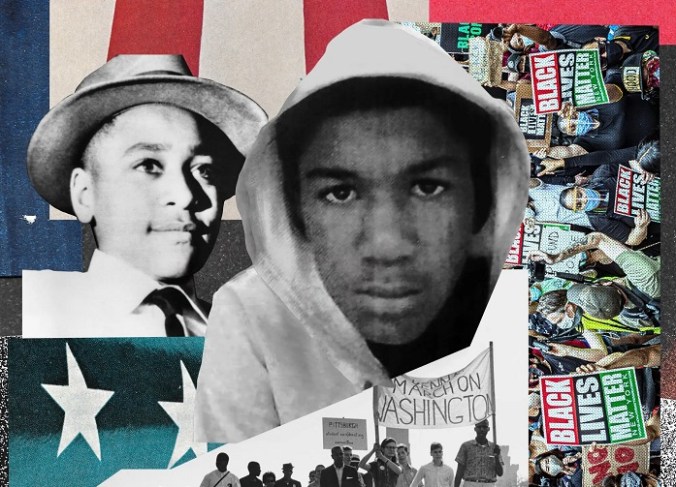
It is not exactly an upset that this column, as dishonest and irresponsible as any I have seen in the New York Times, which is saying a lot, came from the poisoned, bitter and unscrupulous mind of Charles M. Blow. Blow, the most consistently unethical of the Times huge reserve of unethical pundits, never lets fairness and facts get in the way of an anti-white, anti-cop, anti-Republican diatribe when he isn’t writing weekly Trump-hate pieces as he did for four years, nearly without pause. But this week’s column, outrageously coupling a photo of Trayvon Martin with Emmet Till, is special.

Let’s start with the headline: “Trayvon Martin Is Still Making
America Confront Its Original Sin.”
That’s a lot of misinformation for a headline. The “original sin,” of course, is slavery, this being the New York Times, where Nicole Hannah-Jones contrived the fake history-based “1619 Project” that claimed the United States was created to protect slavery. Slavery was neither original with the American colonies nor did American history begin with the practice, and Blow’s analogy (which was also endorsed by Barack Obama) with “original sin” is a core part of the anti-American theme of Critical Race Theory. That anti-white, anti-American tool holds that nothing the nation has done or can do will erase or compensate for slavery and its long-lasting side-effects, though perpetual white guilt and a special set of standards making African-Americans permanent beneficiaries of legal and society favoritism is absolutely required.

Continue reading

Addendum To “Since The Editor Of The New York Times Just Proved That He Doesn’t Comprehend Journalism Ethics…”

A relentless Times apologist–you know which one—chides me for leaving out this from his  interview in the New Yorker, which is the context for the “version of the truth” gaffe, when Baquet said the quiet part out loud (if the Times-enabler hadn’t begun his complaint with “Um,” I might have let it go):

The system of “objectivity” (and I know that’s going to be a bad word) was designed to create a system—Wesley Lowery is right when he describes that—in which the organization’s job was to make sure that whatever your perspective was it didn’t get in the way of reporting the truth. I believe in that very strongly. That’s not the job of every institution. But the job of the New York Times should, in the end, be to come out with the best version of the truth, with your own political opinion held in check by editors and editing. Not everybody believes that, but I believe that. And I think that if you come to work for the New York Times—if you really want to work for the New York Times—you have to embrace that, because that’s what the New York Times is.

In fact, I intended to include that outrageous and insulting lie, but felt it would have just muddled the more important point of the post. (That, and the New Yorker site blocked my access unless I subscribed…) Continue reading

Since The Editor Of The New York Times Just Proved That He Doesn’t Comprehend Journalism Ethics, I Guess It’s Time To Explain It….

Past time, in fact. Some Ethics Alarms readers don’t comprehend it either, but they aren’t editing the so-called “Newspaper of Record.”

Dean Baquet, who is soon retiring as the Times editor-in-chief, and not a moment too soon, dropped this verbal smoking gun during an interview in the New Yorker:

“The job of the New York Times should in the end be to come out with the best version of the truth.”

No, he can’t be forgiven a “speako” on the fly: major media interviews aren’t like that. Baquet had an opportunity to fix that quote, but he didn’t. He didn’t because his ethics alarms, such as they are, didn’t twitch. That’s really what the Times editor, and his paper, and the vast majority of its reporters and pundits really think. The “best version of the truth” is, naturally, the version that serves the interests of the Times and its allies, because they know best.

Continue reading

Dear American Left, And With All Due Respect, Your Totalitarian Inclinations Are Showing…

The top featured letter to the editor today in the New York Times is from Big Brother-loving Richard Cantor:

Re “The Covid Policy That Really Mattered Wasn’t a Policy” (column, Feb. 7):

Ezra Klein’s insightful column points out that the root causes of our failure to deal with Covid adequately both nationally and internationally were more our lack of solidarity and our mistrust of government than policies. In other words, they were due to our social dysfunction.

That insight has profoundly negative implications for human survival that go well beyond Covid. It indicates that we are incapable of dealing with the much larger threats of global warming and devastation of the environment no matter what engineering miracles we discover, because we lack the solidarity and trust necessary to tackle those threats to continued human existence.

We are doomed not because we do not know what must be done; we are doomed because we will neither cooperate with each other nor support our respective governments to get it done. Mankind is now on its last merry-go-round ride and that ride is coming to an end much sooner than most people realize, not because we lack the knowledge to prevent catastrophe, but because too many people refuse to acknowledge the truth for very selfish and shortsighted reasons.

The most urgent things we need to do are to face facts honestly and start getting along with one another to deal with them.

It is astounding to me that anyone who has watched the last two years unfold could conclude that failure to trust the government was an existential problem, or that a solution to current challenges facing the U.S. is to trust the government more. Putting aside the observation that Ezra Klein, a pure progressive propagandist who eschews objective analysis, who started Vox and was also behind “JournoList,” a select Google group controlled by Klein and limited to “several hundred left-leaning bloggers, political reporters, magazine writers, policy wonks and academics,” has never issued an unbiased column not propelled by a leftist agenda in his life, the failure to see the government’s pandemic response as irrefutable proof that the government can NOT be trusted can only be called a fevered delusion.

Continue reading

Ethics Alarms On The New York Times’ “Most Important Debates” Of 2021, Part 2

Part I set some kind of Ethics Alarms record for reader disinterest, which I much admit, I don’t understand. These are all topics we have covered in some detail here over the last year, and the analysis of them by the alleged “newspaper of record’s” experts is, to say the least, perverse and revealing…yet the post’s first installment inspired just a single comment. Well, the Times’ take on the remaining issues are arguably worse. I find it fascinating, anyway. Here’s the rest of the highlights…

Can we save the planet?

It is embarrassing for a supposedly respectable news organization to frame an issue in such a hysterical and intentionally fear-mongering manner, which assumes one side of a debate is correct without reflection of nuance. The Times’ author on this topic, Farhad Manjoo, is a tech reporter, not an expert on climatology, so he has been given a platform to opine on something he doesn’t understand sufficiently to discuss reliably. On the topic of climate change, this is, sadly, typical. His article contains the kind of sentence midway through that would normally make me stop reading because of the bias, spin, hyperbole and mendacity: “During the Trump years — as the United States tore up international climate deals and flood and fire consumed swaths of the globe — unrestrained alarm about the climate became the most cleareyed of takes.”

There were no “climate deals,” just unenforceable virtue-signaling and posturing like the Paris Accords; the link between present day “flood and fire” and climate change is speculative at best, and unrestrained alarm is never “cleareyed,’ especially when those alarmed, like Manjoo, couldn’t read a climate model if Mr. Rogers was there explaining it. Then, after telling us that the Trump years were a prelude to doom, he says that since 2014, things are looking up. Much of what he calls “bending the needle” occurred under Trump.

Should the Philip Roth biography have been pulled?

This one is so easy and obvious that the fact that the Times thinks it deserves special attention is itself a tell. The answer is “Of course not!,” as an Ethics Alarms post explained. An absolutely competent biography was pulled by its publisher, W.W. Norton, never to be in print again, because its author, who had written other acclaimed biographies, was in the process of being “cancelled” for allegations of sexual misconduct toward women. I wrote,

“…[P]ublisher W.W. Norton sent a memo to its staff announcing that it will permanently take Blake Bailey’s biography of Philip Roth out of print, as a result of allegations that Bailey sexually assaulted multiple women and also behaved inappropriately toward his students when he was an eighth grade English teacher.

If that sentence makes sense to you, The Big Stupid has you by the brain stem.

It apparently makes sense to the Times, although its review of the matter doesn’t answer its own question. Why not? This is also obvious: as journalists, the idea that what a writer writes should be judged by what a writer’s personal life has involved is anathema, but the Times’ readers are so woke that the paper would dare not say so. Integrity! Continue reading