The Ethics of Cheering Alex Rodriguez

Poor Alex Rodriguez and his wife...

Poor, downtrodden, Alex Rodriguez and his wife…

Baseball’s most embarrassing super-star, the steroid cheat Alex Rodriguez, in playing for the New York Yankees while appealing his long suspension by Major League baseball. As he is unquestionably a repeat liar and a serial violator of the game’s rules against PED’s (performance enhancing drugs), as he signed a contract, in part generated by the results of his cheating, that will both enrich him by millions and handicap his team competitively while conferring few, if any benefits, as he would qualify, by most objective standards, as the antithesis of a sports hero, the fact that Arod, as he is called, still was cheered by a vocal minority in Yankee Stadium when he made his season debut this week is intriguing. What does this mean? Can it be ethical to cheer Rodriquez now?

These are deceptively complex and difficult questions. The threshold  issue is whether cheering or jeering any sports figure, or any public figure at all, is an act with ethical content rather than just a communication of an opinion. Is it conduct, or just “words”? I think, in the context of the Rodriquez situation, a sound argument can be made that it is conduct. Registering group approval or disapproval of prominent conduct by someone of status and influence is a crucial societal function in setting standards, registering disapproval, and prompting shame, regret, apology and reform—none of which, so far at least, seem to register with Arod.

That is pretty clearly what the boos convey, but what about the cheers? If the boos are ethical—they are if the disapproval is proportionate, rational, fair, and just—then are the cheers automatically unethical? Not necessarily. Here are some of the things those cheers could be expressing: Continue reading

Ethics Corrupter: Yankee Third Baseman Alex Rodriquez; Ethics Dunce: Yankee Manager Joe Girardi; Disgraced: The New York Yankees

Corrupted!

Corrupted!

Today, Major League Baseball announced that it was suspending Alex Rodriquez, the New York Yankees aging superstar, for the remainder of the 2013 season and the 2014 season for  using banned performance enhancing drugs, and impeding baseball’s investigation of his cheating. This was the climax (but not the end) of a long, drawn out, messy process and investigation involving a sleazy Miami drug lab, called Biogenesis, now closed down, which had records indicating that many professional baseball players had obtained banned substances.

Former National League MVP Ryan Braun (who I keep calling “Steve”) has already been banned for the rest of the year by the evidence obtained from Biogenesis records. The process has been marred by serial leaks from MLB  (unfair to the players involved, including Rodriquez) and ugly maneuvering between Rodriguez, who has been recovering from a serious hip issue, and the Yankees, who owe him approximately a gazillion dollars (thanks to an idiotic career contract signed in 2007 after he had already admitted to using steroids once), would like nothing more than for him to vanish in a puff of smoke and sulfur.

To explain the baroque ins and outs of baseball’s steroid wars, its player union relations, and the various intersecting agreements, special clauses and other things that have an impact on Rodriquez’s suspension would take too long here and would even bore the baseball fans. What you need to know now is this: Continue reading

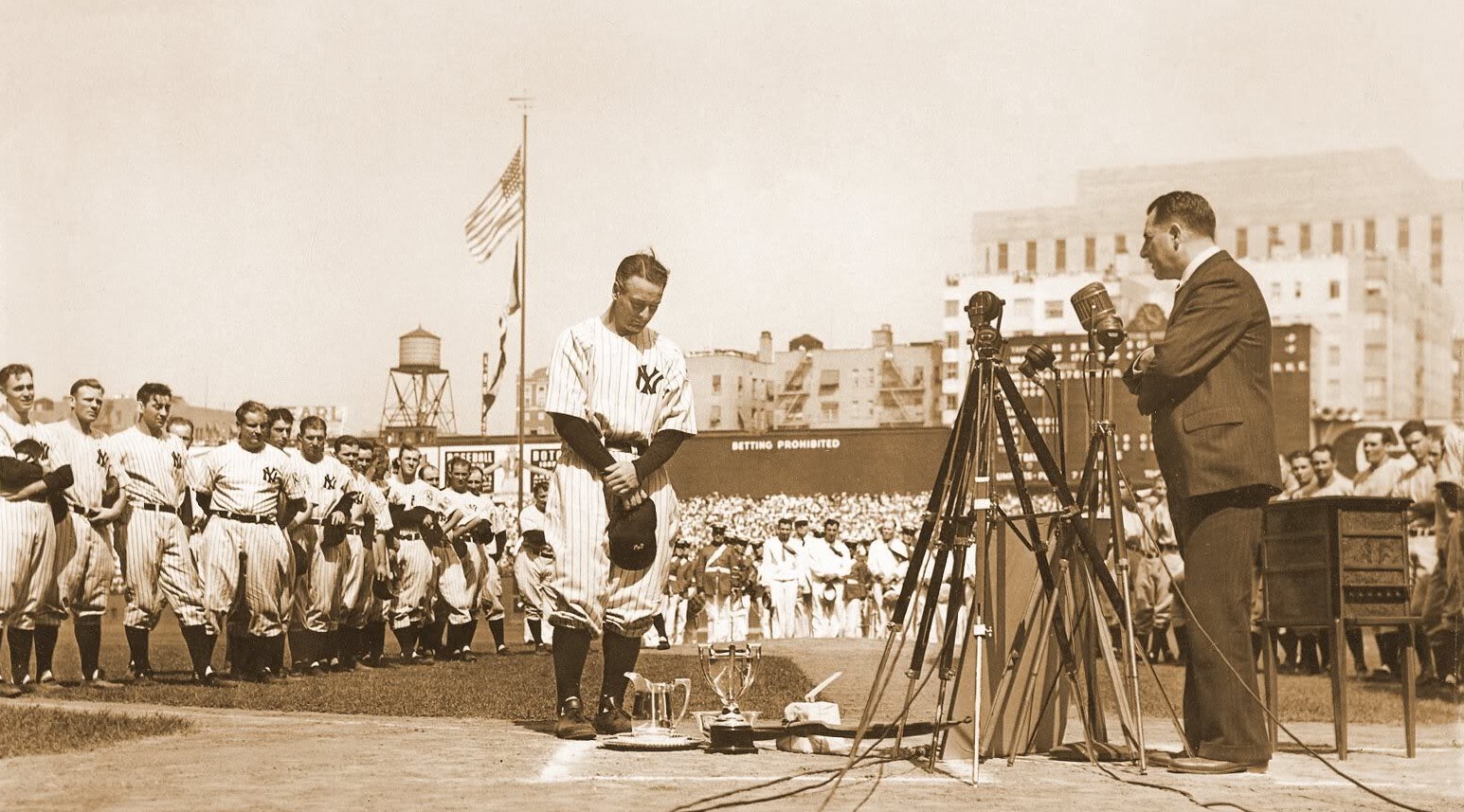
Ethics Quote Of The Day: Lou Gehrig, July 4, 1939

“Fans, for the past two weeks you have been reading about the bad break I got. Yet today I consider myself the luckiest man on the face of this earth.”

—-Baseball great Lou Gehrig, beginning his farewell speech to Yankee fans on July 4, 1939, as they filled Yankee stadium to say farewell to “the Iron Horse,” who was retiring from the game after being diagnosed with the incurable disease, amyotrophic lateral sclerosis (ALS), known forever after as “Lou Gehrig’s Disease.”

Lous Farewell

Lou Gehrig was only 36 years old when he learned that he was dying. ALS is a terrible wasting disease that has no cure, and in 1939 there was little treatment or assistance that could be offered to a victim as his body slowly ceased to function. It is an especially cruel disease for a professional athlete to face, and even more so one, like Gehrig, who was renowned for his endurance and seemingly indestructible body. When the progress of the illness, still then undiagnosed, caused Gehrig to remove himself from the New York Yankees line-up on May 1, 1939, it ended his amazing streak of 2,130 consecutive games, a baseball record that stood until broken by Cal Ripken, 56 years later.

Gehrig’s speech was from his heart. He was an educated and articulate man, but he had not planned on speaking at the moving ceremony to bid him farewell, as current former team mates, some of the greatest players ever to take the field, gathered to pay their respects. But the Yankee Stadium crowd of more than 60,000 began chanting his name, and after initially refusing, Gehrig moved to the microphone. Continue reading

Class Act: The New York Yankees

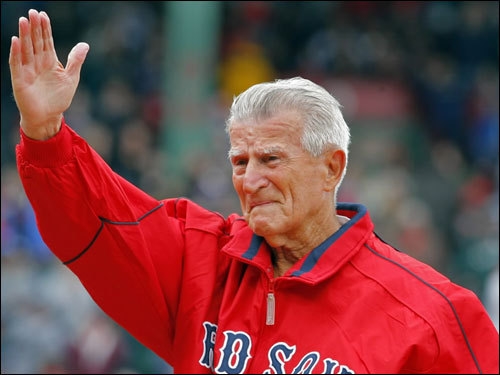
Johnny Pesky, 1919-2012

It’s not quite Ethics Hero territory, and if you know me or drop in to Ethics Alarms with any regularity, you know that as a lifetime Boston Red Sox fan (suffering through a miserable, injury-riddled season) I would rather perform gallbladder surgery on myself than say anything good about the New York Yankees.

I have to put away my partisan biases, however, at least momentarily, to applaud the generous and completely unexpected gesture by the team at tonight’s game, as the New York Yankees held a moment of silence in honor of Johnny Pesky, the Red Sox icon who died today at the age of 92. Continue reading

Ethics Hero: Yankees Manager Joe Girardi

I don't believe I'm posting this.

It has come down to the final day of the season, with the (or as they are known in these parts, MY) Boston Red Sox tied with the Tampa Bay Rays for the final spot in the American League playoffs. The Yankees have been dominated by the Red Sox, their long-time rivals, most of the season, while the Rays have been easier pickings. Lo and behold, it is the Yankees playing the Rays, in a game that could determine who will be the Yankees’ opponents in the League Championship series.

The game is otherwise meaningless to New York, which has already clinched a play-off berth. At this point, a play-off bound manager’s job is to decide which marginal players will be on the post-season roster, to line up his pitching, and to steer clear of injury. Asked if he was bothered that Yankee manager Joe Girardi was surely not going to oppose the Rays with his best team, Boston Manager Terry Francona shrugged. He had earned the right to use the game to prepare for the play-offs, Francona answered.

Yet here was Girardi, starting a team made up of most of his regulars, replacing his pitchers as soon as they were in peril, and generally managing the game against the Rays as if it were the final game of the World Series. Continue reading

A Batboy Sells Out His Heroes

Don't trust him, Roy...he's doing research for a book!

Luis Castillo became a batboy for the New York Yankees at the age of 15, and for eight baseball seasons shared the clubhouse with his hometown heroes. Now he’s cashing in, having written a tell-all memoir of his experiences  that dishes on Derek Jeter, Alex Rodriguez, Roger Clemens and others, all of whom trusted him to be fair, respectful, and discreet.

The recurrent theme from the media’s commentators, which I heard repeated on CNN this morning as it hosted Castillo in his book-hawking efforts (in this case he told an embarrassing anecdote about Yankee catcher Jose Posada) is that “Castillo is able to divulge Yankee secrets in his new memoir because he was part of the last group of batboys who did not have to sign confidentiality agreements.”

This is accurate, but wrong. It is also typical of what passed today as journalistic ethics. Continue reading

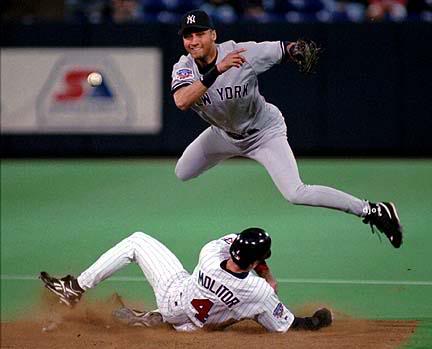
Ethics Hero: Derek Jeter

Roger Clemens is now on trial facing perjury charges. Barry Bonds has been convicted of obstruction of justice. Pacman Jones has just been arrested again; Tiger Woods hasn’t won a golf tournament since he was exposed as a serial adulterer. Through the travails and embarrassments of all of these and many more tarnished athletes who were once looked upon as cultural heroes, Yankee shortstop Derek Jeter has remained a constant— a team player, a clutch player, and an undeniably great player who has maintained his integrity and high values of competition and sportsmanship, never betraying the trust of his fans, his city, his team, or his game.

Yesterday Jeter reached 3000 hits, the watermark of the greatest of the greats, becoming the only lifetime New York Yankee to do so. He achieved the magic number with the flair only special players can muster, rising to a grand occasion like Ted Williams, hitting a home run in his final at bat, or Cal Ripken, marking  his passing of Lou Gehrig’s “iron man” record for consecutive games with a homer. Yesterday, Jeter passed 3000 in a rush, going 5 for 5 with the hit # 3000 being, yes, a round-tripper. Continue reading

Sigh. Cliff Lee Isn’t An Ethics Hero After All

I just pulled a post designating new Philadelphia Phillies pitching ace Cliff Lee an Ethics Hero “because more than any free agent sports figure in recent history, he displayed  integrity, common sense, sound life priorities and courage by deciding where he wanted to ply his trade based on factors other than the size of his paycheck alone.” Sadly, Cliff’s honor is hereby revoked. As the details of the deal he has agreed to with the Phillies emerged this morning, it appears that he did not, as reported earlier, forgo the opportunity to make an additional $50 million dollars by signing with the New York Yankees or Texas Rangers. Arguably, he took the richest deal.

Sigh. Continue reading

Stupid Unethical Reporter Tricks

If true, what Sports Illustrated reporter Jon Heyman is being accused of by his colleagues is a major ethics breach. The context—a free agent baseball star’s negotiation with teams competing with each other for his services—is a narrow one, but it challenges us to ponder how often the same dishonesty occurs in other news reporting contexts. Continue reading

Update: Derek Jeter Is Now A Full-Fledged Ethics Dunce

In an earlier post, I noted that Yankee legend Derek Jeter could do the right thing and accept the New York Yankee’s generous offer to pay him about twice what he’s worth, or become an Ethics Dunce (qualifications: greed, ingratitude, selfishness, unfairness, abuse of power ) by trying to extort the team for millions of dollars he neither needs nor deserves.

He has chosen the latter. Sorry, Yankee fans. Derek’s a Dunce after all.

I really thought he was better than this.