It’s the day before Christmas, and all though my house, there’s no sign of Christmas, but I’ve no right to grouse…
…because it’s my choice to be solitary and miserable this season. Two days ago my adult heir gratuitously sent me a hate bomb that was the most hurtful communication I have ever received from anyone. Given that this individual lives rent free in an apartment in my house and is over 30, I expected just a teeny-weeny bit of, if not gratitude, respect. Uh, no. This was only the latest joy-extracting event this holiday season: I also just wounded my leg (the same one that put me in the hospital in July and hasn’t healed completely yet), I was fired from my oldest ethics gig (as with the unexpected attack from downstairs, the reason is obscure) and the number of administrative Swords of Damocles hanging over my head since Grace died last year have increased rather than diminished, as was my grand plan for 2025. So I’m taking pleasure in other people’s Christmas, including yours. So you better have a great one. Tonight I expect to be playing bridge with three ghosts.
Or heading to the bridge, like George Bailey.
Below is an updated and rewritten version of my earlier post about my favorite modern Christmas song, “Do You Hear What I Hear?” When I still had a professional theater company to oversee, I wrote and directed a musical revue called “An American Century Christmas.” It was staged like one of those old-fashioned TV Christmas specials, with the set decorated like a Christmas living room, and celebrity guests arriving with gifts.
I stuffed everything I loved about the seasonal entertainment into the thing: the scene in “The Homecoming” when John-Boy gets his tablets from his father; the scene in “It’s a Wonderful Life” when George gets emotional realizing that he’s in love with Mary while talking to Sam (Hee-haw!) Wainwright on the telephone; Danny and Bing standing in for the Haines Sisters and singing “Sisters:” a reading of “The Littlest Angel;” the Peanuts kids and Snoopy decorating Charlie Brown’s sickly tree. I don’t think anyone liked that show as much as I did, but so what. It made me happy. Even remembering it now makes me happy.
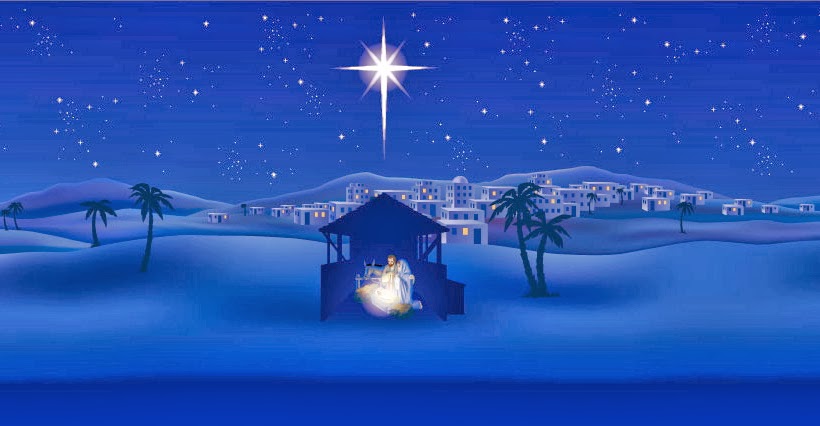
The first act finale was a rousing rendition of “Do You Hear What I Hear?” The song means a lot to me, and I’ll be blasting the original version tonight.
Last week’s forum was the deadest ever, so I’m hoping that injecting some holiday cheer into this one will spark more dialogue. After all, if the wind, a lamb, a shepherd boy, a mighty king and people everywhere can have a productive conversation, Ethics Alarms readers should be able to bring some Goodness and Light too.
As some inspiration, I’m reposting below the Ethics Alarms entry about the origins of my favorite of the modern—“modern” as in “post World War II”—Christmas songs, first sung by my favorite Christmas minstrel.
Bing Crosby memorably introduced this last of the popular Christmas songs to have a religious theme to most Americans in 1963, on this live broadcast of “The Hollywood Palace.” It was written in October of 1962 during the Cuban Missile Crisis, by a married songwriting team that wondered at the time if it would be the last thing they ever did.
Noel Regney, who wrote the lyrics, was born in France and had studied music at the Strasbourg Conservatory and at the Conservatoire National de Paris. When France was overwhelmed by Hitler’s troops in 1940, he was conscripted into the German army. As a Nazi soldier, he secretly joined the French underground and served as a spy, passing information along to the resistance. Once he led German soldiers into a trap where they were massacred by French fighters who cut them down in a crossfire. He was shot too, but survived.
After that traumatic encounter, Regney deserted and worked with the French underground until the end of the war. Continue reading →
It is slowly dawning on me that Christmas music, one of the annual joys of my childhood and perhaps yours, is in a perilous state, both culturally and aesthetically. The best of the songs musically are religious in nature, which means that schools won’t pass them along to their charges as happened routinely when I was a child, and even playing them on the radio is likely to be regarded as a religious statement. I just loved the music, as I think most kids would if they ever got the chance before they were brainwashed into believing the ancient songs were subversive.
A full court cultural press is underway to make those songs as rarely heard outside of church as hymns, and I don’t see the trend as reversible. One obvious bar to a comeback: current pop stars don’t have the pipes to sing most of them without causing a sound pollution emergency. Or, if one of the few singers who could actually hit the notes dared to cover a carol like “O Holy Night,” he or she would feel required to apply flourishes of the sort that make every rendition of “The Star Spangled Banner” at a major sports event an invitation to PTSD.
Even for the more secular Christmas repertoire, the clock is running out. The most listenable versions, and the definitive ones in most cases, are by performers of the past who are not just dead, but also long forgotten by the current culture. An hour of classic Christmas recordings on the radio is now a reminder of how old I am and close to joining great singers like Bing Crosby, Judy Garland, Andy Williams, Nat King Cole, Jo Stafford, Burl Ives, Gene Autry, Frank Sinatra, Dean Martin, Elvis—dead, dead, dead. I guess Brenda Lee is still alive, so “Rockin’ Around The Christmas Tree” is a little less depressing, but it’s a minor classic at best. It’s gotten so bad that when I hear “The Little Drummer Boy,” I find myself wondering if the whole Harry Simeone Chorale is dead too—Harry died in 2005, and the recording is 56 years old, after all.
Meanwhile, our post-modern culture is sneering at the whole idea of Christmas songs, and Christmas itself. Most modern Christmas songs either are making fun of Christmas, about sex, or just lousy. The tradition is being undermined in more creative ways, too: this week I watched a 2012 straight-to-video movie called “12 Disasters of Christmas,” based on the loopy premise that “The Twelve Days of Christmas” was really a coded recipe for stopping the 2012 apocalypse predicted by the Mayan calendar. “The Mayans knew that the knowledge would have to be preserved for centuries, so they devised a song that would carry the secret and would be passed on and learned by children for generations,” explains the old codger who’s figured it all out. (But why would they choose such a monotonous and stupid song?) Come on, guess: How does the “Chosen One” stop the end of the world?[Answer below.]*
The movie is on to something, though. The Christmas songs that have the best chance of persevering though this age of cynicism and cultural illiteracy may be those that either tell a story or that have an interesting one related to their creation. The simple and beautiful tune of “Silent Night,” for example, as one of those films they used to show in school assemblies every year before some anti-religious hysteric sued, was composed for guitar in response to a Christmas Eve crisis for a small church in the Austrian alps in 1818: the church organ wasn’t working. I have found that Irving Berlin’s “White Christmas” affects me far more deeply since I learned that the Berlins’ infant son died on Christmas day, and that while his children celebrated Christmas as a cultural holiday, Berlin and his wife did not. They spent each Christmas after their son’s death in mourning. The song is a wistful remembrance of a happier time that the composer will never experience again.
Maybe another Christmas song will persevere if its origins are remembered; I was reminded of its history this week as a result of the thaw in U.S. relations with Cuba. Though my wife hates it, the song is one of my favorites, perhaps because it brings back warm memories: I watched the song’s first national broadcast with my sister and parents, and the Marshalls bought the recording the next day.
It was 1962. Noel Regney and Gloria Shayne were a husband and wife songwriting team of modest success. They were saddened by the lack of any spiritual content in popular Christmas songs then; imagine what they would think today.
Like all Americans, they were petrified during the thirteen days of the Cuban Missile Crisis, when the world stood on the brink of nuclear annihilation. As the crisis intensified, Regney found himself inspired to write down a simple poem with a Christmas theme. (Later, the couple would say that neither of them could ever sing the song through, because of the strong emotions it recalled.) When the nation could finally take a deep breath of relief as the threat ended, Gloria devised a melody for her husband’s words, though he had always been the composer when he and wife wrote songs together.
The result of this unique variation on their collaboration was recorded before the end of 1962, but it wasn’t until the following year, when Bing Crosby sang the team’s creation live on ABC’s “Hollywood Palace,” that it became widely known. The song written during the Cuban Missile Crisis became a best-seller, Crosby’s last hit Christmas record, and also the last popular Christmas song to have a religious theme.
It was, and remains, a prayer for peace.
____________________________
* By finding and wearing FIVE GOLDEN RINGS, of course!
 Ethics Alarms