Comment of the Day: “Two Mothers, Young Love and Deception”

Lianne Best, who writes a weekly newspaper column about the challenges of a working wife and mother, weighs in with the alternative point of view regarding my post about a friend’s handling of her daughter’s boyfriend’s deception. I was afraid someone was going to write this, because I find the argument persuasive and it makes me doubt the wisdom of my advice. Still, I think I support my friend’s decision not to blow the whistle on the boyfriend, primarily because he’s 17, not 15. By 17, a child is engaged in an ongoing controversy about autonomy, trust and boundaries; the boyfriend is accountable for defying his mother, but it is his life and I would grant him the right to make his own mistakes, if mistakes they are, without my active interference. Lianne is persuasive, however…and she has a teenage daughter and son of her own:

“I like the advice … but because the horse has already left the barn far behind.

“I am actually pretty horrified that Julia is actively participating in and abetting the subterfuge. Even if she doesn’t agree with Ishmael’s mother’s rules (and let’s note they could be his father’s rules too; and maybe his church’s rules, and his culture’s rules), that doesn’t mean she should be actively plotting to subvert them.

“In this instance were it my own daughter, I would NOT take the decisive action of contacting Ishmael’s mother, but NEITHER would I allow him to spend the night there, and help my daughter make up stories and situations to enable the relationship. She’s happy? Please. Teenage female happiness is tenuous and temporary at best. (Has anyone on here LIVED with a 16-year-old girl??) It’s one year, probably less, until Ishmael is 18. So much can (and will) change in that year! Until then, group get-togethers (movie dates and parties) should be fine. Continue reading

Ethics Challenge: Two Mothers, Young Love and Deception

A good friend—call her Julia— with a teenage daughter (she’s 16) recently  asked me for help with an ethical dilemma.

Julia’s daughter is quiet, seemingly conservative, and socially restrained. She has never had a boyfriend, and has been on few dates, until now. She has been seeing a young man—call him Ishmael— her own age (well, he’s 17) who seems to match her to perfection in every respect. He’s sensitive, polite, and witty,  and on top of everything, he’s really cute, the object of every one of her friends’ and rivals’ awe.

Of course, there is a problem. Ishmael’s mother is fanatically protective: he is not supposed to date until he is 18, and has to check in with her every hour when he is out of the house. The relationship with my friend’s daughter only exists through an elaborate subterfuge, involving complicit friends and relayed phone messages. Once, in order to facilitate a special date to go to a concert, Julia allowed the boy to sleep overnight (in the guest room), when he was supposedly staying a male friend’s house.

My friend wanted to know if she should tell the boy’s mother about his web of lies. A parent has a right to have his or her own rules respected, and not undermined by other parents. The Golden Rule, applied to Ishmael’s mother, yields a demand that she be told; Julia would want to be told if her child was systematically defying her.

On the other hand, she firmly believes that the mother’s restriction on her son are excessive, and she has never known her daughter to be so happy.  She is worried that informing the mother will cause a serious rift with her daughter, and perhaps worse. “What is the ethical course?” she asked me. “What should I do?” Continue reading

Comment of the Day: “The Atheist, the Graduation, and the Prayer”

Tgt, the Ethics Alarms resident atheist, backs graduating high school senior Damon Fowler, voting for “hero” rather than the jerk-in-training assessment of my original posts on the topic, to be found here and here.

“I think impeding the encroachment of religion into schools is important, especially when it is unpopular to do so. While Damon is not actually hurt from school backed prayer, some of the other listeners will be: anyone who gets the impression that the school and government back Christianity, anyone who feels they must believe to fit in.

“The danger in this prayer isn’t that Damon will be hurt or his rights violated. The danger is to the weaker people unwilling or unable to stand up against this behavior. The danger is to the children not yet graduated, that they will learn in an environment that sees a place for superstition and pandering at a ceremony that should be celebratory.”

More on “The Atheist, the Graduation, and the Prayer”

Damon Fowler, School Adminstrator-In-Training?

Either by design, bias, or because I was not sufficiently clear (always a distinct possibility), a lot of readers seem to have misunderstood the central principle in my post about Damon Fowler, the Louisiana high school senior who singled-handedly bluffed his school out of including a prayer in his graduation ceremonies. Let me clarify.

The post is only incidentally about atheism vs. religion. The ethical issue arose in that context, but it just as easily could have been raised in other circumstances. The ethical values involved here were prudence, tolerance, self-restraint, proportionality, consideration, generosity, and empathy. Fowler’s actions assumed that preventing what he believed was a violation of the Constitution’s prohibition on the government favoring one religious belief over another justified ignoring all of these. They don’t, and the same conclusion applies whether we are discussing a technical legal violation, a breaching of organizational rules, or personal misconduct.

Anyone who reads Ethics Alarms knows that I believe that the culture only becomes and stays ethical if all its participants accept the responsibility of flagging and, when necessary, condemning and stopping harmful societal conduct, as well as unethical personal conduct that will be toxic to society if it becomes the norm. Nevertheless, society becomes oppressive and intolerable if every single misstep, offense, violation, possible violation, arguable violation or mistaken judgment is cause for confrontation, conflict and policing, without regard for context and consequences. Indeed, much of the challenge in ethical analysis involves deciding what kind of misconduct matters, even once the question of whether something is misconduct has been settled. Continue reading

Ethics Quiz: Find The Tell-Tale Mistake!

Unfortunately, James O'Keefe is no Nellie Bly

Kansas City Star reporter Mary Sanchez has posted an excellent column entitled “James O’Keefe and the Ethical Bankruptcy of ‘Gotcha’ Journalism.” Outside of an unfortunate final “Let’s see some genuine evidence that NPR’s coverage is biased” conclusion (you mean, other than its choice of stories, its lack of ideological balance, Nina Totenberg, its treatment of Juan Williams, and its institutionalized positions on issues like Palestine, gun control, abortion,  and illegal immigration?), she makes a strong case. But her piece is marred by a tell-tale gaffe that makes me doubt her own ethical orientation.

Your challenge in today’s Ethics Quiz: Find it! It occurs in this section: Continue reading

Ethics Alarms Presents: The Top Ten Thought Fallacies That Undermine Our Ethics

Don't expect this list from Dave. ESPECIALLY not from Dave...

Today I’m teaching two ethics seminars for The Washington Non-Profit Tax Conference in D.C. One is on accounting ethics, the other is for lawyers. One segment in the accountants’ program involves the sub-conscious and genetically programmed human tendencies that can interfere with our better judgment and perceptions, warping our ethics, and causing our ethics alarms to sound faintly, if at all. There are a lot of them:  I have a list of more than thirty, and it’s growing. Here are my current Top Ten to be especially alert to, in your own thinking, and for understanding the behavior of others: Continue reading

A Shocking Farewell Confession From “The Ethicist”

In Randy Cohen’s farewell column for “The Ethicist” today—he was sacked by the new editor of The New York Times despite providing an entertaining, well-written and provocative column for many years— he makes a statement that I find shocking, and one that challenges the core assumption of this blog and indeed my occupation.

Writing the column has not made me even slightly more virtuous. And I didn’t have to be: it was in my contract. O.K., it wasn’t. But it should have been. I wasn’t hired to personify virtue, to be a role model for the kids, but to write about virtue in a way readers might find engaging. Consider sports writers: not 2 in 20 can hit the curveball, and why should they? They’re meant to report on athletes, not be athletes. And that’s the self-serving rationalization I’d have clung to had the cops hauled me off in handcuffs.
What spending my workday thinking about ethics did do was make me acutely conscious of my own transgressions, of the times I fell short. It is deeply demoralizing.

Amazing. Randy, we hardly knew ye, and we sure didn’t understand ye, either. How can someone possibly spend one’s working day “thinking about ethics” and not become more virtuous in his daily conduct? Continue reading

The Dilemma of the Legless High School Pitcher

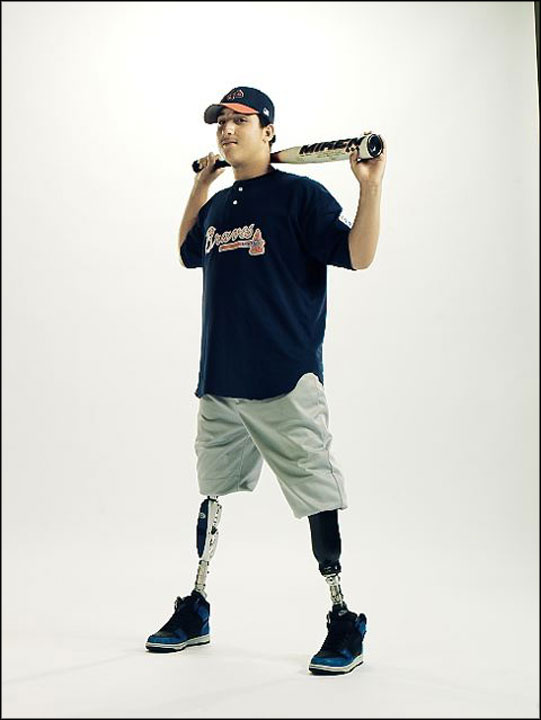
Seemingly an inspirational movie in the making, Anthony Burruto is a student at Dr. Phillips High School in Orlando, Florida. He has been playing baseball since he was 8 years old, despite the inconvenience of having both of his legs amputated when he was an infant. He plays the game on prosthetic legs that are all he has ever known, and does it well as a pitcher who can throw a mean curve and a fastball that has been clocked at 80 mph. This is Anthony’s sophomore year, and his goal was to play on Dr. Phillips High varsity baseball team this spring.

After two days of try-outs, Coach Mike Bradley cut him. Anthony’s metal legs, adept as he was at using them, made him too slow off the pitching mound when he had to field a bunt, said the coach, and teams would take advantage of his inability to jump off the mound quickly.

Sorry, kid.  Continue reading

Ethics Scoreboard Flashback: “Death on Everest”, a Real Life “What Would You Do?”

[ The discussion in the earlier post today regarding ABC’s revolting “What Would You Do?” convinced me that I should re-post this essay about a real-life “What Would You Do?”tragedy, which originally appeared on The Ethics Scoreboard in 2006.  Entitled “Death on Everest,” It has been lightly edited to bring it up to date.]

As 34-year-old mountaineer David Sharp lay near death on Mount Everest, over 40 other climbers trudged past him on their march to the peak. All had oxygen with them, and a few even stopped briefly to give Sharp a few breaths. But still they climbed on, and Sharp perished. His demise on May 15, 2006 has gone into ethics lore alongside the infamous death of Kitty Genovese on March 13, 1964. Genovese was murdered outside her apartment building in Queens while thirty-eight neighbors watched and did nothing.
The two incidents stem from very different causes, however. While Genovese’s death was fueled by urban fear and apathy, a mass failure of courage and the willingness to assume responsibility in a crisis, Sharp was the victim of that universal ethics-suppressant, the powerful non-ethical consideration. Continue reading

Ten Useful Ethics Alarms

It occurred to me, after more than a year, that I’ve never actually posted the basic ethics alarms we all should have installed and in working order, ready to sound when we are in, or about to be placed in, situations that are rife with ethics peril. Here are ten basic ones; there are lots of other useful ethics alarms to have, but these will serve you well. When one starts buzzing, it’s time to step back, thinks, and perhaps most useful of all, talk to someone whose ethical standards and reasoning you trust: Continue reading