The “Non-Violent Protest” Lie

Image:

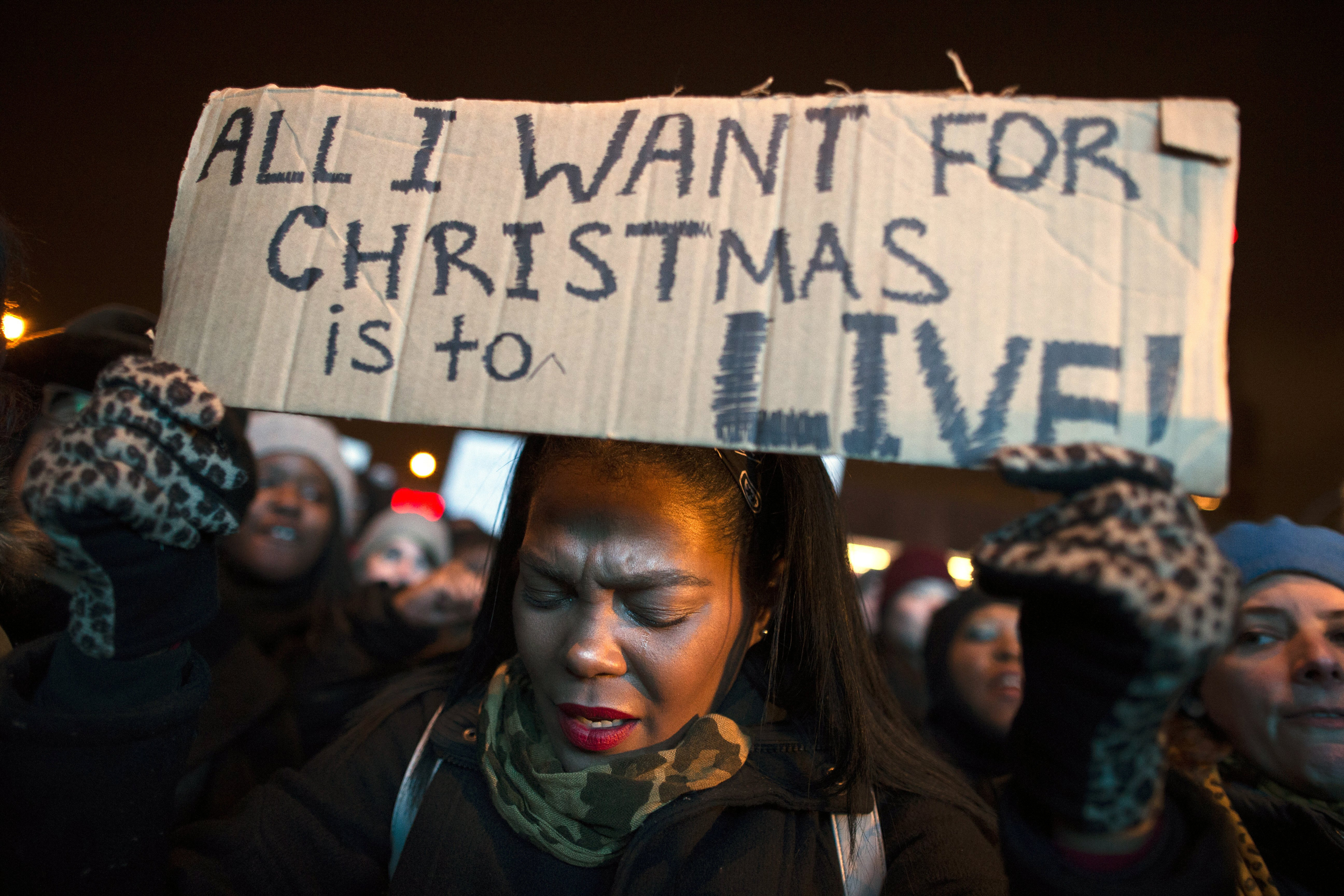
The leaders and participants in the protests related to incidents of excessive police force and violence—real, imagined, manufactured or equivocal—are creating an environment of racial distrust, fear and hate that cannot avoid  resulting in violence. Yet astoundingly, they not only deny the natural consequences of their words and rhetoric but feign indignation (and racism, of course) when the effort, long underway with the assistance of such accomplices as Eric Holder, Barack Obama and Bill De Blasio, is properly condemned as the dangerous and reckless attack on society that it is.

I am not sure which amazes me more: that demagogues like Al Sharpton would have the audacity to proclaim that his organized campaign of hate against police, accusing them of being both racist executioners and the embodiment of a racist justice system, or the caliber of pundits who have rushed to Sharpton’s defense. How can this be? African-Americans are told, for years now, that whites with guns are hunting them; that police are determined to kill them, that the justice system is rigged to let the carnage continue. The carriers of this message includes members of Congress, celebrities, civil rights activists, the Attorney General and the President of the United States. False accounts that support this gross characterization of  disparate incidents, each with unique circumstances, are turned into rallying cries, such as “Hands up! Don’t Shoot!”  The left-biased media openly endorses the narrative, which says that black Americans are being hunted coast-to-coastby an armed force, determined to kill their children.

But the protest is “non-violent.” Continue reading
American Lessons from the English Riots

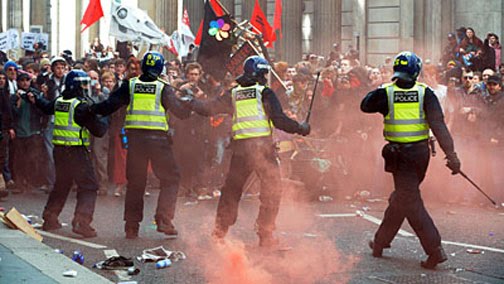
I am going to refrain from joining the ranks of amateur psychologists trying to identify the “root cause” of the English riots. People of any age or economic status who riot are, it is fair to say, assholes, like lesser social miscreants such as vandals, computer virus inventors, Leroy Fick and Pastor Terry Jones. If I were convinced that these riots were in response to necessary government cutbacks in social programs, I would have something arguably useful to say, but that doesn’t seem to be the case.

There is no question, however, that in allowing the riots to go on so long and harm so many citizens, businesses and homes, the British government has failed one of its most basic duties. Great Britain has been the anti-gun zealot’s Nirvana for a long time: not only can’t citizens own guns for their personal protection, neither can the police. That can work, if the culture is reliably non-violent, and if social and community institutions do a good job making sure that the culture of non-violence is strong, self-reenforced, and deep.

Well, it isn’t, is it?

Continue reading

Comments of the Day: “Bully Ethics…”

I was in New York all day, and returned to find a plethora of excellent comments on the post, “Bully Ethics: Lessons from Casey the Punisher.” Two of the finest follow, and they go well together: Michael on the dilemma facing the bullied child, and Lianne on her family’s solution.

First, Michael:

“Bullies only understand violence. If you are being bullied, how can you stop it? Continue reading

Bully Ethics: Lessons From “Casey the Punisher”


Go get him, Ralphie!

The YouTube video of the tormented 16-year-old Australian student who provides a surprise ending to a 12-year-old bully’s fun at his expense by suddenly slamming the younger boy to the ground—breaking the bully’s ankle in the process— has set off an international debate that could help clarify some important ethical dilemmas regarding bullying, or muddle them further.


The video shows a heavy teen, one who classmates say has been bullied by other children for years, enduring repeated punches by a smaller student as his humiliation is being videoed for posterity. Then, emulating Ralphie’s sudden rage against the evil Scut Farkus in one of “A Christmas Story’s” iconic scenes, he suddenly fights back…and how. Continue reading