What’s Up, Doc? UConn Med School’s Unethical, Woke, Ridiculous “DEI Hippocratic Oath”

Unbelievable.

In August of last year, UConn School of Medicine’s class of 2028 became the first to recite a newly revised version of the Hippocratic Oath:

“I will strive to promote health equity. I will actively support policies that promote social justice and specifically work to dismantle policies that perpetuate inequities, exclusion, discrimination and racism.”

No, this is not a sick joke. No, I am not making this up. Yes, our institutions of higher education really are in the clutches of maniacs who think this kind of indoctrination is part of their job.

Continue reading

Incompetent Elected Official of the Month: District 7 Boston City Council Member Tania Fernandes Anderson

Ohhh, yeah, Boston must have high expectations for THIS City Council member…

Back in the Home of the Bean and the Cod, where of-color Mayor Michelle Wu held an apartheid Christmas Party to which no white officials were invited, (in case you’re curious, yes indeed, Mayor Wu has attributed Claudine Gay’s demise at Harvard to “racial bias”), newly elected city councilor Tania Fernandes Anderson has to retake her oath of office after a video was circulated on social media showing that she neither said the words nor raised her right hand during this week’s swearing-in ceremony.

Fernandes Anderson was instructed by both City Council President Ruthzee Louijeune and the city’s law department to retake the oath, both verbally and in writing. The do-over was supposed to take place at 9 a.m. today, but though City Clerk Alex Geourntas arrived to swear in, she wasn’t there. The District 7 councilor’s staff told Geourntas at around 11 a.m., and again shortly before 1 p.m. that she was on her way, but Fernandes Anderson eventually called in at 3:15 p.m. to say she wouldn’t make it.

Continue reading

Labor Day Ethics Quiz: The Dr. Seuss Oath

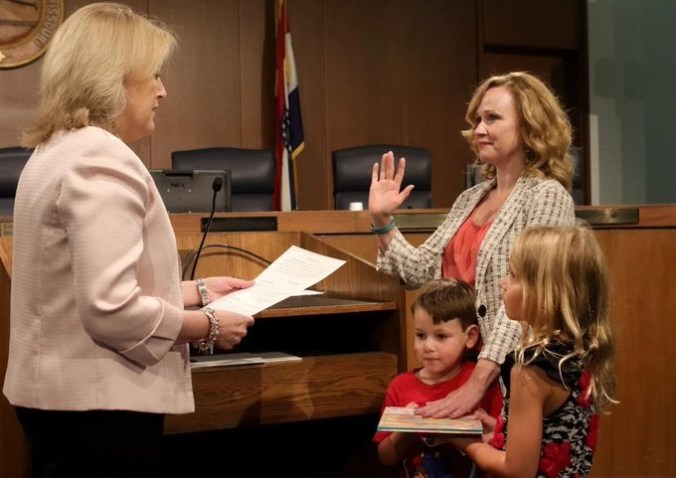
Conservative writer Megan Fox was left sputtering with indignation after learning that a Missouri councilwoman, Kelli Dunaway (D…of course), took her oath of  office with her right hand on a Dr. Seuss book. “Just because we’ve done things the way we’ve always done them is no reason to keep doing them that way,” she told ABC News.

Good point! Let’s try taking the oath using a hunk of cheese next time!

The particular children’s classic Dunaway chose for this solemn ritual was “Oh the Places You’ll Go” which, ironically, we recently defended here from the accusation that it was racist.

Fox:

“One can only hope that choosing to make a mockery out of the serious pledge to protect and defend the Constitution will be the catalyst to take her to a new place in the next election–the private sector…Meanwhile, real satirists over at the “Babylon Bee” are suffering trying to come up with something weirder than this to report. No wonder Snopes can’t quit accusing the Bee of trying to sound like real news. The real news is insane.”

Is it?

Your Ethics Alarms Labor Day Ethics Quiz is…

Is it unethical–disrespectful, irresponsible, dishonest— to take an oath of office on a children’s book?

I think I’ll wait for some responses before I give my answer…but I have one.

Saturday Morning Ethics Warm-Up, 1/5/19: Bait And Switch, Inconvenient Honesty, Fake News

Oh, good morning, I guess…

1. Once again: this should be illegal, because it is unconscionable. Recently re-elected Rep. Don Marean, a multiple term Maine state legislator from York County, announced that he was leaving the Republican Party to become an Independent.  In a Friday text message last week, he said that “out of respect” for House Republicans  he would not  comment on the resaon for his decision and would let it “speak for itself.”

It does speak for itself; it tells us that Marean is an unscrupulous, liar who gained election to office fraudulently. Elected officials who betray voters this way have an ethical obligation to resign from office and run again under the party affiliation they will stick to.

2. Keep it up! Please! The freshman Democratic House members, in a single day, managed to strip away the mask of the Democratic Party and expose more of the ugliness beneath than the party veterans deemed wise. Senator Kyrsten Sinema (D-Ariz.) refused to be sworn in with her hand on the traditional Bible,  and insisted that a law book be used for the purpose instead. She is a member of the party that has been questioning whether Catholics are fit to be federal judges, and the message that one party is openly hostile to religion is becoming clearer and clearer. The Bible is a moral/ethical document, and accepting it for the purpose of a binding oath should not be a problem for anyone unless they are trying to make a point. Using a law book is no more appropriate or meaningful than using a Harry Potter novel: oaths are declarations of duty, honesty and integrity, not law. Continue reading

Comment of the Day (2): “Ethics Hero: Dallas District Attorney Craig Watkins”

jag

The celebration here of Dallas DA Craig Watkins’ installment of an open file policy to ensure that crucial evidence that might exonerate a criminal defendant doesn’t get “inadvertently” left out of the material shared with defense counsel prompted this comment from one of the Ethics Alarms resident Marine vet, THE Bill:

“I’ve always wondered why the civilian courts haven’t adopted the military practice of having both the prosecutor and the defense council in the same office under the same command as they do in JAG. It would seem that this would eliminate the US versus THEM mindset.”

I responded…

“It’s because of loyalty and trust, Bill. The adversarial relationship and the appearance of such assures the accused that the two lawyers aren’t colluding against the defendant, and attorney-client confidentiality is surely at risk if there is not physical distance. That’s why in law firms a lawyer with a client who might be adverse to another lawyer’s client in the same firm has to be screened from substantive contact with the other lawyer.”

(I will note here that the last section about screening is an over-simplification of a very complex and confusing issue, as when and if screening is permitted varies state to state, and in many cases still isn’t enough to deal with an unwaivable conflict of interest.)

texagg04 then added the following discussion of the cultural differences between the military and civilian America, and how this informs the differences between the ways the respective systems deal with criminal prosecutions.

This is an appropriate place to salute tex, who is among the most prolific, serious and vital Ethics Alarms commentators. As his comments are often in an advocacy or adversarial mode rather than an expository one, his percentage of  officially recognize commentary excellence is less than it should be considering the consistent quality and frequency of his participation here. He has long made Ethics Alarms better and sharper, if perhaps scarier for first time swimmers in these waters, since thanks to tex (and others), the tide is swift and merciless.

I hope he realizes how much I value  and appreciate his thoughtful and vigorous contributions.

Here is texagg04’s Comment of the Day on the post, “Ethics Hero: Dallas District Attorney Craig Watkins.”

There is a presumption given the weight of military Commissions combined with the added weight of the Oaths of Office, that barring any obvious corruption, the officers in charge are not corrupted. Whereas in the civilian world, the presumption that so much burden lies on the state and the accused’s innocence until proven guilty, that even a hint of amiability between defense and prosecution is enough to worry about corruption. Continue reading

Ethics Over Compliance: The Dutch Banker’s Oath

bankers oath

“Professional ethics” is a never-ending battle between compliance and ethics, between rules and penalties on one side, and principles and values on the other. Compliance is easier: all you do is tell people with rules and regulations what they must or can’t do, and promise that there will be consequences if those rules are violated. For ethics to work, people actually have to understand ethical values and be committed to living by them in a professional context.

Compliance has little to do with ethics. Jack the Ripper will follow rules if they are clear, if he knows he’ll get caught if he violates them, and if the punishment when he does will be  harsh enough. That won’t make him ethical. In fact, compliance–rules-based professional conduct control—is often antithetical to ethics. Rules and laws are merely a challenge to the type that Oliver Wendell Holmes called “The Bad Man”-–which includes bad women—to find ways to do things that are wrong but that avoid violating rules sufficiently to justify punishment.  This is why most compliance codes have language in their introductions noting that it’s impossible to make a code that will cover every wrong someone can think of, so ethics are important too.

Pure compliance-based systems don’t improve ethical conduct. The financial collapse in 2008 was largely caused by financial manipulators operating in the grey areas of the rules and laws—that’s why so few of them could be prosecuted. In politics, The compliance mindset is extremely convenient for clever liars and cheats like the Clintons, which is why Hillary could try to explain her e-mail shenanigans by saying that “I fully complied with every rule I was governed by (heh-heh-heh!).” Unethical people will always find ways to get around rules. Ethical people, in contrast, barely need rules at all.

Another benefit of ethics over compliance is that ethics rules–compliance codes—have to be long and detailed, otherwise it’s too easy for Clinton-types to find loopholes, though they usually will find some anyway. Ethical values, on the other hand, can be stated very simply. An ethical employer thinks, “Hmm, that intern is cute, but I am married and have duties of loyalty and honesty to my wife and family, and it would be an abuse of power and influence as well as irresponsible for me as a leader to have an affair with someone under my supervision in the organization.” The Bad Man thinks, “Wow, she’s hot; my wife won’t care as long as I’m not caught; getting a hummer isn’t considered sex where I come from, and there’s nothing that says a President can’t fool around!” For the former, “A leader should not have sex with subordinates” is clear as a bell; his values tell him why. The latter, though, is thinking, “Hmmm. How can I get around this? That rule says “should” but not “shall”— that’s good. No punishment is specified. Sounds like more of a guideline than a rule. “Sex”—that must mean sexual intercourse: great! Lots of wiggle room there. And “subordinate”—is an intern really a subordinate? And I bet I could argue that this is personal, not official conduct. All good…now where’s that cigar?

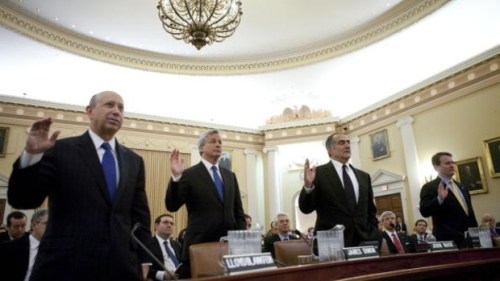
Invoking ethics rather than compliance is a new oath required by the Dutch Bankers Association. It could be printed on a postcard, and if a banker is ethical, it is all he or she needs:

I swear within the boundaries of the position that I hold in the banking sector…

…that I will perform my duties with integrity and care;

…that I will carefully balance all the interests involved in the enterprise, namely those of customers, shareholders, employees and the society in which the bank operates;

…that in this balancing, I will put the interests of the customer first;

…that I will behave in accordance with the laws, regulations and codes of conduct that apply to me;

…that I will keep the secrets entrusted to me;

…that I will make no misuse of my banking knowledge;

…that I will be open and transparent, and am aware of my responsibility to society;

…that I will endeavor to maintain and promote confidence in the banking system.

So truly help me God.

And if a banker isn’t ethical,

it won’t matter anyway.

__________________________

Pointer: Legal Ethics Forum

Sources: Bloomberg, The Conglomerate

Graphic: Bloomberg

Incompetent Elected Official of the Week: U.S. Rep Rubén Hinojosa, D-Texas

The mind of a Congressman.

Nine term U.S. Democratic Rep Rubén Hinojosa was asked about the Second Amendment at a political debate this week with his opponent, Republican businessman Dale Brueggemann. His response:

“There are so many people in Washington who come and talk to us about the Constitution and the rights that they want kept sacred and that not do anything about them. That we not change them. That we not amend them. And I can tell you that — I’m drawing a blank on the Second Amendment, but I think it’s the weapons, isn’t it? The NRA?”

He thinks it’s “the weapons”?

Yikes! Continue reading