Ethics Quote of the Week: Ann Althouse

“The silent sadness of the CBS newswoman’s face at 0:29… hilarious. So funny that these newsfolk don’t activate actorly skills to project the appearance of professionalism and neutrality.”

Attorney/blogger Ann Althouse, commenting on the doleful expression on CBS newswoman Norah O’Donnell’s face after the report that the network’s focus group of undecided voters scored last night’s debate a victory for Mitt Romney.

The video:

Althouse’s observation is perceptive, as hers often are. Although many studies have found that the facial expressions, body language and vocal inflections of broadcast news journalists influence audience perceptions and opinions, and carry at least as much potential for bias and slanted reporting as the news content itself, few of O’Donnell’s colleagues, if any, make any effort to ensure that these non-verbal communications are objective as a matter of professionalism and fairness. This is because broadcast journalism has largely abandoned fairness, objectivity and professionalism as priorities or industry standards. Continue reading

The AP’s Revolting Romney Photo: As Low As It Goes

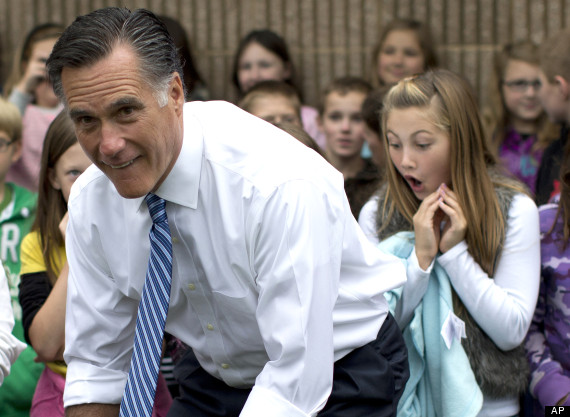
The AP has apologized for running this misleading, undignified, offensive photograph of Mitt Romney, suggesting that he was happily mooning a shocked girl. In fact, he was in the act of sitting down for a photo, and the girl was showing surprise that the presidential candidate would be sitting next to her.

Apology not accepted. Continue reading

9 Tips For Ethical Debate Watching

The hype and predictions about tomorrow night’s first debate between Mitt Romney and President Obama are already unbearable. Yet the debates will be worth watching, and could do this revolting campaign a lot of good, if we can discipline ourselves to watch it ethically. This is harder than it sounds.

1. The most important aspect to ethical debate watching is resolving to be fair. That means don’t do your own “spin”: force yourself to be equally critical of both candidates. There are no villains in this election, much as it has been framed that way by the two parties. Neither has a nefarious objective; both are dedicated public servants and loyal Americans. If you don’t believe that, you probably shouldn’t watch the debates at all.

2. Look for honesty, and be grateful for it. I will give points to any candidate that admits a mistake, gives credit to his opponent, state that he doesn’t have all the answers, acknowledge that there is merit in some of what the other candidate suggests.

3. Look for dishonesty, and be critical of it. Are his answers evasive? Does he quote false statistics? Is he making promises he can’t keep, or has no control over whether he keeps them or not? Is he trying to mislead the ignorant and gullible in the audience? Do you trust him?

4. Watch for signs of character, good and bad. The debate isn’t scripted, which means that we have a rare chance to see the human beings (maybe) rather than the facades. Are they arrogant? Nervous? Disrespectful? Rude? Dispassionate? Impulsive? Cocky? Are they respectful? Fair? Reasonable?  Gracious?

5. Ignore the practiced zingers and the style points. Don’t be overly impressed with recitations of facts, names and numbers: both candidates are smart and do this well; so can many people you wouldn’t want in the White House on the best day of their lives. This is a crisis for each of them; the stakes are huge. How do they handle it? Are they cautious? Reckless? Unprepared? Impulsive? Brave?

6. Try to ignore whether you like either candidate, but rather examine about whether they can be persuasive to others. Try to adjust for your biases.

7. Be open to having your mind changed. The hardest task of all.

8. After the debate is over, make up your own mind before you listen to any of the partisan analysts. All Republicans will say Romney won; all Democrats will say Obama won, except pundits who want to stand out as the “objective” ones. Most of them are calculating too. Confirmation bias operates in overdrive in such events: the partisans really see it the way they want to. Ignore them. Don’t listen to them. How did you feel about the debate? That’s all that matters. Nobody knows how you should react to it better than you do.

9. Watch it. This is important, and we are lucky to have the system we have, as rotten as it often is.
Exposing the Fact Check Game

Ethics Alarms generally doesn’t deal in links alone, but I just had the experience of working for several hours on an ethics issue only to see an excellent post on the same tipic pop up on my computer screen, rendering my work both moot and inferior.  James Taranto, the sharp, funny, perceptive Wall Street Journal political blogger and wag  has long been fuming about the bias and incompetence of so-called “fact-check” features, as have I. He has never before done as thorough an analysis of their performance, however, as today, and it bears reading.

Taranto is a conservative, and the charge of leftward bias accompanies his commentary, but I don’t see how it could be otherwise. If there is a right-leaning fact-check feature, I haven’t encountered it. I continue to respect the Annenberg Foundation’s Factcheck.org, as it does the best job of controlling its own liberal bias and generally avoids the devices Taranto flags in his article. Still, its bias is often detectable, as I told its managing editor a few years ago when she addressed a luncheon I attended. She denied it; I had examples. She was not happy with me. Continue reading

Most Deceitful Magazine Name of the Year: “Newsweek”

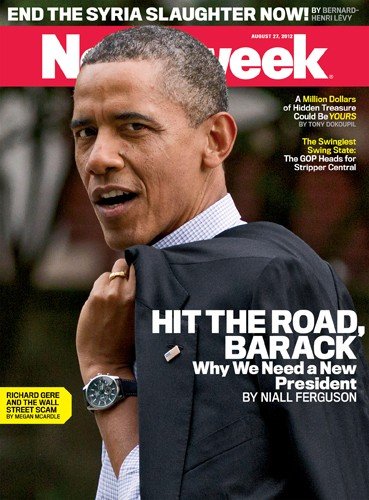
With its current, shocking, attention-seeking and pathetically pandering cover story, Newsweek, once a respected name in news coverage, has officially jumped the shark and self-identified as chum. “Hit the Road, Barack” the cover shouts, in a lame spoof of the classic Ray Charles song. The subtitle: “Why We Need A New President.” Naturally, the Daily Beast, which, like Newsweek, is a left-leaning newsy thing owned by Tina Brown, plugs the issue as its #1 event.

Here is what makes the cover significant: it shows that there is no longer even a pretense of integrity in the business of journalism, only show biz, shock, and tabloid tactics. Newsweek, in its recent incarnation, if it stood for anything other than the demise of weekly news magazines in the internet age, stood for the deification of Barack Obama,  fairness and facts be damned. During the 2008 campaign the magazine ran so many beatific photos of the candidate on the cover that it became laughable and monotonous. Since the election, Brown has stocked the magazine’s  pages with Obama-worshipers who had to turn in their independent judgment and objectivity at the door. The Daily Beast is a bit more diverse, but still hits the same mind-blowing notes of partisan fantasy. Beast regular Peter Beinart pronounced the election a guaranteed stroll for Obama months ago. Michael Tomasky, who also stalks the pages of Newsweek, recently wrote that an Obama landslide was sure thing, so undeniably successful has his term been. The red meat Blue crowd laps it up; never mind that such articles have the approximate enlightenment value of being hit over the head repeatedly with a 9-iron. The President has now devolved into a mere prop for Newsweek to brandish in the pursuit of sensationalism. Remember the cover with Obama wearing a rainbow halo and being hailed as “the first gay President”? This has nothing to do with news. It is only about commerce. Continue reading

Why Journalists Can’t Shoot Straight

George probably wasn’t lying, but Bill sure was.

The issue in the Washington Post’s weekly Outlook section concerned the virtues and dangers of honesty in a Presidential campaign, a matter that interests me from the perspective of ethics, presidential history, and citizenship. Two Post reporters were given the assignment of creating sidebars to the main article, one on candidates who told the truth and were punished for it, the other on campaign lies that came back to haunt the Presidents involved.

These are not difficult assignments, by any means. Either would be a legitimate term paper topic for a high school senior’s history class; both would be rejected as a history major’s thesis topic as overly simplistic. Yet both Rachel Weiner and Aaron Blake botched their tasks, and would have earned D’s at best in high school history, and that’s only because of grade inflation. The reasons for their failures exemplify the inadequacy of the mainstream media for the job we need it to do during a Presidential election.

Continue reading

Comment of the Day: “Ethics Dunce: Animal Planet”

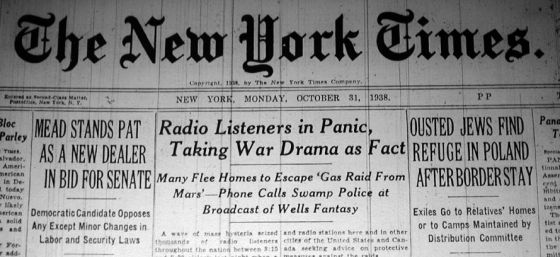
Arthur in Maine contributes the Comment of the Day, expanding on the predictable comparison between Orson Welles’ Halloween radio broadcast of his adaptation of “War of the Worlds,” which many gullible listeners believed was a real invasion, with the misinformation broadcast by Animal Planet in its recent fake documentary claiming that mermaids may exist. I have a few comments afterwards; meanwhile, here is Arthur’s interesting perspective on the post, “Ethics Dunce: Animal Planet”:

“I’ll give Welles a pass here. Because of my work, I am a student of the media (contrary to the assumptions made by a kindhearted poster on another thread).

“Welles was not irresponsible. He was groundbreaking in his art, using a new form of media in a way it had never been used before. The program was announced as a radio play; it was interrupted by commercial breaks, it ended in an hour, nothing about the invasion was carried on other networks, and even more to the point: the panic ascribed to “The War of the Worlds” broadcast never happened. Continue reading

Ethics Dunce: NBC’s Andrea Mitchell

Yesterday, Ethics Alarms discussed the deceptive editing of a Mitt Romney campaign video to make him look out of touch “with how real people live,” the attack line used so successful against President George H.W. Bush by Bill Clinton, after Bush had expressed amazement at grocery store price scanners. MSNBC host Andrea Mitchell cackled over the clip, which conveniently left out the point Romney was making. Naturally, other liberal flacks in the media picked up the theme, and cited the falsely edited segment.

Mitchell subsequently responded to complaints regarding the blatantly biased and unethical edit, and you can watch her response below: a huge shrug, and a dishonest “we didn’t have the chance” to play the whole thing (and instead decided to laugh at the Republican candidate for looking like a fool because we intentionally made him look like a fool.

Continue reading

The News Media’s Election Year Ethics, Part 2: NBC Does A Breitbart

MSNBC serves up a lie sandwich for its viewers, and Jonathan Capehart chows down.

The Washington Post’s Op Ed page, courtesy of the paper’s liberal blogger Jonathan Capehart, was mocking Mitt Romney—he’s an out-of-touch rich guy, you know—for “waxing amazed at what he just saw or who he has just met as if he were a traveler in a strange and distant land for the first time.” Wrote Capehart:

“…Romney added to his parade of wonder with this beauty after visiting a well-known roadside convenience store chain in Pennsylvania. ‘Where do you get your hoagies here? Do you get them at WaWas? Is that where you get them? Well, I went to a place today called WaWas. You ever been to WaWas? Anybody been there? Some people don’t like . . . I know, I’m sorry. It’s a big state divide. But we went to WaWas . . . I was at a WaWas. I went to order a sandwich. You press a little touchtone key pad.… You touch this, touch this, touch this, go pay the cashier, and there’s your sandwich. It’s amazing!’

“What’s amazing is that Romney is seeking to lead a nation he appears to be visiting for the very first time. Pity he won’t settle for a t-shirt instead of the presidency as his souvenir” Continue reading

Should Black Journalists Be Promoting Race Loyalty As a Virtue?

Go Team!

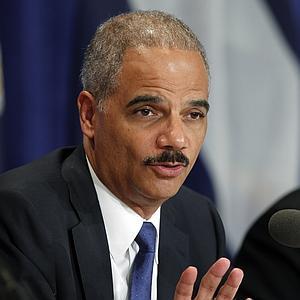
On Sunday’s “Washington Watch with Roland Martin” on TVOne, host Martin questioned several black journalists about the support shown by the Obama administration and black leaders for Attorney General Eric Holder, currently stonewalling Congress regarding a full accounting of what occurred in the “Fast and Furious” debacle.

“Many Republicans are calling on him to resign by demanding he release more documents, also in the Fast and Furious case,” Martin said.  “So, I want to ask the panel, is this White House doing enough to protect the attorney general? And also, where is black leadership? I mean, here you have Eric Holder, who has been — first of all, he was a high-ranking official in the Justice Department under President Bill Clinton. He becomes the black, first African-American attorney general. He has been very aggressive on many issues. But some folks are saying that look, he’s been taken to the woodshed and he is not getting the kind of support that you would think he would be getting.”

This is a disgraceful question that assumes that unethical conduct—racial bias— is somehow admirable. What difference does it make that Holder is the first black attorney general? How could that justify the media, the White House, black leaders or Congress treating  a black Attorney General any differently than they would treat a white, Asian or Cherokee Attorney General? Isn’t the issue whether he is a competent and effective Attorney General? Shouldn’t that judgment be race blind? Aren’t black journalists, like white journalists, obligated to keep race out of their assessments of how public officials behave? Continue reading