The Selfish Brother, the Stranded Passengers, and the Key To Ethical Problem-Solving

Carolyn Hax is an advice and relationship columnist, not an ethicist. Still, her ethical instincts, values and ethics problem-solving technique are impeccable. This week, she schooled her readers on the most important step in approaching any ethical dilemma: define the problem correctly.

An inquirer asked Hax,

“Am I being selfish in insisting that my parents can stay with us for only two weeks after the birth of our first child? My brother thinks so and isn’t speaking to me.”

As the letter proceeded, crucial details appeared.  The writer’s parents had suffered some kind of financial crisis that required them to move into the brother’s home. The brother’s wife is pregnant. It looks like the stay will be six months, and the brother wants his sibling’s family, new baby notwithstanding, to do its fair share. Two weeks out of six months doesn’t seem fair to Bro.

Hax nailed the problem with the letter immediately: Continue reading

CREW and the Problem With Partisan “Non-Partisan Watchdog Groups”

There is a new website called “CREW Exposed,” which is pretty brief and to the point: it highlights statistics showing the degree to which Citizens for Responsibility and Ethics in Washington (CREW), a government ethics watchdog that does not identify any partisan or ideological allegiances in its materials, concentrates its criticism, investigations, formal complaints and ethical exposes on Republicans and conservatives rather than Democrats and liberals at a ratio of about 5 to 1.

Continue reading

God, Beck, and the Confirmation Bias Trap

Hurricane Irene proves that God agrees with Glenn Beck. Glenn Beck says so, and he must be right, because God agrees with him. Hurricane Irene proves it.

Policy makers, decision-makers, journalists, and indeed all of us have an ethical obligation to be on the alert for confirmation bias, that insidious human tendency to interpret all external phenomena as confirmation of our established opinions and beliefs. Why do we have the obligation? We have it because confirmation bias makes us dogmatic, inflexible, close-minded, incompetent, and, in a word, stupid. Life can make us wiser, but not if we misinterpret everything so as not to disturb our most cherished certainties. Continue reading

Botching Big News: CNN and Fox Show How Far Their Profession Has Fallen

It was nearly 11 PM, E.S.T., and the sudden announcement that President Obama was about to make an important announcement “related to national security” had been hanging in the air for almost a half hour, as TV reporters, hosts and anchors speculated and waited. I was jumping back and forth between two networks when the news began leaking out about what the announcement would be: Osama bin Laden had been killed in a U.S. operation. The professional ethics on both networks promptly evaporated, as Walter Cronkite, David Brinkley and Howard K. Smith looked down from news anchor heaven and retched. Continue reading

Global Warming Advocates Flunk Ethics, and Credibility…Again

Never mind!

The evidence for global warming is pretty overwhelming, though still possessing some holes, and the likelihood is that much of the change is man-made. That’s about as far as the scientific evidence goes, however, without getting into serious controversy. The dire climate chance projections continue to be questionable at best, which poses problems for environmentalists who want to use climate change as a wedge to shut down industry, and alarmists who are frightened out of their wits by science they really don’t understand. Rather than demonstrate that the science is unbiased and credible by acknowledging the uncertainty, the global warming community, including elected officials with agendas, radical anti-industrialists, various research, political and advocacy groups and a depressing number of scientists who know better—and Al Gore…can’t forget Al!—have resorted to outrageous scare tactics and apocalyptic “projections.” Continue reading

Ethics Quiz: Find The Tell-Tale Mistake!

Unfortunately, James O'Keefe is no Nellie Bly

Kansas City Star reporter Mary Sanchez has posted an excellent column entitled “James O’Keefe and the Ethical Bankruptcy of ‘Gotcha’ Journalism.” Outside of an unfortunate final “Let’s see some genuine evidence that NPR’s coverage is biased” conclusion (you mean, other than its choice of stories, its lack of ideological balance, Nina Totenberg, its treatment of Juan Williams, and its institutionalized positions on issues like Palestine, gun control, abortion,  and illegal immigration?), she makes a strong case. But her piece is marred by a tell-tale gaffe that makes me doubt her own ethical orientation.

Your challenge in today’s Ethics Quiz: Find it! It occurs in this section: Continue reading

The NPR Ethics Train Wreck

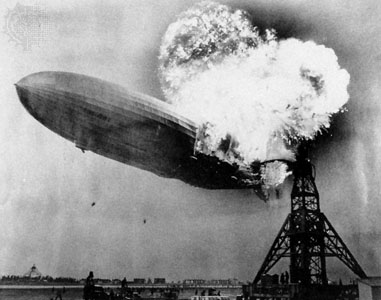
Ethics train wreck scholars take note: when an organization’s image and existence is based on multiple lies, an ETW is inevitable.

Oh NO! It's another Ethics Train Wreck!

National Public Radio is now in the middle of a massive, six-months long ethics train wreck that began with the hypocritical firing of Juan Williams on a trumped-up ethics violation. The disaster exposes the culture of dishonesty and entitlement at the heart of NPR, and by extension, the Corporation for Public Broadcasting. To the extent that their supporters blame anyone else, it is evidence of denial. This is a train wreck, however, and the ethics violators drawn into the wreckage are many: Continue reading

Fired for Applauding: The Warped Ethics of Sports Reporters

I missed this story, because I regard auto racing as interesting as beetle mating, but it is an important one.

"Yeah, I report on it, but I really don't give a damn."

Trevor Bayne won the Daytona 500 last month, and the unexpected victory of the youngest Daytona champion ever provoked audible glee in the press box. One of the reporters on the scene, Sports Illustrated freelancer Tom Bowles, explained on Twitter and his blog why his applauding for a sporting result, considered a cardinal sin in the sportswriting profession, was not a sin after all.

He was fired. Continue reading

Oscar Ethics: Was Melissa Leo’s Campaign Wrong?

On a difficult day, I am not up to writing about heavy ethics issues, so instead I will comment on an ethics controversy that is as inconsequential as possible—one involving the Oscars.

Melissa Leo, a front-running Best Supporting Actress nominee for her role in “The Fighter,” courted controversy by violating one of the Academy Awards’ unwritten rules: “Don’t promote yourself for an Award—it’s tacky!” Leo personally placed Hollywood trade ads showing her in full glamor mode, a sharp contrast to her character in “The Fighter.” The text simply said “Consider,’ then below that, “Melissa Leo,” and in small print off to the side, the web address http://www.melissaleo.com. She argued that she needed to promote herself because her competitors were getting the benefit of big studio publicity, while she was not. Continue reading

Ethics BELIEVE IT OR NOT!!! A NEW Missoula “List” Controversy, and It’s Just as Stupid as the FIRST One!

I am sorely tempted to just scream, “ARRRRRRRGGHHHHHHHH!!!!” and leave it at that.

This time around, the humorless, metaphor-challenged, unfair individuals and media outlets misrepresenting an innocent, non-violent, non-provocative use of the imagery of putting someone on a list doesn’t hail from the lunatic Right, like Ronbo and his Missoula Maniacs (an excellent name for a rock band, if you ask me), but from the Left….proving that when it comes to allowing ideological fervor turn your brain to mush and your ethics to applesauce, there are no partisan limitations.

But…you are not going to believe this, but it’s true…this one started in Missoula, Montana too, just like the Missoula Mikado Affair!

Get this:

But first: ARRRRRGGHHHHHHHHHHHHHHHHHH!

OK, I feel a little better. Let’s proceed: Continue reading