Politics in Elementary School: Unethical Always

Believe it or not, Yip Harburg is only 7 years old in this photo...

Third graders at Woodbrook Elementary School in Albemarle County, Virginia recently performed a song called “Part of the 99,” proclaiming their solidarity with the “Occupy” movement’s zeitgeist.  The song was part of a program sponsored by “Kid Pan Alley,” a children’s arts organization. The children worked with a facilitator to develop the theme and lyrics for a song, and that facilitator, who so far has not been identified, obviously, and I mean that in the “do these people really think we’re all idiots?” sense of the word, manipulated the process to produce an “Occupied Youth” moment. A blog got wind of it, and the criticism, richly deserved, erupted on the internet.

Incredibly, the school denies that any indoctrination went on, and claims that the children came up with the lyrics and theme on their own. As “who are you going to believe, me or your own eyes?” lies go, this one is superb. Here are the lyrics those third graders supposedly came up with by themselves: Continue reading

Occupy Manny

Sing it, Manny! "You load 16 tons, and what do you get? Another day older and a pro-rated 20 million dollars a year.."

I admit it: Manny Ramirez’s existence is a constant irritant to me. I regard him as epitomizing the worst tendencies of professional sports stars, and the attitudes of the most conscience-free who walk among us who make/ society and the culture a little bit worse every day. I was thrilled when his baseball career came to an appropriately sordid end, with his being caught using performance enhancing drugs and retiring o avoid having to serve his suspension, and nauseated when he announced the end of his retirement a few weeks ago, hoping to lure some addled team owner into paying him a million dollars or so to hit home runs and loaf.

Now, thanks to the research skills of baseball blogger Craig Calcaterra, my morning began by learning that Manny is also akin to the recording stars, Hollywood actors, rich politicians and toadying business executives who have tried to pass themselves off as Occupy Wall Street’s virtuous and harshly exploited 99% despite all reason and evidence to the contrary. In an interview in Spanish, Manny was explaining that he might have to travel to Japan to play ball again, and said,“Somos un obrero y donde quiera que haya trabajo hay que ir a trabajar;” in English: “We are the working class and must go where there is work.”

“Working class!” Continue reading

Ethical Quote of the Week: Boston Judge Frances A. McIntyre

Not speech.

“… while Occupy Boston protesters may be exercising their expressive rights during their protest, they have no privilege under the First Amendment to seize and hold the land on which they sit… ‘Occupation’ speaks of boldness, outrage, and a willingness to take personal risk but it does not carry the plaintiffs’ professed message. Essentially, it is viewed as a hostile act, an assertion of possession against the rights of another. The act of occupation, this court has determined as a matter of law, is not speech. Nor is it immune from criminal prosecution for trespass or other crimes.”

Suffolk Superior Court Judge Frances A. McIntyre, in a 25 page decision lifting the temporary restraining order that has blocked Boston officials from forcibly dismantling Occupy Boston’s  encampment by declaring that mere occupation does not constitute “speech” within the First Amendment.

Well, of course.

Occupying property, public or private, and preventing rightful owners or those who should also have access to do likewise is hostile, and has been from the beginning. “Boldness, outrage, and a willingness to take personal risk” pretty much defines all the Occupy movement has been able to communicate clearly, its more substantive positions being a matter of some dispute, or changing according to tactical needs.

Too many municipal leaders, their political biases and yellow streaks showing, have been reluctant to make this obvious and necessary point in order to toady to hard-left voting blocks and cynical Democratic operatives who think the Occupiers bolster the class warfare theme that seems to be the agreed-upon 2012 electoral strategy. But as public annoyance with the endless occupations wore on (and the novelty wore off), the yellow streaks worked against the demonstrators. They are going to have to find some other way of “speaking” besides sitting around.

A well-reasoned, articulate and rational position would be nice.

Now THAT’s Hypocrisy! OWS Protester Tracy Postert, Hypocrite of the Year

Tracy Postert, before and after. Integrity is not a job requirement on Wall Street.

Out of work Ph.D Tracy Postert spent 15 days at Zuccotti Park advocating revolution, condemning the corruption of Wall Street and decrying the moral bankruptcy of the capitalist system. Then she decided to hold up a sign advertising her degree and specialty while she was protesting the evil ways of the financial district. Wayne Kaufman, chief market analyst for John Thomas Financial Brokerage, saw her on the street, was intrigued by her background in biomedical science, and took her resume. Then he asked her if she’d like to come for an interview.

Kaufman offered her a job as a junior analyst evaluating medical companies as potential investments, and she accepted. Postert has now just completed her third week as paid employee of the system she was railing against on the street, studying for exams to be a certified financial analyst.

“I want to get a perfect score,” she told the New York Post. She gets a perfect hypocrisy score already. Imagine Martin Luther King agreeing to accept  a special membership in all-white country club, or taking a lucrative job as Sen. Strom Thurmond’s advisor on racial matters. Imagine Jane Fonda signing an Army contract to recruit soldiers for the Vietnam War. Wall Street and capitalism were the embodiment of evil and injustice for Postert, until she had a chance to move from the “99%” to the 1% whose values she had sneered at.

Is there anything wrong with working as a Wall Street analyst? Hell no—unless you have derided Wall Street analysts as the scum of the earth before you had the chance to be one. I don’t assume that Tracy Postert is typical of all OWS protesters, but I am confident she is typical of many of them. Not principled, but angry. Not idealistic, but envious. Not serious, but cynical. In other words, hypocrites, just waiting for the opportunity to show it.

Here is the irony. The fact that Wall Street would make a job offer to someone as ethically inert as this intellectually dishonest and feckless class warrior shows that Occupy Wall Street is not entirely wrong about the dearth of ethical values in the business community

And the fact that an Occupy Wall Street protester would accept such an offer shows that Wall Street may be right about the protesters.
Ethical Quote of the Week: Will Wilkinson

After the headlines and the drama, the real grunt work of democracy begins...or not.

“…now that the Occupy movement has succeeded in shining a spotlight on its primary concerns — rising inequality, political corruption, and debt peonage — Occupiers and their allies now ought to pull up stakes, give up their whimsically undemocratic semi-privatization of public spaces, and endeavor to reform public policy through the democratic institutions established to make the collective determination of binding public rules legitimate. Moving on to seek reform through established democratic channels would require giving up the insolent and frankly disrespectful presumption that these often radically left-wing congregations somehow represent not only a majority of Americans, but 99% of them. It would require Occupiers to square up to the fact that their movement’s implicit ideology is an ideology, and a minority ideology at that — just one among our society’s many rival moral and political worldviews. The intransigence of the Occupy movement suggests an unwillingness among its numbers to take seriously the fact of pluralism, and the corollary impossibility of consensus, which makes majoritarian democratic procedures necessary in the first place.”

Blogger Will Wilkinson, in his essay, “The Occupy Movement’s Enthusiasm and Contempt For Democracy” on bigthink.com (Think Big).

You can read the entire essay by Wilkinson, who is much more supportive of the Occupy movement than I am, here.

Good thinking, good work.

Unethical Website of the Month: “Occupy Black Friday” Facebook Page

The  intellectual, logical and ethical deficiencies of the tiresome “Occupy” movement are on full outrageous display on “Occupy Black Friday,” a Facebook page that is part of the effort to harm large retailers by interfering with holiday shopping. Naturally, as with segments of the “Occupy” groups that have advocated or engaged in violence, used anti-Semitic rhetoric, broken laws and made ridiculous statements, defenders of the movement will dismiss this as an aberration, not representative of the principles of the “Occupiers” as a whole. This is the group’s genius, or something: by being infuriatingly vague, it avoids accountability.

But an organization is accountable for the events it sets in motion, and the harm that its pretensions wreak. The idea promoted by the group’s Facebook page is for mobs of Occupiers to swarm stores during their deep discount sales today, interfering with shoppers and bringing commerce to a halt:

“The idea is simple, hit the corporations that corrupt and control American politics where it hurts, their profits. Black Friday is the one day where the mega-corporations blatantly dictate our actions, they say “shop” and we shop! Pushing their ledgers from red to black. This Black Friday, we will boycott all of the corporations that corrupt our government, and put profits before people.”

The idea is simple minded. Continue reading

The Pepper Spray Chronicles: So What’s the Ethical Way to Remove Protesters?

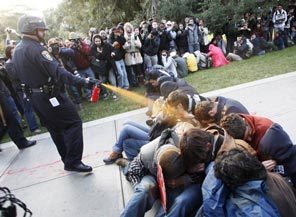
The flagging Occupy movement is gleefully—yes, gleefully—exploiting the University of California pepper spray incident for all it’s worth, which is fine. This is the game demonstrators play, and when their objective is, say, to overthrow a brutal dictatorship, the time-tested tactic of provoking authorities into apparent abuse is a wonderful way to attract support to a worthy cause. When the objective is to, uh, like say things aren’t as good as they might be and argue that the people working hard to make a living on Wall Street have too much and need to give more to the ones who spend all day drumming in parks, there lingers a legitimate question of whether the end justifies the means.

But I digress.

The police who pepper sprayed the passive squatters at UC Davis have been placed on leave, and you can bet that they will be defended to the hilt by the police union, which will try to show that they were following the book. “Heh! Heh! Gotcha! chuckle the Occupiers. It’s a good gotcha, to be sure.
The police over-reacted, regardless of what you are hearing from some experts. No doubt: it is a delicate situation, and no doubt (in my mind, at least), the protesters almost certainly were going to make the police do something that would look bad on TV, even when it was justified. But this wasn’t. Continue reading

Wild Card Ethics and Cultural Expectations

Bad ideas are contagious, especially popular ones.

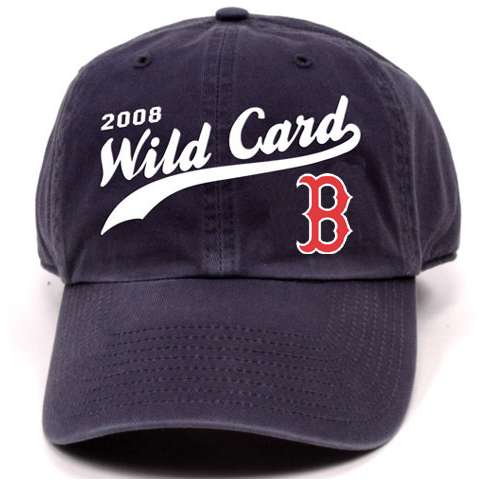
Major League Baseball just expanded the number of teams that qualify for post-season glory from eight to ten. Yes, there are ethical calculations involved in this, whether baseball cares or not. Supposedly, questions of fairness were part of the reason for the change, though I doubt it—in pro sports, the engine of change is always profit. And whether the change results in more fairness or less depends on what you consider fair—or perhaps whether you are sleeping intents in various U.S. cities.

Sports is such a big part of our cultural consciousness that what the National Pastime calls fair and just cannot help but influence cultural standards. Before 1969, there were two leagues of eight, then ten, Major League teams, and the two teams with the best records in each league met in the World Series. It was a simple meritocracy, with just 10% of the teams being allowed to advance after the regular season. Oh, there was always complaining about how the rich Yankees got into the Series more often than not, while the Senators, Phillies, Astros and A’s never did, but nobody camped out in the middle of Manhattan to protest baseball talent disparity. If you lived in one of the smaller Major League cities you just scaled back expectations, that’s all. And if, by some miracle, you won, then victory was all the sweeter, because you had bucked the odds by being harder working, stronger, better. Continue reading

Ethics Quote of the Week: Charlie Chaplin

I’m heading to New York City shortly, and will make an effort to check out first hand the state of Occupy Wall Street. The nationwide protest seems to be waning in both intensity and public support, despite some hopeful, futile voices (like the New York Times editorial page) who persist in claiming that its message is “important.”

I’m not denying that it could be. At this point, however, it is in danger of redefining itself as (or, in my case, confirming the diagnosis) a self-indulgent, expensive mess that never succeeded or even tried to articulate its goals clearly enough to avoid overtaken by the worst side-effects of such protests: violence, damage to property, threats to safety, and harm to innocent bystanders. Yesterday, for example, having failed to disrupt the operations of Wall Street, the New York contingent decided to disrupt the subway system—the mode of transportation overwhelmingly used by “the 99%.”

Stupid.

Words and clear thinking are not only helpful, but an obligation for those seeking social change.  As an example of how words can inspire, I offer this, the speech that Charlie Chaplin wrote and delivered at the end of his film, “The Great Dictator.” I am far from four-square with Chaplin’s politics, but he knew how to craft an inspiring rally to change—exactly what the “Occupy” should have done. Then, at least, we would recall it for what it aspired to, rather than all the annoyance and cynicism it launched. Here is a link to an editorially enhanced version of the scene and here is the text: Continue reading

The University of Illinois Law School Statistics Scam and the Responsibility of Being a Corporate “Person”

The scandal itself is self-explanatory. The ethical issue I am most concerned with is not, but it is more important than the scandals.

The University of Illinois has confessed that its law school reported and published inaccurate admissions data in six of the last ten years. An investigation determined that the law school reported false LSAT and GPA data for the class of 2008 and the classes of 2010 through 2014, and fabricated the acceptance rate data for the classes of 2008, 2012, 2013 and 2014, as a result of  both overcounting the number of applicants and undercounting the number of admissions offers the law school made. The purpose of all this, of course, was to enhance the school’s rankings to bring it better applicants, which translate into more successful alumni and bigger gifts.

Solely responsible for the deceptions, the school says, was Paul Pless, the law school’s assistant dean for admissions and financial aid during that period, who resigned last week. Naturally, the 114-page report concludes with recommendations to improve the school’s oversight and controls and ensure a “culture of integrity and ethical conduct.”  This will help persuade the American Bar Association, which is looking into the matter, not to punish the law school, since it has now seen the light…having been caught. Pless, you see, was most of the problem. Continue reading