Unethical Quote of the Week: Men’s Breast Stroke Olymipic Gold Medal Winner Cameron van der Burgh

“If you’re not doing it, you’re falling behind. It’s not obviously – shall we say – the moral thing to do, but I’m not willing to sacrifice my personal performance and four years of hard work for someone that is willing to do it and get away with it.”

—– South African Olympic swimmer Cameron van der Burgh, admitting that he cheated in his gold medal winning race because, you understand, everybody else cheats too.

Yechhh.
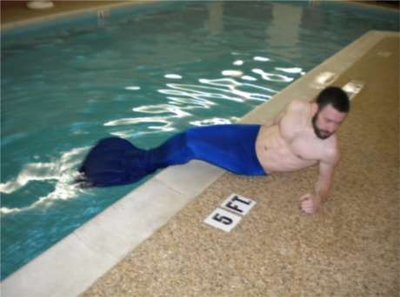
Maybe they won’t notice…

The commercialism is blatant, the nationalism is sickening, the warping of the lives of the young athletes as they prepare for the Games is disturbing. The one constant that has made the Olympics worth our attention is the opportunity to see great athletes in fair and intense competition with the most capable rivals in the world, and to see the best of the best triumph in the various sports by dint of superior effort, skill, training and character.

Who wants to see who the most effective cheater is? If you do, what’s the matter with you? The most disturbing aspect of van der Burgh’s admission is that there was no shame in it. He matter-of-factly explained that he cheated, how he cheated and why, and apparently believes that this doesn’t diminish his victory at all. And, also apparently, he’s right. Despite the fact that a gold medal winner blandly declaring that he cheated robs the Olympics of any pretense of integrity, it appears unlikely that anything will happen to the swimmer or his prize.

See? Cheating works!

And nobody cares!

Well, if the Olympics are going to stand for the cultural standard that cheating is acceptable as long as enough competitors do it, I have better things to do with my time, like making dust bunny sculptures under my bed. Just about everything we see and read about these days is corrupting and cynicism-producing; if the Olympics are just going to add one more toxic lesson to the array, what good are they? What’s the point?

Higher, faster, sneakier?

Wonderful.

_____________________________________

Pointer: Rick Jones

Facts: NBC

Graphic: Deviant Art

Ethics Alarms attempts to give proper attribution and credit to all sources of facts, analysis and other assistance that go into its blog posts. If you are aware of one I missed, or believe your own work was used in any way without proper attribution, please contact me, Jack Marshall, at  jamproethics@verizon.net.

 

Olympics Ethics, Fair Competition and Ick

Try as I might, I can’t find anything unethical about  the U.S. basketball team throttling Nigeria by the humiliating score of 156-73, the worst wipe-out in Olympic history.

Was the U.S. running up the score, which would be poor sportsmanship? No. As USA coach Mike Krzyzewski pointed out, he held back his best players once the outcome was certain. Every player he put in was hitting the basket with frightening consistency. Should the team have let up, gone through the motions, or allowed the Nigerian players some easy hoops? No. That would be an insult, and a breach of the integrity of the game. The U.S. Olympians had a duty to play their best. Continue reading

“Hard to Watch” Video: Responsible or Not?

Over at the Huntington Post, Jason Linkins praises the edict of NBC News chief Steve Capus to curb network Olympic coverage use of the video showing Nodar Kumaritashvili’s fatal luge run. “I’m glad this decision has been reached,” Linkins writes. “The video of Kumaritashvili’s fatal luge run is difficult to watch and I do not recommend that you do so. …Here’s hoping Steve Capus will remember having made this choice come September and break with MSNBC’s grim and pointless tradition of replaying the events of September 11, 2001 in real time.”

Linkins presumably regards Capus’s decision as “responsible broadcasting.” My question is, “What’s responsible about it?” Continue reading

Futile Ethics Lessons From the Luge

Long before Luger Nodar Kumaritashvili of the Republic of Georgia crashed and died on a training run there, Vancouver’s Whistler Sliding Centre, now the site of the Olympics luge, bobsled and skeleton competitions, had been the target of complaints, warnings and controversy regarding its safety. After the first international training event at Whistler in November 2008, the president of the luge governing body openly expressed worries over the speed of the track. Since then, there have been sufficient accidents on the track, not only in the luge, but also bobsled and skeleton races, that the fatal accident there could not fairly be called “a surprise.”  Just a  day before the Georgian was killed, United States luger Mark Grimmette was quoted as being concerned about the course’s speed, saying, “I think we’re probably getting close, too close, to the edge.” Later the same day, a Romanian luge racer was knocked unconscious during his training run. The frequency of crashes during the training runs last week were far above the norm.

Nevertheless, Olympic and luge officials chose not to make changes to the course that would limit the speeds in excess of 90 miles per hour that luge, bobsled and skeleton competitors were reaching, speeds beyond what they were used to, or had trained to handle.

And yet… Continue reading

Media Ethics and Haiti

  • Rebecca Solnit has written a powerful piece questioning the news media’s accounts of “looting” in Haiti. She argues that people in the midst of a disaster with a breakdown of infrastructure and government assistance are acting reasonably and justifiably when they take food and other necessities from abandoned stores. She believes that media accounts emphasizing looting warp the public perception of what is happening, vilifies the victims of the disaster, and prompts excessive measures against the “looters,” who are only trying to survive. She has a point. You can read her whole piece here.
  • There is something oppressive and coercive when so many networks and cable channels interrupt regular programming to carry a telethon, as they did last night. It turns an appeal for help into a demand for help. Continue reading