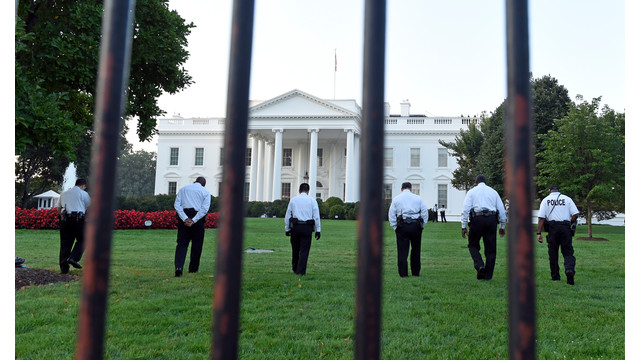
Update on the Secret Service: Mud

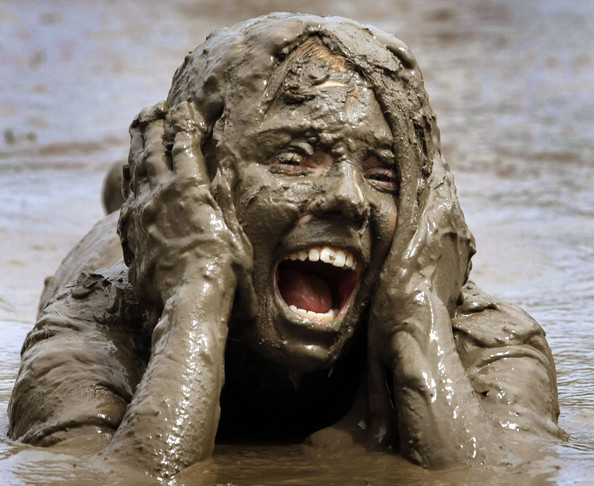
muddy

The Secret Service Director, Julia Pierson, resigned.

Because today’s news carried yet another tale of a dangerous botch by her agency, an episode in which the President was allowed to ride in a elevator with an unscreened individual who had a gun on his person, this looks like a final straw situation when no final straw was needed.

It was crucial that she be fired, by Obama, and that this be made clear, as well as why she was being fired: incompetence, poor performance by the Service, no trust of confidence by him, Congress or the public. This should have been conveyed immediately after the fence-jumper fiasco. If not then, immediately after Pierson’s embarrassing performance before Congress yesterday. The message that the President himself will not tolerate sub-par performance would be a welcome and encouraging one even as ridiculously late as that would be, six years into his Presidency.

But no. As usual, the Administration’s message, and values,  are as clear as mud. Homeland Security Secretary Joe Jeh’s statement announcement of the resignation was typical equivocal murk:

1. I have accepted Pierson’s resignation.

2. I salute her 30 years of service.

3. We are studying the fence-jumping incident.

4. Scrutiny “by a distinguished panel of independent experts of the September 19 incident and related issues concerning the Secret Service is warranted. The Panelists will be named shortly.”

5. “The Secret Service is one of the finest official protection services in the world, consisting of men and women who are highly trained and skilled professionals prepared to put their own lives on the line in a second’s notice for the people they protect. Last week, the Secret Service was responsible for the protection of the President as well as 140 visiting heads of state or government as they convened at the United Nations General Assembly in New York City. Likewise, in August the Secret Service handled the protection of 60 world leaders as they convened in Washington, D.C. for the African Summit. As usual, the Secret Service executed these highly complex and demanding assignments without incident. There is no other protection service in the world that could have done this.”

So if the Secret Service it is so good, and performed so well recently, why is the Director quitting? Why is a panel needed, if the agents are so well-trained and the agency performs so well?

Mud.

____________________

Pointer: Slate

Sources: Washington Post 1, 2
Will President Obama’s New Leadership Model Cripple U.S. Management Competence For Decades?

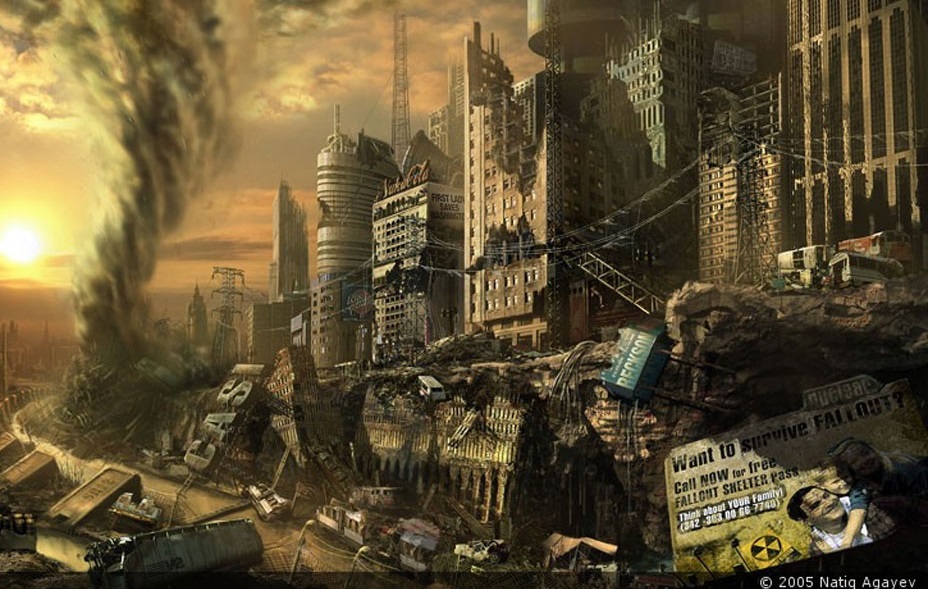
America in ruins

 It seems to be a distinct possibility.

The President of the United States is the culture’s most powerful, visible and influential leader. Like it of not, he is also a role model for leadership and management across society. He has the most responsibility, the largest organization to oversee, and the most vital interests at stake. The management and leadership techniques he uses necessarily set a standard others, especially young, inexperienced, aspiring leaders and management, will be encouraged to emulate.

What are they learning? To begin with, they are learning to accept a startlingly low standard for “confidence.”

The President has now issued two statements that he has “confidence” in the Secret Service. The assessment has special significance because the health and safety, the very lives, of the President, his wife, his young children and his staff is in the Secret Service’s hands, and the agency would seem to have demonstrated beyond all doubt that it is incapable of meeting any reasonable expectations or trust. We know that the agents are barely trained, and that they lack professionalism and self discipline. We know that agents availed themselves of prostitutes in South America, and got drunk on duty in Amsterdam. We know that  a gunman fired at least seven bullets that struck the upstairs residence of the White House in 2011, aided by a botched Secret Service response, and that just this month a deranged fence-jumper got into the residence and was running amuck before he was stopped.

The Service’s statement on that incident was jaw-dropping, saying agents “showed tremendous restraint and discipline in dealing with” an intruder who could have had a bomb or deadly intent. How could this President, any President, any leader, any manager, have “confidence” in a security force under these circumstances, with its own management displaying such a bizarre attitude?

Well, I don’t know. It’s a brand new paradigm, the most lassez faire, gentle, kind,empathetic and understanding, hands-off, no-fault, no standards, no accountability leadership style I have ever seen at any management level higher than a lemonade stand. I’m sure many members of the public, especially those who goof off at their jobs, steal supplies, file fake reports, arrive to work stoned, never finish assigned tasks and think they have a right to keep their jobs and paychecks no matter how useless they are, would love to have Obama as a boss. Such a boss would express confidence in the most obviously inept and untrustworthy employee imaginable, and apparently mean it. And never, never fire him. Continue reading

Making Us Suffer For Their Incompetence: The Secret Service and the Barn Door Fallacy

White House Security

A mentally ill veteran got inside the White House Friday. He could have had a bomb, or a gun, and the President and his family might have been targets. How did this happen? Mass incompetence and a break-down in security. Multiple “rings” of protection failed. Was it because the system was inadequate? No, it was because the Secret Service screwed up.

1. A plainclothes surveillance team stands guard outside the White House fence, and its job is to spot fence-jumpers and sound a warning before they go over. The team wasn’t paying attention.

2. Omar Jose Gonzalez climbed over the fence to the lawn, where a Secret Service officer was supposed to intercept him. Gonzalez got past him.

3.  At that point, an attack dog was supposed to be released to bring the intruder down. It wasn’t.

4. A SWAT team is next in the series of obstacles, but it was late to the party, trailing the intruder, and being apparently unwilling to shoot him as procedures dictate.

5. Gonzalez reached the White House door. A guard is supposed to be directly in front of the door. Not this time. (And still no fire from the SWAT team…I can’t imagine why a white SWAT team member would hesitate to shoot an apparently unarmed black man, can you?)

6. The door was supposed to be locked. Nope.

Of course, no system is better than the human beings working within it. Like so many agencies in the Obama Administration—the NSA, HHS, Justice, the IRS, the Veteran’s Administration, the State Department, Homeland Security, the GSA—the Secret Service had shown unambiguous signs of poor discipline, lax management and poor oversight, so its performance on this occasion should not surprise anyone, though it is cause for alarm. The Secret Service’s response to a fiasco of its own making is to place blame elsewhere, in this case, in the systems it didn’t execute properly, with new burdens falling on those who had nothing whatsoever to do their collapse.

The agency is floating a  proposal is to keep people off the sidewalks around the White House, to add barriers to the perimeter, and to screen visitors as far as a block away from the entrance gates. This is immediately recognizable as the Barn Door Fallacy, in which adopting excessive and  draconian measures that might have prevented an unusual disaster or near disaster is used by those responsible to distract from the real reasons for the event—bad luck, stupidity, incompetence—and make sure that what has already happened can’t happen again, with concern for the cost to others and other considerations being discarded entirely. Thus the fact that Boston’s Logan airport didn’t follow its existing security procedures and allowed planes to be hijacked by terrorists resulted in billions of dollars of national airport security and endless inconvenience for law-abiding passengers—to stop what had already occurred. Thus a deranged young man using an elementary school for a shooting spree was used to justify arguments to ban firearms from purchase by non-deranged, honest and trustworthy citizens. Now the fact that the Secret Service can’t perform the tasks they are supposedly trained to do—and an embarrassing episode arising from the Service’s procrastination in dealing with an existing inadequacy–is being used to continue the transformation of the nation’s capital into an eyesore of barricades being prowled by secret police, so a disturbed veteran who belonged in a mental hospital won’t elude agents, dogs and doors to burst into the home of the President. Continue reading