Ethics Hero: President Barack Obama

President Obama granted clemency to 231 deserving individuals, yesterday, the most individual acts of clemency granted in a single day by any President inU.S. history. He also issued 153 commutations, and has now commuted the sentences of 1,176 individuals, including 395 life sentences. The President also granted pardons to 78 individuals, bringing his total number of pardons to 148.

Good.

The pardon and clemency powers of the President are underused, and until the last two years, Obama underused them more than any modern President. Now, presumably in a last minute flurry to enhance his legacy, Obama has embraced these acts of mercy as one thing he can do that Donald Trump will not be able to reverse. Obama’s motives are irrelevant, however. The “quality of mercy is not strain’d…” and it also shouldn’t be criticized. We must assume that the beneficiaries of Obama’s mercy are deserving, and that there aren’t any Marc Rich-types in the group.

There is so much that is right with Obama’s commutations and pardons. They match the spirit and ideals of the season; they provide second chances to Americans who need them; it returns citizens to their families. Let’s hope that he has begun a permanent competition, and that every President will now strive to exceed the number of official acts of mercy of his or her immediate predecessor.

Thank-you, Mister President.

You just made the United States  a little more ethical.

A lot, in fact.
Comment of the Day: “Jonathan Montgomery: Victimized By An Unethical Tag Team Of A Vicious Teenager And An Officious Attorney General”

catch-22Reader John Robins provides additional, and depressing, perspective on the Montgomery case, discussed in today’s post, Jonathan Montgomery: Victimized By An Unethical Tag Team Of A Vicious Teenager And An Officious Attorney General. Here is his Comment of the Day:

“It gets worse than this, actually. Although everybody acknowledges that Montgomery is innocent, he must still report to a probation officer and must register as a sex offender until the Virginia Court of Appeals grinds its way through the Petition for Writ of Actual Innocence, which may take several months, and is being handled by the Innocence Project out of D.C. I know what went on in this case and what happened because my office was involved in the defense. Continue reading

Jonathan Montgomery: Victimized By An Unethical Tag Team Of A Vicious Teenager And An Officious Attorney General

What now qualifies as a rising star in the Virginia GOP.

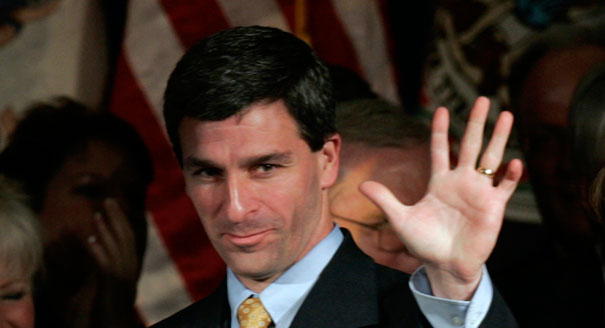
Atty. Gen. Cuccinelli: What now qualifies as a rising star in the Virginia GOP.

Jonathan Montgomery was recently pardoned by Virginia Governor Bob McDonald for a rape he never committed. This inherent contradiction—“We know you’re innocent, and we forgive you” —was made necessary by a sequence of events that could have been devised by Kafka, Stephen King or Mel Brooks, but unfortunately really happened. They happened because of two individuals who were absent the day basic ethics were handed out.

First and foremost in this wing of the Hall of Ethics Shame was Elizabeth Paige Coast, from the Tawana Brawley school of sociopathy.  When she was a teenager in 2007, her parents caught her surfing internet porn. To deflect their anger and avoid punishment, she concocted a story about how her sex drive had been addled as a result of being sexually molested when she was ten by a neighbor hood 14-year-old, Montgomery. She thought, since his family had moved away, that nothing would happen to him. Wrong. He was arrested and she testified against him to avoid telling the truth to her parents, putting him in jail for four years before she finally decided to recant her accusation. We are told that she has been charged with one count of perjury, and was fired from her job with the police department. Not enough, not by a long shot.

Then Virginia Attorney General Ken Cuccinelli decided to pick up where Coast left off. Continue reading

When Unethical Approaches Evil: The Clarence Aaron Pardon Fiasco

Clarence Aaron, waiting for justice

I read about Clarence Aaron four days ago. It has bothered me ever since. The short version of this horror story is that a young man, outrageously sentenced to three consecutive life sentences for a drug offense despite being a first offender, was poised to receive a pardon from President Bush but did not, because the Pardon Attorney charged with job of presenting the case to the President inexplicably left out critical  information that would have all but guaranteed his freedom. The attorney’s name is Ronald Rogers: he was the Pardon Attorney under Bush, and is still in that post today.

I have been trying to figure out what ethical breach would describe what Rogers did, a difficult task in the absence of an explanation from him. Was this incompetence? Laziness? Was it a lack of diligence—was he careless? Did Rogers sink Aaron’s case because he doesn’t like blacks, or doesn’t like drugs, or doesn’t like pardons? Does he lack empathy? Sympathy? A heart? Continue reading

Ethics Dunce: New Mexico Gov. Bill Richardson

From the “What was he thinking?” files:

New Mexico Gov. Bill Richardson says that he is considering whether to pardon Henry McCarty, a.k.a. William Bonney, a.k.a. Billy the Kid (1859-1871), because in 1879 one of Richardson’s predecessors, Gen. Lew Wallace (who, among other things, presided over the trial of the Lincoln conspirators, headed the military tribunal that condemned the Confederate commandant of the infamous Andersonville prison camp, and wrote Ben-Hur,)  reneged on a deal to grant Billy amnesty in exchange for some helpful grand jury testimony in the prosecution of vigilantes.

Of course, when Billy didn’t receive his pay-off quickly enough, he escaped from jail and killed two deputies in the process. He was that kind of guy. Continue reading