Flagrant Virtue-Signaling of the Year: CEO of Olympic Broadcasting Services Yiannis Exarchos

I’m sure glad I ignore the Olympics as the corrupt, greed-infested fiasco it had been for decades, because if I gave a rip, the Paris Olympics would have my head exploding more frequently than Old Faithful blows. The whole enterprise appears to be run by silly, incompetent, unethical bureaucrats and con artists.

Here’s a particularly nauseating example: the CEO of Olympic Broadcasting Services (OBS) Yiannis Exarchos decided to burnish his woke creds by telling reporters in Paris that his organization updated its guidelines for camera operators, most of whom are men, to inveigh against “sexist” portrayals of female athletes at the 2024 Summer Olympics. “Unfortunately, in some events they are still being filmed in a way that you can identify that stereotypes and sexism remains, even from the way in which some camera operators are framing differently men and women athletes,” Exarchos said, making no sense at all. “Women athletes are not there because they are more attractive or sexy or whatever. They are there because they are elite athletes.” Exarchos said that the problem primarily stems from “unconscious bias,” which leads to camera operators and TV editors favoring more close-up shots of women than of men.

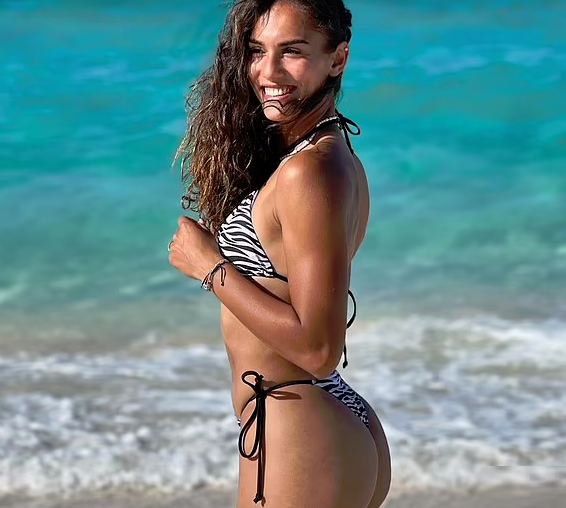
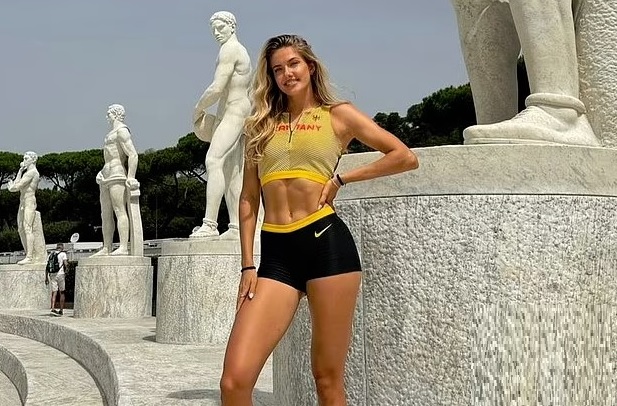
Oh, shut the HELL up! TV editors favor more close-up shots of women than men because women are more attractive than men, the demographics of Olympic viewing for many events slants male, and there is nothing offensive or disrespectful about showing Olympic athletes like this German sprinter,
Continue reading

Revisiting the Paris Olympics Opening Ceremony

My sister recorded the whole thing, and invited me over to view it. I would say it’s unwatchable—she agrees—but we did do our best, focusing on the main features of the opening that have caused controversy. This was in the wake of yesterday’s obviously PR-generated non-apology apology from Paris Olympics “organizer” Anne Descamps (whatever that’s supposed to mean):

“Clearly there was never an intention to show disrespect to any religious group. On the contrary, I think Thomas Jolly did try to intend to celebrate community tolerance. We believe this ambition was achieved, if people have taken any offense, we of course are really sorry.”

Should I add that to the Apology Scale as a perfect example of Apology #9? That’s “Deceitful apologies, in which the wording of the apology is crafted to appear apologetic when it is not (“if my words offended, I am sorry”). But I’m not even sure the statement appears apologetic. “Clearly there was never an intention”— that’s a lie, since clearly many, many people believe that was the intention. The “apology” begins by insulting those who were offended. Then again we have the risible “community intolerance” claim. If someone could show me how that mess possibly communicated anything coherent, much less “community tolerance,” I will be eternally grateful.

Continue reading

About That Paris Olympics Opening Ceremony…

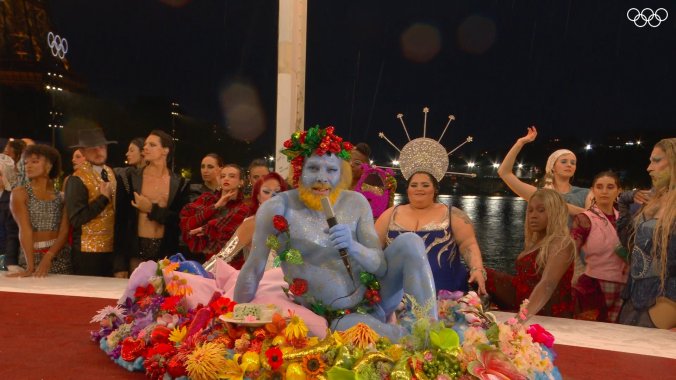
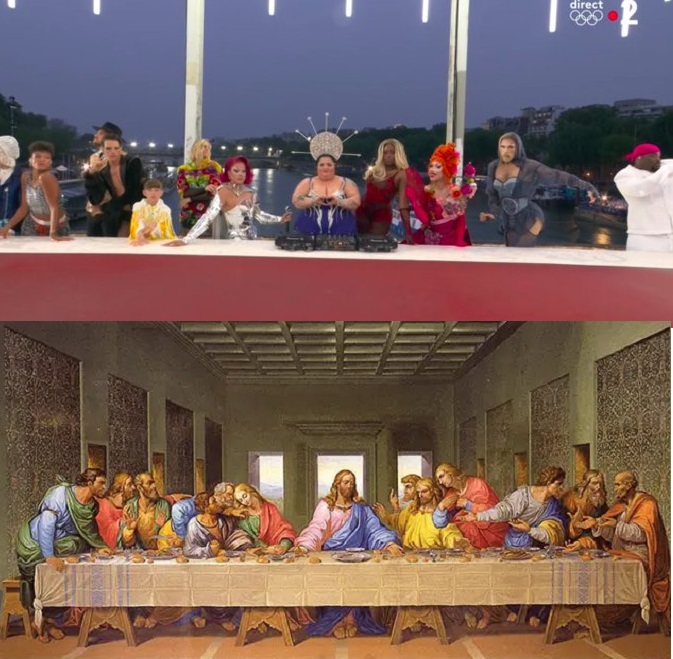
A bizarre sequence in the opening ceremony of the Paris Olympics opening ceremony has created instant anger, controversy and, of course, social media controversy. At one point, a group of drag performers, transsexuals performers costumes to look like something in that range created a tableau that seemed to evoke a very weird version of the Last Supper. Many critics, including Elon Musk, declared the number blasphemous and an intentional insult to Christians. The organizers, cowards and liars as such functionaries tend to be when controversy strikes, claimed that any resemblance to The Last Supper was unintentional, and this was supposed to comment on “the absurdity of violence against human beings” because a giant platter with a representation of the Greek God Dionysus had the drag Last Supper as its backdrop, or perhaps representing the menu at the Last Supper. See?

Oh.

Okaaaay.

You got that? Do you believe it?

Was it ethical to include this spectacle in televised, live entertainment seen all over the world? This seems like a good opportunity to use one of the ethics decision-making models. Let’s roll out the “TWELVE QUESTIONS TOWARD ETHICAL DECISION-MAKING,” adapted from Harvard Business School Professor Laura Nash’ s 1981 Harvard Business Review article, “Ethics without the Sermon.” (The ceremony also included this…

…an image of a famous French queen holding her own severed head. Someone else can figure that one out. At least it wasn’t Kathy Griffin).

Continue reading

Ethics Hero/Dunce: Charlotte Dujardin

I haven’t had many of these, as you might imagine. In fact, I’m not even sure that this is one.

British Olympic dressage medalist Charlotte Dujardin holds six Olympic medals, three of them gold, in equestrian events. She just dropped out of the Paris Olympics, however, after a video was uncovered that reportedly shows her repeatedly whipping a horse on its legs.

“A video has emerged from four years ago which shows me making an error of judgement during a coaching session,” she said in her statement withdrawing from the Games. “Understandably, the International Federation for Equestrian Sports (FEI) is investigating, and I have made the decision to withdraw from all competition — including the Paris Olympics — while this process takes place,” she said. The statement continues, “I am sincerely sorry for my actions and devastated that I have let everyone down, including Team GB, fans and sponsors.”

Some have described this as Ethics Hero-level contrition. She did wrong, she has admitted it without qualifications, and has administered her own sanctions. OK, I’m buying that, sort of. Maybe. With major misgivings.

Continue reading

A Hanlon’s Razor Puzzle: The Olympic Team’s Snub of Caitlin Clark

Incompetence or bigotry?

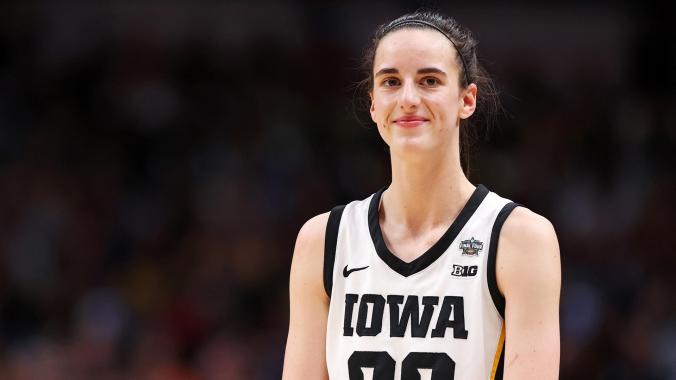
Over the weekend the announcement came out that Caitlin Clark was not on the roster for the USA women’s basketball Olympic team for the games in Paris. This seemed, and seems, strange to put it mildly. Clark, a rookie this season, is by far the most famous, publicized and popular professional women’s basketball player of all time, as well as the most important. Her stellar performance as a college player led her to be the obvious #1 first round draft pick in the WNBA draft, and her presence in Indiana Fever games has led to a significant spike in attendance, TV ratings and public interest. The Olympic Games are mostly publicity for the league and the sport: once professionals were permitted to play, the U.S. women’s team has been unbeatable for decades. It would win the gold if the Olympics team coach picked the names of the team member out of a hat. But having the league’s charismatic rookie play would guarantee more interest in the sport during the Paris Games this summer, which logically should translate into more attention—popularity, TV ratings, money—for the sport itself.

So why isn’t Clark on the team?

Continue reading