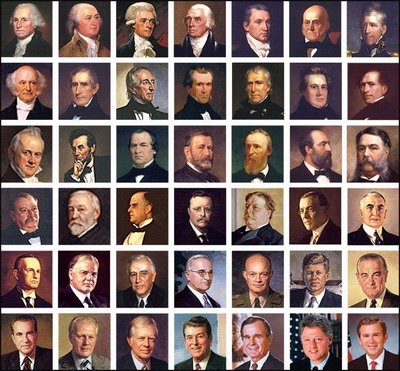
The good guys.
The degree of anxiety over today’s Presidential election—perhaps more accurate than anxiety is hysteria—is palpable. It is also unnecessary and foolish. I have read the fevered rantings of Andrew Sullivan, who fears Mitt Romney like the Germans feared the invading Russian army at the end of World War II, and the apocalyptic monologues of conservative radio talk show host Mark Levin, who is prone to statements like, “It’s over, that’s all! Do you understand? If Obama wins, this country is never coming back!” I have watched both parties exploit and encourage this kind of irrational fear, and its by-products, predictably, are hate, division and anger. There was a time in America when political adversaries referred to each other as “my honorable opponent.” The candidates were not more honorable then. We were more sensible.
The history of the United States has shown that very few truly bad men have the opportunity to run for President. It makes sense, if you give it a modicum of thought. A Presidential contender must negotiate the perils of life for at least four decades without accumulating damning evidence of disqualifying character traits and malign intent. The candidate must have shown sufficient ability and character to impress those he worked with and owed duties to. Most of all, a potential President must have been able to engender a sufficient amount of trust over more than half of his natural life.
We should not judge political leaders by the same standards as other professionals, because the nature of politics, by definition, is ethically ambiguous. Politics knows only one ethical system: utilitarianism. The practice of governing and making human progress advance in the civic arena rules out absolute principles, and requires delicate calculations of ends and means. This often appears, to non-practitioners, as corruption, and it certainly can become that. Effective, trustworthy leaders are able to avoid the occupational hazard of believing that the ends necessarily justify the means. If they cannot, they will not have the opportunity to be President. Continue reading



 Ethics Alarms