 The results of the Barry Bonds trial, which today concluded with the jury finding baseball’s all-time home run champion guilty of obstructing justice by misleading a grand jury investigating the distribution of illegal and banned steroid to professional athletes but unable to agree on the perjury charges, helps to balance the ethical scales. It should silence the shameless Bonds defenders who misused the “innocent until proven guilty” standard to maintain poor Bonds was being unfairly suspected of inflating his biceps, head, statistics and income through the marvels of chemistry, though it was blatant and obvious in dozens of ways. Now he has been proven guilty—not of everything, but for celebrity justice, in a trial where much of the most damaging evidence was withheld from the jury, enough—, so the claims of racism and unfair prosecution will ring even hollower now. Continue reading
performance-enhancing drugs
The Ethics of Nailing Barry Bonds
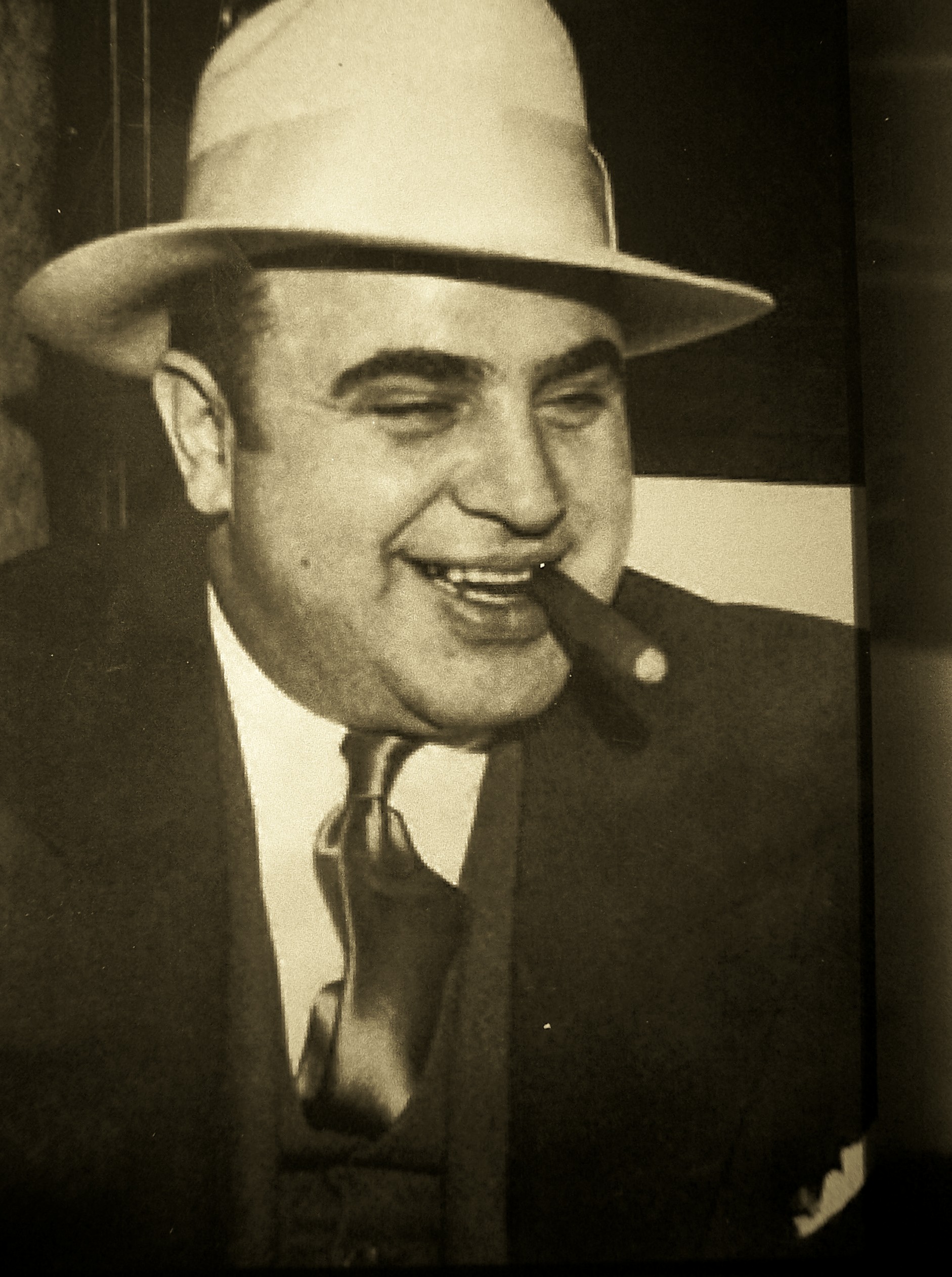
Is Barry Bonds getting the Al Capone treatment? Should we care?
Baseball’s all-time home run king Barry Bonds is finally on trial for perjury and obstruction of justice relating to his 2003 testimony before a grand jury that he never knowingly used steroids. It looks like he may get convicted too, even though the one man who could harm him most, his trainer and childhood pal Greg Anderson, once again has refused to testify and is in jail for contempt of court. (Many—including me— believe that Anderson has a promise of a pay-off from Bonds.)
Essentially everyone who isn’t actively trying to protect Bonds, completely ignorant of the facts of his career, or mentally handicapped knows he was lying and knew it at the time of the grand jury hearings. Barry has been both lucky and relentlessly dishonest, however, seemingly happy to spend the millions he made while cheating and permanently damaging his sport, and pleased with himself for retiring in possession of baseball’s most prestigious home run records, the most homers in a single season, and the most homers in a career. That Bonds achieved these, and several of his Most Valuable Player awards, while enhanced with the surreptitiously induced body chemistry of a Bulgarian weight-lifter in the 1972 Olympics doesn’t seem to faze him at all. Meanwhile, critics are dredging up the old rationalizations to defend Bonds, none of which apply to his current fix. Continue reading
Hall of Fame Ethics: The Jeff Bagwell Dilemma
Members of the Baseball Writers Association of America have been turning in their ballots for the Hall of Fame, their collective totals eventually determining which retired major league baseball stars will have plaques in Cooperstown. If you follow baseball closely, you are aware of the big debates this year: Is Tim Raines worthy? Will Bert Blyleven finally make it? Has Alan Trammel been unfairly neglected? What about Jack Morris and Roberto Alomar? If you don’t follow baseball, you couldn’t care less, and I pity you. One controversy this year, however, should be of interest to non-fans as well as fans, because it involves the proper application of the ethical principles of fairness and equity in an environment of doubt. It is the Jeff Bagwell dilemma. Continue reading
Thomas Boswell’s Outrageous Ethical Breach
In the first installment of Ken Burns’ latest addendum to his epic documentary “Baseball”, there is a considerable discussion of baseball’s steroid problem, and its effect on the game, its image, and integrity. Washington Post sportswriter Thomas Boswell is one of those interviewed, and caused quite a few PBS watchers, including me, to drop their jaws when he volunteered this:
“There was another player now in the Hall of Fame who literally stood with me and mixed something and I said ‘What’s that?’ and he said ‘it’s a Jose Canseco milkshake.’ [ Note: Star outfielder Jose Canseco was widely believed to be a steroid user from early in his career, and he finally admitted it after retiring.] And that year that Hall of Famer hit more home runs than ever hit any other year. So it wasn’t just Canseco, and so one of the reasons that I thought that it was an important subject was that it was spreading. It was already spreading by 1988.”
Boswell, who knew exactly what the player meant by “Jose Canseco milkshake,” never reported the apparent use of steroids—illegal in 1988, as it is now— to the team, Major League Baseball, or the public. Continue reading
Sheyla Hershey’s Mega-Breasts and the Ethics of Assisted Self-Destruction
The current bicycle ordeal commenced by the Vogel family was sold to the family’s twin boys as a chance to get into the Guinness Book of Records. That publications has been used to justify more self-destructive conduct than the complete works of Ernest Hemingway, and here’s another example: Sheyla Hershey, owner of the world’s largest breast implants (size M, supposedly) according to Guinness, just had to have them removed because of serious infections. They were also “uncomfortable,” she has told reporters.
Gee, who could have seen that coming? Continue reading
The Trouble With Auto-Tune
The British show that launched “American Idol,” X-Factor, admitted that it had used Auto-Tune, an audio processor that corrects a singer’s pitch and tone. An 18-year-old contestant named Gamu Nhengu sang just a little too well in the show’s seventh season premiere, and fans and critics started hinting at conspiracy on the web, especially via the show’s Facebook page. Finally, a spokesman for “X-Factor” confessed that Auto-Tune was used to fix disruptions caused by the many microphones used on stage during the telecast, but that the judge’s decisions were definitely based on the actual, non-Auto-Tuned performances of contestants. The show’s producers, he assured the public, only used the processor to “deliver the most entertaining experience possible for viewers.”
I’m sure that is true. This is exactly the reason TV executives rigged the quiz shows in the 1950’s. It is the reason why TV reality shows are scripted, and why NBA stars get away with game fouls that referees call against lesser players. Any competition’s entertainment value is enhanced by better competitors and more suspenseful action. The problem is that once spectators know or suspect that they are being manipulated, they stop watching at all. The fact that Simon Cowell’s UK hit would use the device immediately roused “American Idol” conspiracy theorists, and Cowell to immediately announced an Auto-Tune ban. Continue reading
Charlie Rangel’s Defense and Buster Olney’s Fallacy
Charlie Rangel’s defense against the ethics charges against him is, in part this: I’m not the only one, so it’s unfair to punish me.” From the Washington Post:
“He was not the only lawmaker to solicit donations in this manner, his lawyers argue, saying that peers who did the same thing were not punished. With a trial of Rangel by the House ethics committee possible by mid-September, his legal team reached across the Capitol to point a finger at Senate Minority Leader Mitch McConnell (R-Ky.), who helped raise money for a center named for him at the University of Louisville. Rangel’s team cited similarities with the recently deceased Sen. Robert C. Byrd (D-W.Va.) and with former Republican senators Trent Lott (Miss.) and Jesse Helms (N.C.).”
OK, a question: what’s the matter with that argument? Continue reading
The Ethics of Giving Up on Ethics
Paul Daugherty, a sportswriter for the Cincinnati Enquirer,recently wrote a column expressing a theme I hear all too often regarding politics, government, education, and society generally. Motivated by the steroid allegations against yet another hero, Lance Armstrong, Daugherty penned his surrender to a culture that doesn’t seem to care about ethics. Daugherty wrote:
“Everyone wants sports to be equitable. We all desire the level field. No one wants sports to be as drugged up as Woodstock in 1969. But it is. We’ve fought the ethical fight. We’ve lost. It could be time to let it go.
Even the athletes who lose still win. Mark McGwire got his, Barry Bonds got his, Brian Cushing got his. If you wait enough, deny enough, then rationalize believably, you get yours. Disgrace fades. Only Olympic athletes wear the stink of doping longer than the average 5-year-old’s attention span. In one respect, it’s not unlike the fight against legalizing marijuana. It has lasted so long, and now seems so pointless, I can’t even remember what we’ve been arguing about. We’ve become numb to it….It’s only a little outrageous now to suggest that a professional athlete be allowed to use performance-enhancing substances to his (enlarged) heart’s content, as long as he’s doing it legally….So what’s the point?”
“What’s the point?” Continue reading
Armstrong, Bonds, Steroids, and Bias
Barry Bonds was forcibly retired from baseball despite general agreement that he could still hit a ball better than most active players. No team would hire him, because he had become the symbol of baseball’s steroid and performance-enhancing drugs scandal that casts a permanent shadow over the game’s image, statistics, integrity, and current stars. Bonds never has admitted to using P.E.D.’s, but the evidence that his remarkable late-career success was illicitly aided by banned substances is overwhelming, and indeed was overwhelming while he was playing. [I have written about the fairness of judging Bonds a cheater and the tortured rationalizations employed by his defenders here, here, and here.] At the same time, another individual who dominates his sport, cyclist Lance Armstrong, has managed to convince most of the media and his adoring public that accusations that he used steroids are false, even though the circumstantial evidence against him rivals what has condemned Bonds. This has always had the stench of a double standard; now, in the wake of new allegations by a former team mate, the only excuses for not giving Armstrong the Bonds treatment are unethical ones. Continue reading
Mark McGwire’s Steroid Confession, Part 2: Neyer and the Rationalizations
The worst thing about Mark McGwire’s belated confession is that I once again have to listen to and read the absurd, hackneyed, illogical and ethically obtuse arguments for ignoring his conduct. Like… Continue reading
 Ethics Alarms