Unethical Quote of the Month: 34,812 Americans*

“British Citizen and CNN television host Piers Morgan is engaged in a hostile attack against the U.S. Constitution by targeting the Second Amendment. We demand that Mr. Morgan be deported immediately for his effort to undermine the Bill of Rights and for exploiting his position as a national network television host to stage attacks against the rights of American citizens.”

—- The language on a petition posted at whitehouse.gov and signed by 34,812 American citizens,* asking the Obama Administration to deport Piers Morgan.

brainless-empty-open-head-screamingYou can’t get much more ignorant, hypocritical and dumb than this, can you? A talk show host criticizes the Second Amendment, and these fools think the appropriate remedy for “his effort to undermine the Bill of Rights” is for the government to punish him with deportation, thus violating the First Amendment, from the Bill of Rights.

Passionate, engaged, and completely incapable of rational thought: what a frightening combination.

* UPDATE, 12/26/2012  The number is now over 75,000, and still rising. If every American who can’t see that this petition represents an absurd contradiction signs it, we’re looking at about 200,000,000 people, maybe more. This would probably spell doom for Morgan’s show, as it would mean that the only people conceivably dumb enough to watch him want him deported.

_______________________________

Pointer: Drudge
Ethics Quiz: The Conundrum of the Anti-Gay Marriage Diversity Officer

…But be sure to think about it who will see it before you do!

Ethics, law, fairness and common sense are locked in a complex battle in this story, which comes out of Gallaudet University, the famous Washington D.C. school for the deaf.

Dr. Angela McCaskill, Gallaudet’s chief diversity officer, has been put on administrative leave and may face dismissal because the school learned that she had signed a petition opposing Maryland’s same-sex marriage law.  McCaskill apparently signed the petition at her church after her preacher spoke against gay marriage. A measure is on the Maryland ballot that could overturn the recently-passed state law approving same-sex marriage.

Does she have an absolute right to sign a petition in favor or opposing any political or social policy? Yes. Is this a petition something a university official in charge of promoting diversity is wise to sign? No. Is a university whose diversity officer chooses to sign such a petition behaving fairly and responsibly to decide that it should have someone else in that position?

Hmmmm.

And that’s your weekend Ethics Alarms Quiz:

Is it fair and responsible for a university to fire its diversity chief because she signed a petition opposing gay marriage? Continue reading

Ethics, Stereotypes, and Holly Golightly

"Andy Hardy, the Asian Years"

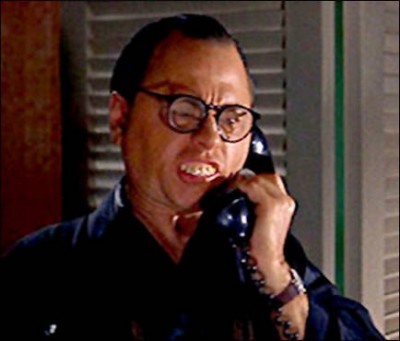
A Bronx woman, Ursula Liang, has started a petition against Brooklyn Bridge Park’s “Movies With A View” series showing “Breakfast at Tiffany’s,” the 1961 Audrey Hepburn classic that gave us “Moon River” and one of actress Hepburn’s most endearing performances. Why? Well, the movie, which has long been popular for summer screenings in New York City and elsewhere, also contains a pre-political correctness performance by Mickey Rooney as Holly Golightly’s comic Japanese neighbor, “Mr. Yunioshi.”

Rooney’s performance, in my opinion, was cringe-worthy even in 1961, one of director Blake Edwards’ not uncommon excesses in vaudeville humor, placed in a context where it didn’t belong. It is a scar on an otherwise marvelous film, but there is nothing inherently wrong with comic stereotypes. Stereotypes are a staple of comedy, and have been forever; the question is whether a particular stereotype is cruel, gratuitous, harmful, or funny. Some stereotypes are cruel and funny. Continue reading

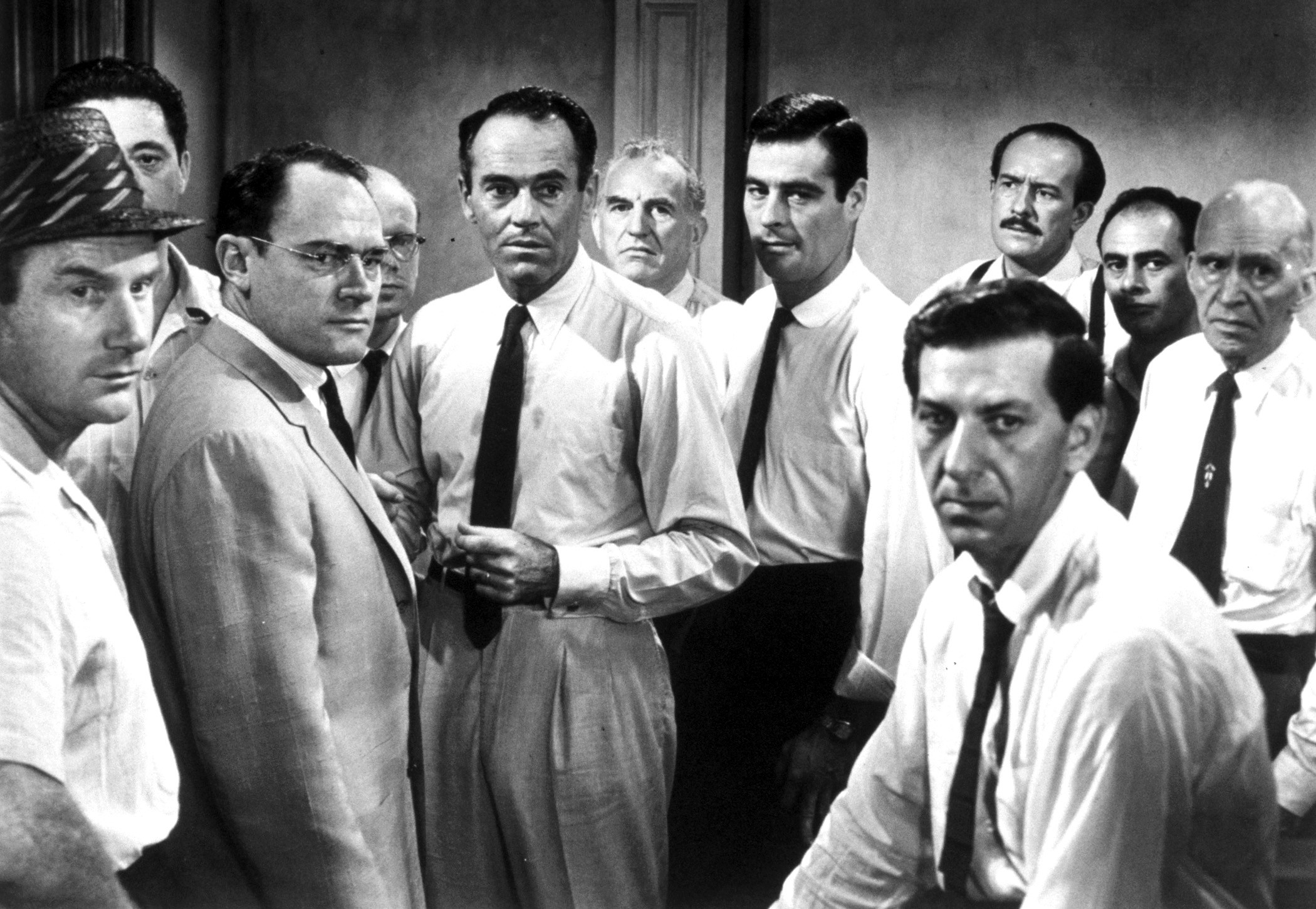
“Twelve Angry Men,” A Million Angry Fools, and the Jury System

Their defendant was probably guilty too.

Ethics Alarms All-Star Lianne Best sent me this link about a member of the Casey Anthony jury who is going into hiding because of all the hate and criticism being directed at jury members and their controversial verdict. Her plight, which must be shared by other members of the much-maligned jury, highlights the unethical, not to mention ignorant, reaction of the public to the Florida ex-mother’s narrow escape from a murder conviction she almost certainly deserved.

The problem begins with publicity. We may need to re-examine the logic behind broadcasting high-profile cases. The combination of live courtroom feeds and quasi-semi-competent commentary gives viewers the mistaken belief that they are qualified to second guess the jury, and they are not. They are not because the jury is in the courtroom, and the viewers aren’t. The jury and TV watchers see different things; individuals communicate different emotions and reactions in person than they do on camera. There is only one fair and sensible way to answer those on-line instant polls that ask, “Do you think Casey Anthony should be found guilty?”, and that is “I don’t know.”

Most of all, the viewers and pundits are not present in the jury room. Continue reading

The Ethics of Silencing Hate

Good and just people are not just bothered by the bad things people do, but also by the bad things they may be thinking while they do it.  This is reasonable, on its face, because a lot of  the time (though far from always), misconduct arises from ideas, emotions, motives and intentions that are not very admirable and sometimes despicable. The indisputable connection between what we think and what we do increasingly is fueling the idea that we can and should try to control people’s thoughts—not by encouraging good ones through education, culture, philosophy, role models and positive reinforcement, but by preventing bad thoughts through punishment, enforced conformity, censorship, and linguistic controls.

The civil rights movement, once dedicated to wiping out discrimination, which is a kind of conduct, now focuses on eliminating bigotry and bias, a form of thought. Hate crime legislation extends penalties for criminal acts beyond the act itself to what the criminal was thinking while he committed it.  The term “hate speech” is frequently used to describe any intense negative opinion as a way of both suppressing and de-legitimizing political opinion. The label effectively argues that an opinion, even a reasonable opinion by itself, should be shunned and even suppressed based on the “illegitimacy” of the thought process used to arrive at it.

As many predicted, this device or tendency (which you call it depends in part on how cynical you are) has intensified with the election of our first African American president, allowing the kind of intense opposition rhetoric, satire, condemnation, hyperbole and ridicule that has been directed at virtually every president before him to now be characterized as hate speech, or proof of racial prejudice. People, of course, have a right to engage in this tactic, but it is wrong.

Over on Facebook, over a million people have joined a fan page called “DEAR LORD, THIS YEAR YOU TOOK MY FAVORITE ACTOR, PATRICK SWAYZIE. YOU TOOK MY FAVORITE ACTRESS, FARAH FAWCETT. YOU TOOK MY FAVORITE SINGER, MICHAEL JACKSON. I JUST WANTED TO LET YOU KNOW, MY FAVORITE PRESIDENT IS BARACK OBAMA. AMEN”, inspired by a joke that is a lot older than Barack Obama, and probably older than Millard Fillmore. Continue reading