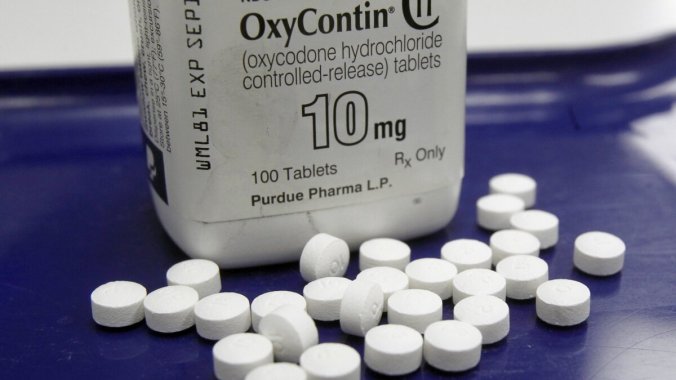
Comment Of The Day: “Painkiller”

Most of the comments on EA posts come from a solid base of experience and knowledge, but it is especially welcome when a commenter enlightens us on a subject he or she really knows well. Thus Tom P.’s observations on the pharmaceutical industry in light of the EA post on the Perdue Pharma/Sackler/ OxyContin horror as dramatized in “Painkiller” is a special pleasure. Here it is, a Comment of the Day:

***

I apologize for the length of this post, but the topic is complicated and does not lend itself to sound bites. What follows is my experience and opinions based on working in the pharmaceutical industry and extensive reading on my part.

Full disclosure: I am a retired pharmaceutical company executive. During my career, I worked for various cosmetic and pharmaceutical companies. I held positions in R&D, manufacturing, quality control, and supply chain management. For most of my career, I was responsible for a major Pharma manufacturer’s anticancer and biologics global supply chains. As a point of reference, I have not seen “Dopesick” or “Painkiller”. I am familiar, however, with the travesty the Sacklers perpetrated on the sick and society. The best summary of their unethical and probably criminal behavior I have read is in an LA Times May 5, 2016, article: https://www.latimes.com/projects/oxycontin-part1/

Continue reading

Today’s Weasel Words, Courtesy Of Big Pharma: “Have Happened”

Hi!

Some time in the recent past a memo went out, and as a result virtually all the TV ads for new drugs now include the deliberately awkward and puzzling phrase, “have happened,” or sometimes “have occurred.” First the ad ends with all the possible side effects of the drug and what conditions make it dangerous. Then we hear the list of all the maladies the drug “can cause.” Last of all, we learn that other undesirable things like early onset dementia, a taste for human brains or the dreaded ass-fall-off syndrome “have happened.”

Wait, what? Have happened why? Tornadoes, plagues and firebombings have happened too: why are these things that have happened mentioned in the drug commercial?

Here’s why: the manufacturers are fighting lawsuits alleging that the drugs caused these things to happen, but the companies are arguing in defense that causation is uncertain. By using the vague, passive “have happened,” they aren’t conceding that the drugs caused the problem, but it will still claim in later law suits that the customer was warned, and thus assumed the risk.

It’s double talk, essentially, and deceit. You are warned, but by warning you we aren’t admitting that there is anything to be warned about.

I hate this stuff.

Just thought I’d mention it.

GlaxonSmithKline Inspires a Fun Game For Your Holiday Party: “Forcast That Ethics Scandal!”

Almost all ethics scandals and examples of outrageous unethical conduct are thoroughly predictable, whether they involve individual, organizations or institutions. The most obvious proof of this is in politics. Once we consider past patterns, current conditions, institutional habits and what we know about human nature, the question when a new political party takes over isn’t whether there will be instances of bribery, influence peddling, self-enrichment, and conflict of interest, but only which elected leaders will be caught at it. Sometimes even that part is easy: everyone should have been able to guess, long before they occurred, that Tom DeLay’s ethics-free philosophy of politics as warfare would lead him to commit serious misdeeds, just as the odds against former Florida Rep. Alan Grayson running a fair or civil campaign for re-election were prohibitively high. Similarly, sports scandals can usually be seen coming a long way off. Once New England Patriots coach Bill Belichik was caught making surreptitious videos of his team’s opponents’ practices, it was easy to guess that he wasn’t the only one, and that since both he and his team were so successful, it would be only a matter of time before a similar incident came to light. And it did, last week.

As I look through various Ethics Alarms posts, it is striking how many of them could have been written in advance, in fill-in-the-blank format. All you need to do is identify an industry with a history of ethics problems, a weak ethics culture, a trusting, under-informed audience, the potential for increased profit, power or influence, and a large population of corruptible, lazy, incompetent, venal, ambitious or cowardly allies. I’m sure a computer program could be developed, but for this holiday season, why not forecast next year’s ethics scandals as a party game? Challenge your guests: Which TV reality show will be shown to have completely manipulated “reality”? Which revered sports figure will be disgraced in a sex or drug scandal? Which Wall Street firm will be caught violating the “sacred principles” posted on its website? Which school will suspend or expel a student for violating the letter of an overly broad and horribly-written rule without actually doing anything wrong? Which universally accepted scientific research will turn out to be the result of manipulated data? Which embarrassments of the Obama Administration will only be reported by Fox News, and which outrages committed by Republicans will the same network ignore?

And, of course, where will TSA employees put their hands next?

This occurred to me as I read about the recent Big Pharma-manipulating-medical-practice scandal, involving drug giant GlaxonSmithKline, while slapping my forehead and shouting, “Of course! This was the logical next step!” Continue reading

Obamacare Ethics: Prof. Gruber’s Conflict and Democratic Deceit

Professor John Gruber, meet Armstrong Williams. Obama Democrats, meet the Bush Republicans. The names and faces may change, but the unethical tricks remain the same. Continue reading

Michael Chertoff’s Ethical Dilemma

Is it unethical to promote something in which you have a financial or other personal interest even if you would have advocated it anyway? When one is a respected and credentialed former public official, this situation can pose a real dilemma. You sincerely believe it is critical to take certain action; indeed you believed in the importance of this action before you had a stake in it. Continue reading

Proof of Dead Ethics: Attacking Your Adversary’s Family

It is a standard threat in movies about the Mob and TV dramas about thugs: “Do what I tell you, or your family’s dead.” The tactic of going after loved ones as a particularly awful form of revenge is a calling card of the truly despicable. That is why the Valerie Plame scandal so damaged the Bush Administration’s popularity, even though it was never clear (and still isn’t) that anyone there really did try to “out” Plame’s CIA status to get even with her obnoxious husband’s fueling opposition to the Iraq invasion. Just the plausible suggestion that Vice President Cheney’s gang may have committed such an ethical outrage was too much to bear.

You would think, then, that those who most revile Cheney’s no-holds-barred approach to political combat would be the least likely to emulate him. You would be wrong. Continue reading