Minnesota’s Religious Freedom Pharmacist Case

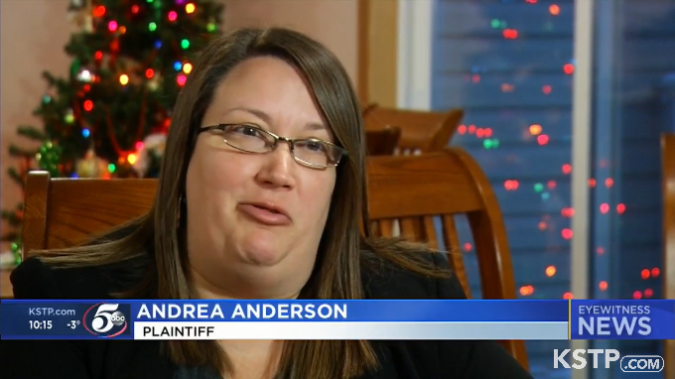
In  2019, Andrea Anderson’s primary birth control method had failed, so she called her health care provider to ask for a prescription to Ella, an emergency contraceptive tablet. But when she went to  the local McGregor Thrifty White pharmacy in Aitkin County, Minnesota, pharmacist and local pastor George Badeaux refused to fill the prescription, citing his religious beliefs. He told her that a pharmacist working the following day could fill her needs if a snowstorm didn’t prevent the pharmacist from getting to work.The desperate woman ended up driving three hours round trip to Brainerd during a snowstorm to get her pregnancy-terminating pills.

Anderson sued under the Minnesota Human Rights Act, alleging sexual discrimination. The jury ruled against her.

Ethics Alarms verdict: the jury was right on the law, but the pharmacist was unethical. Continue reading

Ethics Analysis: My CVS Confrontation

As with many ethics problems, the most important question to answer  is “What’s going on here?”

This is what happened.

I take quite a few drugs, some of which keep me breathing. My doctor now e-mails the full slate, usually a three-month supply, but with automatic refills, after every check-up. This time, I actually witnessed the prescriptions being sent. From the start, however, there was a screw up. The first three drugs I tried to get refills for turned up expired: there was no record of the directive from my doctor. Each time, the same thing happened: the CVS pharmacy automated line said the order “was being filled;” when I arrived to get it, I was told that the prescription had expired; I explained that they had a glitch in their system; one of the staff agreed (“Ugh! This ticks me off! Someone is automatically cancelling these orders!”); and I eventually got my drug, sometimes after giving me a partial refill and my having the doctor call CVS to confirm. The last time, however, the prescription I sought was ready. (They all had been e-mailed at the same time.) They also offered me another drug, and extremely expensive one, that I didn’t need immediately. I said I didn’t care to spend the money just then, and they told me they would hold it.

Yesterday I needed that drug, the previous supply having run out the day before. I had no opportunity to go to the pharmacy until nearly 9 PM, but it shouldn’t have mattered: the pharmacy during the week is open until the CVS closes at 10 pm, and I knew the prescription was ready, because of my previous visit.

But it wasn’t. The pharmacist, a young woman, told me that I had no valid prescription. “Nope,” I said. “Wrong.” And I explained what had been happening with my drugs, how I was told that the system glitch had been fixed, and also that I actually saw the filled prescription I now needed when I picked up my last prescription. AND, I said, firmly, skipping a day was not an option. This drug was one of the ones I could not skip.

Then the excuses started. Continue reading

Gallup’s Honesty And Ethics Ratings Of Occupations

shattered-trustThe annual Gallup survey is out. You can read Gallup’s commentary here, and see the details here. (you’ll need an Adobe reader.)

Gallup’s big announcement this time is that the Clergy has declined in perceived trustworthiness since 2012, but that’s a stretch: the percentage of respondents who rated the men and women of God as “high” or “very high” in honesty and ethics declined 5% from last year, but all of the most trusted professions had similar drop-offs, including the perennial winners, Nurses (down 3 points) and Pharmacists (down 5).  The Clergy still is among the most trusted professions, and that’s especially impressive since almost half the country doesn’t believe the basic premise of their calling. I think the Gallup reasonably figured that trumpeting that the clergy’s ratings had hit a new low would garner more publicity than “Car mechanics trusted more now than ever!”, which the data also would support. (They still aren’t trusted much.)

The real surprise is how little any of the professions have changed their public standing. TV reporters, near the bottom, are still as trusted as they were in 1998. Members of Congress, held in even lower esteem, are about where they were in 2009. Lawyers, mirabile dictu, are the most trusted since this survey began, which is not to say they are trusted—they are tied with TV Reporters. The only real head-scratchers are that Ad Executives are at an all-time high—why?—and that lobbyists score so much lower than the people who tell them what to do, Business Executives, and the people they corrupt, Members of Congress. I think it’s because most people have no idea what lobbyists do, but it sounds shady. Continue reading

Our Untrusted Professions: Another One Bites The Dust…Or Should.

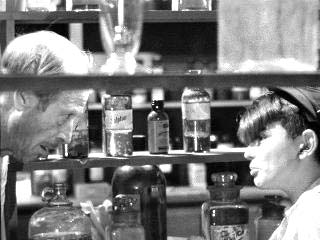
Come to think of it, Mr. Gower would have put poison in a boy's medicine if it hadn't been for George Bailey...

America’s trust crisis, which has seen virtually all its institutions decline precipitously in public trust, hasn’t left the professions unscathed. Far from it: Gallups’ annual poll of the public’s regard for the professions, the most recent of which was released last December, showed accountants trusted by only 43% of the public (abysmal for a profession whose only mission is to accurately determine the truth and to relay it—funeral directors are trusted more), journalists at just 26% (which is more than they deserve), bankers at 25%, lawyers at an insulting 19% (for a profession that includes honesty as a core ethical requirement), business executives slightly less at 18% (but no lower than those champions of the 99%, labor leaders, also at 18%). Stockbrokers, who figure to have fallen even lower after Greg Smith’s anti-Goldman Sachs diatribe, came in at a “can’t be trusted to deliver the water bill payment” 12%, and then we’re really in the pits of utter distrust, with lobbyists, used car salesmen, and members of Congress, all tied for last place at 7%.

In contrast, one of the professions that always is on top of the list or near it is pharmacists. In 2011, the friendly neighborhood druggist scored a trust rate of 73%, better than doctors and second only to the perennial champs of the last decade, nurses.

Well, all that trust in pharmacists appears to be misplaced. Continue reading

Ethics Hero: Arizona Governor Jan Brewer

There is hope for Arizona yet...

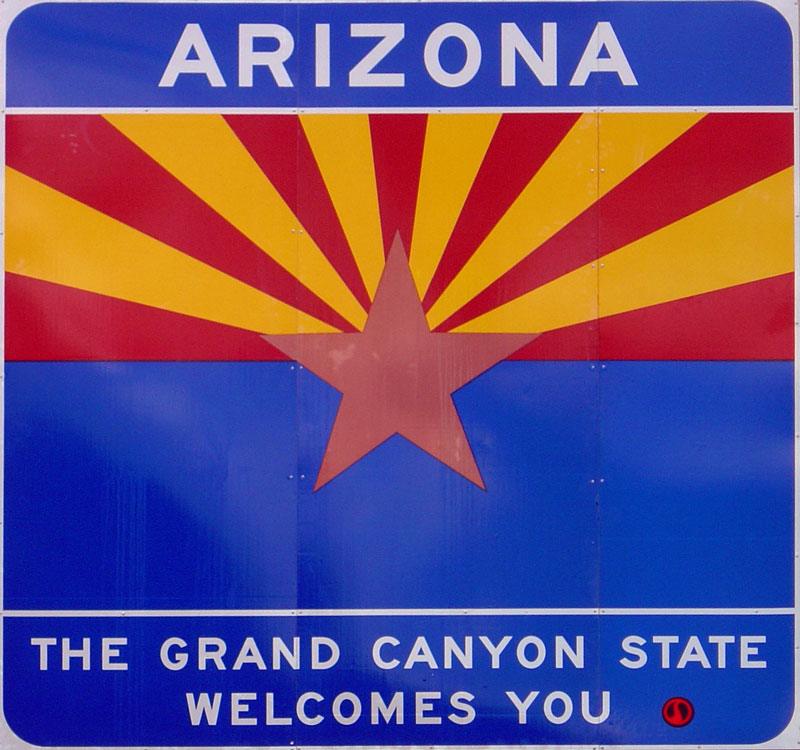
Earlier, I wrote about a bill passed by the Arizona legislature that would broadly allow religious practices and beliefs to trump professional obligations, ethics codes and discipline. The bill, SB 1288, directed in part:

A. Government shall not deny, suspend or revoke a professional or occupational license, certificate or registration based on a person’s exercise of religion.

B. Government shall not deny, suspend or revoke a professional or occupational license, certificate or registration based on a person’s refusal to affirm a statement that is contrary to the person’s sincerely held moral or religious beliefs, regardless of whether those beliefs are specifically espoused by a recognized church or religious body…

C. A person’s exercise of religion is not unprofessional conduct.

It was widely assumed, including by me, that Republican governor Jan Brewer would sign this stunningly awful bill into a law which would allow any practice that could be called “religious” to be immune from community, cultural and professional norms of right and wrong unless they were explicitly illegal. She did not. She vetoed it, an act of responsible leadership and political courage.

You can read her veto letter here.

Arizona’s Anti-Ethical Free Exercise of Religion Bill

While I was worrying about the unethical nature of so-called “conscience clauses,” which allow certain professionals, like pharmacists, withhold their services when they clash with the professional’s religious convictions, the Arizona legislature was cooking up something unimaginably worse. Last week the Arizona House of Representatives passed and sent to the Governor Brewer to sign into law SB 1288, a mind-blowing bill prohibiting the denial of occupational licenses or positions on public bodies because of an individual’s exercise of religion.

The soon-to-be-law states:

A. Government shall not deny, suspend or revoke a professional or occupational license, certificate or registration based on a person’s exercise of religion.

B. Government shall not deny, suspend or revoke a professional or occupational license, certificate or registration based on a person’s refusal to affirm a statement that is contrary to the person’s sincerely held moral or religious beliefs, regardless of whether those beliefs are specifically espoused by a recognized church or religious body… Continue reading

Cranky Ethics Encounters In A Rotten Week

The unexpected death of my mom on Saturday tends to make everything else in my life the past week fade to insignificance, but the last seven days featured more than my usual quota of confrontations when thrust in the path of conduct that seemed just wrong to me:

  • Staying at a Fairfield Inn and Suites, a Marriott chain, in Greensboro, North Carolina, I found myself running behind schedule for a morning presentation. Rushing to take my shower, I was stopped cold by the shower controls, which made no sense at all. The long handle didn’t seem to do anything, and the round knob inside it had no effect either. Since I have the mechanical skills of a rodent, and am constantly embarrassed by my ineptitude, I fiddled with the knobs longer than I should have before giving up in a panic and calling the front desk.

“I can’t get the shower controls to work, and I’m late!” I blurted out to the woman manning the desk. “Send someone up right away!” Continue reading

Gallup’s 2010 Ethics Poll: Little Trust Where We Need It Most

As it does periodically, Gallup has released the results of its surveys to determine what professions Americans regard as ethical, and which ones they don’t. Gallup notes that there has been very little change over the last two years; on its site, it compares the results to those of polls taken from 2004 to the present.

The professions that have positive ratings from the public are nurses, the military, pharmacists, grade school teachers, doctors, police, clergy, judges, and day care providers.

The rest are in the red, trust-wise, with TV and newspaper reporters coming in below auto mechanics and bankers, lawyers below them, business executives even below lawyers, and well below them, Congress, which comes in barely above car salesmen—and more people actually have a low opinion of Congress members than of car salesmen. Congress inches ahead because a larger number also think that members of Congress are ethical.

Probably federal workers… Continue reading