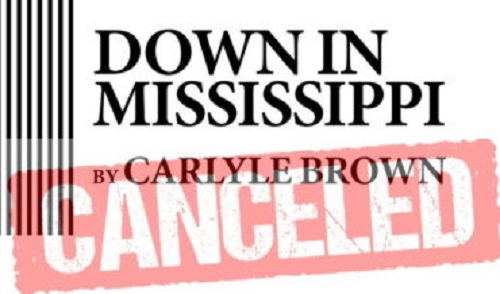
Confession: before I wrote the post that Curmie fashioned into his Comment of the Day, I emailed him the underlying story in advance, given his unofficial position as the Ethics Alarms dramaturg. I almost asked him to write a guest post on the head-exploding tale of a university banning a black playwright’s work about the civil rights movement because it has white characters using the word “nigger,” but I guessed, fortunately correctly, that he would provide a Comment of the Day on the topic whatever I wrote.
And do he did, very well indeed.
Here is Curmie’s Comment of the Day on “For Some Strange Reason, The Playwright Didn’t Think ‘N-Word’ Carried The Same Dramatic Punch…“
***
The first comment on this post, by JutGory, is especially apt. [ JutGory wrote: “The Woke Paradox: We must teach ‘real history’ even if it might hurt the feelings of white kids/We can’t teach ‘real history’ if it will hurt the feelings of black kids.”]
But, as someone who taught college-level theatre courses for over forty years and continues to do some scholarly writing in the field, I’d like to take the analysis a little further.
In the interest of full disclosure, I should mention that I have directed two plays which contain the word “nigger.” Both, Tennessee Williams’s Cat on a Hot Tin Roof and Athol Fugard’s ”Master Harold”… and the boys, are widely anthologized and both are regarded as among the greatest works of 20th-century drama. The latter, which includes a particularly crude racist joke, is also unquestionably an anti-racist play, as Down in Mississippi appears to be (I confess I haven’t read it or seen it).
I was also asked by a recently-graduated black student a decade or so ago to play the role of a slave-owning plantation owner in a short film he had written and was directing. The character probably used the dreaded epithet at least a half dozen times in a four- or five-minute scene. I agreed to play the role, but for whatever reason the film shoot never happened.
My first question, unanswered by the linked article, is precisely who made the decision to cancel the performance. It certainly wasn’t the (black) playwright, who said that “maybe you should be less fragile. And try to listen to what your former generations are trying to teach you for the well good being of all of us,” and it’s unlikely to have been the theatre department, given that they were the ones who decided to produce the play to begin with.
Administrators above the level of department chair are almost never involved in the process of selecting a production season. But they will stick their noses into the process if there’s a potential controversy, even a fallacious one. We can reasonably surmise that it’s a dean, a vice president, or a president who is the Designated Weenie in this case. It certainly wasn’t the chairman of the Board of Trustees, Glenn O. Lewis, himself a black man, who points out that censorship is not a solution, and that “you don’t learn anything new until you get out of your comfort zone, and I think that is what Mr. Brown intended for this play to do.”
 Ethics Alarms