Acting Ethics: Why We Don’t Want Actors Being Too Picky About Their Roles

FergusonX

In the strange ethics category of “Conduct That Isn’t Exactly Wrong But That Will Have Nothing But Bad Consequences To Society If There Is A  Lot Of It” (CTIEWBTWHNBBCTSITIALOI for short) is actors rejecting roles because they have philosophical or political disagreements with the script.

We’ve had two high profile examples of this occur lately. All we can do is hope that it’s a coincidence. The first was when about a dozen Native American actors, including an adviser on Native American culture, left the set of Adam Sandler’s first original movie with Netflix, “The Ridiculous Six,”a western send-up of “The Magnificent Seven,” claiming some of the film’s content was offensive.

Really? An Adam Sandler movie offensive?

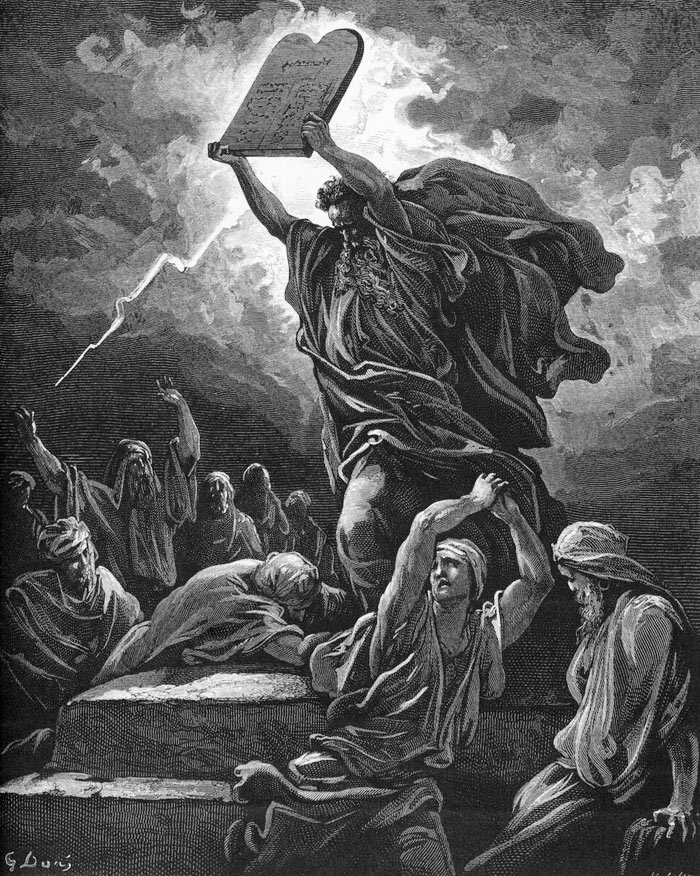
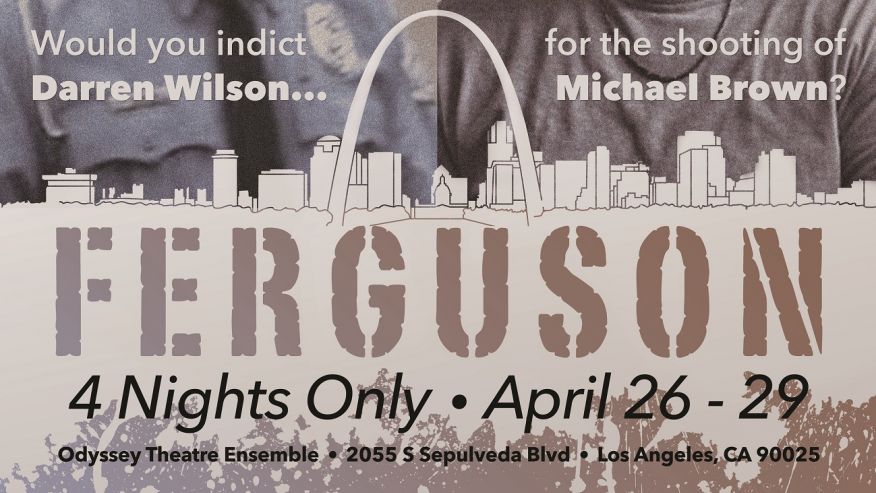
The second and more troubling was in LA,  where five actors quit the cast of the new play “Ferguson,” which consists entirely of dramatizations of the Michael Brown murder grand jury testimony, because the actors apparently felt that it did not appropriately support the “Hands Up! Don’t Shoot!” narrative.

That’s really stupid, but I’m not getting into that again.

We don’t see many examples of professional actors doing this for several reasons. One is that they can’t afford to. Acting, except for the top fraction of a per cent, is anything but lucrative; it’s a subsistence level job, redeemable because it is, or can be, art, and tolerable as long as the actor doesn’t have a family to support, or has a trust fund.

The main reason this is unusual, however, is that an actor isn’t responsible for the content of the play, movie or TV show he or she acts in, but only the skill with he or she helps present that content to an audience. Actors—and technical artists like costume and light designers—are the conduits through which a writer’s work of performance art gets to live. They don’t have to like a show, agree with it or understand it, which is a good thing, since many excellent actors don’t have the  education, experience or intellect to understand complex and profound works. As one realistic actor friend once told me, “If we were that smart, we’d be smart enough to be in another profession.” Continue reading
Being Fair To College Student Ideological Idiocy

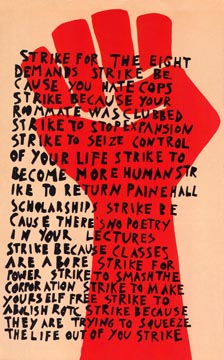
Luckily for him, the bank president who wrote this foolishness in 1969 didn't sign his name to it...

Luckily for him, the bank president who wrote this foolishness in 1969 didn’t sign his name to it…Ah, my old college days!

My attention has been drawn recently to two essays by college students, both presumably sent to me on the theory (or hope) that reading them would kill me. The first, published in the Drexel Triangle (the student paper), argues that stage directors should be prevented from casting actors who look the way the playwright envisioned them. The second, published in the Harvard Crimson, makes an even more disturbing assertion: its author asserts that Harvard should stop guaranteeing professors and students the right to advocate controversial views or pursue research that challenges liberal views and assumptions.

I don’t want to devote the bulk of this post to rebutting these two essays, which are, I think self-rebutting. In the theatrical essay, student actress Alyssa Stover argues that a stage director shouldn’t have the right to decide that, say, casting an Asian dwarf as black boxer Jack Johnson in “The Great White Hope” would lead to a less effective production (that is my example, not hers—she objects to a director of “Cabaret” refusing to cast African-Americans as a matter of historical accuracy):

“These arguments are fundamentally flawed. What the audience wants is almost impossible to measure because the “audience” is composed of anyone who can get a ticket. A director or producer’s right to deny someone a role due to their appearance is debatable because this is a judgment based on one person’s preferences and may not actually create something that is stage worthy. The current status quo allows people to be barred from the stage due to physical “flaws,” as determined by the direction. These judgments are not harmless, and when the issue of race is involved, the problem only gets bigger.” Continue reading

As Wisconsin Bans a Theatrical Production, Some Questions

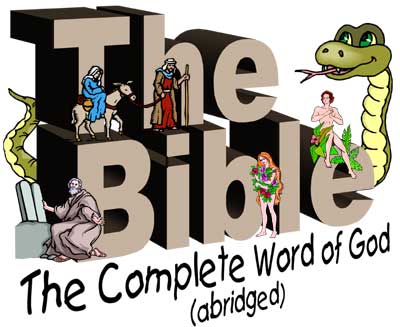
“The forces of intolerance just won another victory in Wisconsin,” is how The Progressive headlines a story about a “rightwing evangelical” whose complaints prompted the Wisconsin Department of Natural Resources to cancel a planned production of  “The Bible: Complete Word of God, Abridged” in a state park. From the article:

“Vic Eliason raised a stink. Eliason is an evangelical clergyman in Milwaukee who runs the VCY (Voices of Christian Youth) America Radio Network. He has a show, “Cross Currents,” in Milwaukee, and on August 9, he dedicated his hour-long program to condemning the play as “blasphemous” and “diabolical.” He urged his listeners to contact the board members of SummerStage, and he gave out their numbers. He also urged listeners to call the businesses where some of the board members worked and ask them, “How can you have someone on the board who will literally spit in the face of the Bible?” Eliason also gave out the phone numbers of the DNR’s top two officials and told listeners to ask them why the state was allowing this play to go on, and why it was profiting from it. (The agreement with SummerStage and the Lapham Peak State Park is that 5 percent of ticket sales go to the park, Eliason said.)”

The article ridicules the state and Ellison on several grounds. The play, it notes, is “very light-hearted,” a spoof of the Bible. Ellison admits he never read the script, but that the theme of the comedy is enough. The statement of the Department in cancelling the play smacks of dishonesty: “SummerStage will not be performing ‘The Bible – the Complete Word of God, Abridged’ at Lapham Peak as the event did not meet the provision of the Department agreement requiring all productions to be family oriented,” said a spokesperson. Translation: “This was turning into a hassle with the possibility of a lawsuit, and it just isn’t worth it.”

I agree that Eliason is an officious trouble-maker, a bully who sees nothing wrong with stopping people from entertaining and being entertained if he doesn’t approve of their taste. But I have some questions: Continue reading

The Ten Commandments for Ethical Reviewers

Film critic Roger Ebert’s autobiography is out, and I’m sure it’s terrific: Ebert is a lively writer, and he has many good stories to tell. One tale from the book that has been recounted in several  reviews, however, caused me to slap my forehead. Ebert says that he adopted longtime New Yorker film critic Pauline Kael’s approach to film reviewing, which she wrote was, “I go into the movie, I watch it, and I ask myself what happened to me.”

Ah HA! That’s why Pauline Kael was such a destructive film reviewer, and the predominance of her attitude is why reviewers of stage and film do far more damage than good. Once upon a time, when critics had professional standards and cared about fairness, the accepted approach of someone who reviewed films or plays for public consumption wasn’t how a work made the critic feel, but rather how it was likely to make a typical audience member feel. It doesn’t take much insight to decide whether one likes a play or a movie; anyone can do that. Continue reading

Why Professional Reviewers Are Unethical, and Why We’ll Be Better Off Without Them

When Variety recently announced that it was firing its in-house film and drama critics, there was much tut-tutting and garment-rending over the impending demise of professional reviewing in magazines, newspapers and TV stations. The villain, the renders cry, lies, as in The Case of the Slowly Dying Newspapers, with the web, which allows any pajama-clad viewer of bootleg videos to write film reviews, and any blogger who cares about theater to write a review of a play. “I think it’s unfortunate that qualified reviewers are being replaced,” said one movie industry pundit, “but that’s what’s happening.”

I say, “Good. It’s about time.” (And also: QUALIFIED?”) If there has ever been an excessively influential non-professional profession that caused as much damage as reviewing, I’m not sure I want to know about it. The end of full-time film and drama critics as we know them can only prove to be a boon for artists and audiences alike. Continue reading