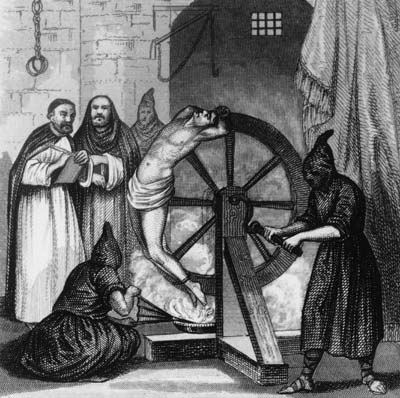
The Halliburton Plea Bargain: Why We Have To Start Sending Corporate Executives To Jail

"BAD company! BAD! Now go feel sorry while you count your money."

“BAD company! BAD! Now go feel sorry while you count your money.”

The news media and pundits were too entranced by Anthony Weiner’s package, the royal baby, whatever it was, and President Obama’s  third or fourth promise to make the economy his primary focus every waking hour between fundraisers and expensive junkets to notice that the old villain of the Left, Halliburton, once again got away with corporate villainy of the worst kind. You see, Halliburton executives engaged in ethics accounting, essentially balancing the possible penalties that might arise from illegal and unethical conduct against the benefits, and decided, sure, let’s destroy evidence that shows that Halliburton had more to do with the deadly and ecologically devastating Deepwater Horizon explosion that created the Gulf oil spill than regulators and the courts currently know.

The company’s crime—remember, Scooter Libby was sent to jail for obstructing justice regarding the investigation of a crime that didn’t exist—was discovered, so it made a sweet deal with the Justice Department: it agreed to pay the maximum allowable fine of $200,000 ( perspective: this would be considered a joke of a fine for steroid use by a major league baseball star) and will be subject to a three year probation; the company continue its cooperation with the government’s criminal investigation (which is its duty anyway), and to really show its contrition and yummy goodness, Halliburton made a voluntary contribution of $55 million to the National Fish and Wildlife Foundation to clean off those oil-covered sea birds and otters, and that kind of thing.

Awwwwwww…

Disgraceful and outrageous. Continue reading

Comment of the Day: “The Kaitlyn Hunt Affair: Upon Further Review…”

And if Kaitlyn Hunt looked like this, would we be having this discussion?

And if Kaitlyn Hunt looked like this, would we be having this discussion?

John Garrison’s incisive Comment of the Day decisively adds Kaitlyn Hunt’s parents to the Kaitlyn Hunt Ethics Train Wreck, which has already enlisted them, the vigilante group Anonymous (itself a self-perpetuating ethics train wreck), the lazy news media, which apparently misreported the essential facts of the case, and the social media as passengers since my first post on the debacle.

Here are his comments on the follow-up post, The Kaitlyn Hunt Affair: Upon Further Review:

“There are a number of things that concern me about this case. First, I do agree that the law is very harsh in Florida. But we never seem to get the actual story from Kaitlyn’s parents. At first, they said that they were 17 when they started dating, and that the parents vindictively waited until Kaitlyn turned 18. That story seems to have changed around the time the police report was released stating that actual ages of the girls. At that time, the family claimed that the police not redacting the address was retaliation against them going to the media, even though it is not remotely unusual for the police not to redact the address of the accused.

http://www.examiner.com/article/kaitlyn-hunt-arrest-record-released-free-kate-family-disgusted-with-sheriff Continue reading

Brian Banks’ Lawyer’s Dilemma: The Ethics of Counselling An Innocent Client To Plead Guilty

Would Wanetta have eventually admitted her lie if Brian Banks had been sentenced to 40 years? Would you bet your life on it?

The understandable uproar over Brian Bank’s five year imprisonment for a rape he never committed has focused public attention on the wrenching situation where a criminal defense attorney feels he must counsel an innocent client to plead guilty (or no contest, in Banks’ case) when the only alternative appears to be conviction at trial and a harsher sentence.  Banks’ attorney persuaded him that five years for a crime he didn’t commit was preferable to a maximum of 40 years if he was found guilty.  Was that bad advice? Was it unethical advice? Continue reading

The West Memphis Three, Still Abused By Unethical Prosecution

Their real killer is still loose, but law enforcement doesn't care: it has the West Memphis Three to blame.

The release this week of the men railroaded into prison as teenagers for the 1993 killing of three young Cub Scouts in West Memphis Arkansas was covered by the news media in superficial and misleading fashion, concentrating on the human interest aspects of the event—a “happy ending” in which three wrongfully accused and convicted men finally get justice. This overshadowed the disgraceful performance of the justice system in general and the Arkansas justice system in particular. The circumstances of the men’s release were only slightly less revolting than their conviction, and the method by which it was achieved was thoroughly unethical.

Damien Echols, Jason Baldwin, and Jessie Misskelley Jr. had been in jail for 18 years, with Baldwin and Misskelley serving life sentences and Damien Echols languishing on death row. They are almost certainly innocent. Continue reading

Are Conviction Bonuses For Prosecutors Ethical?

Next, how about a bonus for confessions?

Sometimes a story starts the ethics alarms ringing so loudly that it is hard to think about anything else. It is rare, however, to have this occur when it is not entirely clear what is so unethical. An unusual bonus arrangement in Colorado is in this category.

Carol Chambers, the District Attorney for Colorado’s Eighteenth Judicial District, offers financial incentives for felony prosecutors who meet her office’s goals for convictions.  Plea bargains and mistrials don’t count in the incentive program; they have to be trial convictions.  The bonuses average $1,100, and Chambers says she gives them out to encourage prosecutors to bring her district’s rates in line with other jurisdictions in the state. No other Colorado DA gives out bonuses, or bases evaluations on conviction rates. Continue reading

Should a Prosecutor Be Lenient So A Rich Felon Can Keep His Big Bucks Job?

Good intentions, it is said, pave the road to Hell. It’s an especially direct road when the good intentions are those of a prosecutor who doesn’t have the skills or common sense to reach the correct decision to resolve a rather easy ethical conflict. An ethical conflict occurs when there are valid ethical arguments for diametrically opposed actions, and one must weigh the priorities, implications and likely results in order to make the most ethical choice. Mark Hurlbert, the district attorney for Eagle, Colorado, faced such a conflict, as prosecutors often do. He botched it royally, and that road he’s paving is going to reach far beyond Colorado. Continue reading