The Problem Isn’t The Poem But The School And The Teachers Who Would Teach It

Poet Amanda Gorman’s interminable poem “The Hill We Climb,” read by the poetess at Joe Biden’s Inauguration, has apparently been removed from the curriculum of elementary schools in Miami-Dade County, Florida as inappropriate for grade-schoolers. It took an objection from a single parent to get the job done, which the mainstream media thinks is significant—you know, a single complaint is enough to “ban” literature. It is significant, but not in the way they think. It is significant because it shows how few parents are actively engaged in their children’s education and properly on the look-out for political indoctrination in the schools.

The poem is inappropriate for sixth grade and under even if it were taught competently and objectively. I could see the thing being used productively in high school, for example to teach what agitprop is, how events are framed differently by various political factions, or to show what bad poetry is. Unfortunately, using “The Hill We Climb” appropriately requires a level of skill and objectivity most teachers lack, and a degree of trust today’s teaching profession doesn’t deserve.

Now here is the poem:

Continue reading

Ethics Observations On The Great “2015 Best American Poetry” Scandal

William Wordsworth (April 7, 1770-April 23, 1850)

William Wordsworth (April 7, 1770-April 23, 1850)

Sherman Alexie is the editor of the 2015 edition of Best American Poetry, an annual anthology that came out this week. One of his choices for inclusion was “The Bees, the Flowers, Jesus, Ancient Tigers, Poseidon, Adam and Eve” by Yi-Fen Chou.

After being informed by Alexie that his short poem, previously published in a small journal, had been honored with selection,  Yi-Fen Chou contacted Alexie to reveal that he wasn’t Yi-Fen Chou, but boring, white, privileged  Michael Derrick Hudson of Fort Wayne, Indiana.

Hudson explained to Alexie, and in his bio for the anthology, that he had posed as an obscure Asian poet rather than as an obscure WASP poet after his poem was rejected by 40 different journals when it was submitted under his real name. He decided to test his theory that the poem would suddenly seem better to editors if it had a little pro-diversity, cultural bias behind it. He was right. Now two editors had favored it.

Alexie left the poem in the collection, with the poet’s real name, and has been attacked for doing so, from all sorts of angles. Hudson has received criticism as well. Alexie wrote a heartfelt, thoughtful, and self-contradictory explanation of why he thought he did the right thing. Read it, if you can stand it. Also worth reading is Jesse Singal’s essay, inspired by this rhyme-crime, in New York Magazine about bias.  His most useful statement—“It can feel threatening to acknowledge that we are all susceptible to bias. The reality is that it’s simply a part of being human”—is wise. Otherwise, he is far too kind to Alexie simply because he was transparent and thoughtful in analyzing his conduct. Transparent and thoughtful Alexie is. He is also wrong.

Observations: Continue reading

Ethics Quote of the Week: Phyllis McGinley (1905-1978)

The Angry Man

The other day I chanced to meet
An angry man upon the street —
A man of wrath, a man of war,
A man who truculently bore
Over his shoulder, like a lance,
A banner labeled “Tolerance.”

And when I asked him why he strode
Thus scowling down the human road,
Scowling, he answered, “I am he
Who champions total liberty —
Intolerance being, ma’am, a state
No tolerant man can tolerate.

“When I meet rogues,” he cried, “who choose
To cherish oppositional views,
Lady, like this, and in this manner,
I lay about me with my banner
Till they cry mercy, ma’am.” His blows
Rained proudly on prospective foes.

Fearful, I turned and left him there
Still muttering, as he thrashed the air,
“Let the Intolerant beware!”

Poet Phyllis McGinley, quoted in the comment thread on the Volokh Conspiracy’s post about the Supreme Court decision this week in Glowicki vs. Howell Public School District. Continue reading

Ethics and “Casey At The Bat”

casey-at-the-bat-1888-granger

Today is the 125th anniversary of the publication of “Casey at the Bat,” arguably the most popular and famous of American poems, the creation of humorist Ernest L. Thayer in 1888.

The poem carries many  lessons relevant to ethics and life within its tale of the hometown hero who fails spectacularly just when heroics are most needed and anticipated, such as…

  • Don’t promise what you cannot be sure of delivering.
  • Good faith failure isn’t unethical, a sin or a crime, but it still carries with it the need for someone to accept responsibility for it.
  • The focus of disaster is always on the last individual who might have prevented it, but that is neither fair nor logical. The Mudville Nine lost the game, not Casey.
  • Expecting miracles, last-minute rescues, heroic intervention and infallible rescuers is foolish and irresponsible.
  • Respect your adversaries, for your own sake as well as theirs.
  • “Pride goeth before a fall.”

Today, however, I am struck by how neatly the poem reminds us that in baseball there is no spin, no rock to hide under and no Fifth Amendment to claim. When a player fails, or makes a mistake, or misbehaves, it is usually all out on the field, watched in person by thousands, seen on TV by millions, and recorded forever. There is usually no way to deny or hide responsibility, and indeed part of the professionalism of baseball is accepting that, facing the media and the public, and saying, “That was on me. I failed. I’ll do better next time.”

Most of the time, that’s all the crowd asks after failure. Honesty and accountability.

As long as Casey doesn’t keep striking out, that is.

Here’s the poem, recited by the now-forgotten Bob Hope sidekick Jerry Colonna, he of the rolling eyes:

________________________________________

Spark: Craig Calcaterra

Graphic: Fine Art America

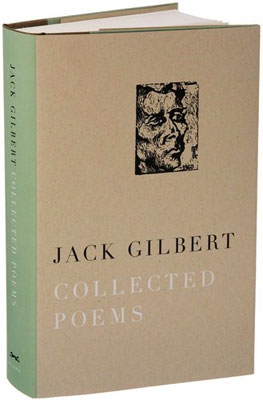
Ethics Quote of the Week: Jack Gilbert (1925-2012)

A Brief for the Defense

Sorrow everywhere. Slaughter everywhere. If babies
are not starving someplace, they are starving
somewhere else. With flies in their nostrils.
But we enjoy our lives because that’s what God wants.
Otherwise the mornings before summer dawn would not
be made so fine. The Bengal tiger would not
be fashioned so miraculously well. The poor women
at the fountain are laughing together between
the suffering they have known and the awfulness
in their future, smiling and laughing while somebody
in the village is very sick. There is laughter
every day in the terrible streets of Calcutta,
and the women laugh in the cages of Bombay.
If we deny our happiness, resist our satisfaction,
we lessen the importance of their deprivation.
We must risk delight. We can do without pleasure,
but not delight. Not enjoyment. We must have
the stubbornness to accept our gladness in the ruthless
furnace of this world. To make injustice the only
measure of our attention is to praise the Devil.
If the locomotive of the Lord runs us down,
we should give thanks that the end had magnitude.
We must admit there will be music despite everything.
We stand at the prow again of a small ship
anchored late at night in the tiny port
looking over to the sleeping island: the waterfront
is three shuttered cafés and one naked light burning.
To hear the faint sound of oars in the silence as a rowboat
comes slowly out and then goes back is truly worth
all the years of sorrow that are to come.

—American poet Jack Gilbert, who died this week.