Ethics Quiz: The Conundrum Of The Wrong Color Baby

mixed race child

[ I wrote about this case last fall, before the decision in the case. This Ethics Quiz is a follow up. No fair cheating by going back and reading the older post until you have your answer]

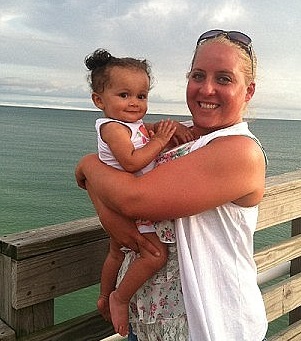
Jennifer Cramblett, one half of a white same-sex couple that wanted a child, went to Midwest Sperm Bank and chose adeposit from donor No. 380. The sperm bank made that ol’ “8 looks like 3” mistake, so instead of the white donor the couple wanted, they were given sperm from donor No. 330, a black man. Cramblett filed suit against the sperm bank in 2014 for damages because she gave birth to a mixed-race daughter, and that was not what she paid for.

The sperm bank apologized but refunded only part of the cost to Cramblett and her partner Amanda Zinkon, and denied that damages were warranted.  Cramblett’s suit alleged that the mistake caused her and her family stress, pain, suffering and medical expenses, and that she feared that her daughter, Payton, now 3, would grow up feeling like an “outcast.” Attorneys for the sperm bank argued that “wrongful birth” suits should only apply to cases where a child is born with a birth defect that was predictable. In this case, the girl, Payton, is normal and healthy. Being black, of course, is not a defect.

The judge threw out the case, but headlines have been misleading. The original suit—why, I don’t know—failed to allege negligence, which I would think would be a slam dunk. The suit can and presumably will be refiled with a negligence claim, and that’s res ipsa loquitur.  (If a black child is born to a white couple, someone goofed somewhere.) There will be damages, but the question is how much and on what basis.

Your Ethics Alarms Ethics Quiz of the Day is this:
Would it be ethical for a court to hold that having a child that is the “wrong” color is a hardship, injury, or misfortune worthy of damages?

Continue reading

The Dissing Of Judy Carne: Wait, Aren’t Newspapers Supposed To Make Us BETTER Informed?

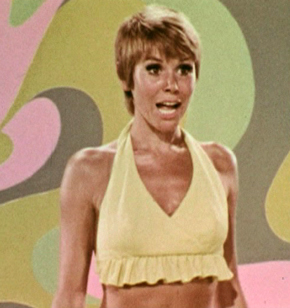
CarneWitness this bit of “information,” courtesy of Washington Post writer Justin Wm. Moyer on the occasion of the death of Judy Carne, Rowen and Martin’s Laugh-In’s “Sock it to me” girl:

“The joke now seems as cruel — and as difficult to explain to millennials — as it seemed hilarious in the 1960s: A young, lithe woman, often in a miniskirt or less, stands onstage. She announces that it’s “sock-it-to-me time.” Then, she is hit with a bucket of water, or dropped through the floor, or otherwise clobbered in some form or fashion.

Is the Post now recruiting its feature writers from Jupiter? Are editors extinct? Has the paper decided that political correctness, hyper-sensitivity, gender-obsession dementia is both mandatory and universal?

What happened to Judy Carne is called slapstick. It is funny. It has always been funny. What happened to Judy Carne is no more cruel—that is, not cruel at all—than what repeatedly happened to Lucy,  Laverne, Wile. E. Coyoteand Raven, Tina Fay…Katy Perry….

Anyone writing about history and culture in a national publication—about anything, really—has has an obligation to actually know what he or she is writing about, and not make stuff up. There was definitely a lot of stuff that was on Laugh-in that will look weird today to anyone under the age of 50 or so; after all, the show is a half-century old, and the Sixties were weird even in the Sixties. Goldie Hahn dancing in a bikini with words written all over her body, for example. People laughing at every mention of the word “bippy.”  Nehru jackets. NOT women and men having staged catastrophes befalling them for laughs. Continue reading

“When The Ethics Alarms Don’t Sound” Files: Auschwitz

auschwitz-showers

From The Jerusalem Post:

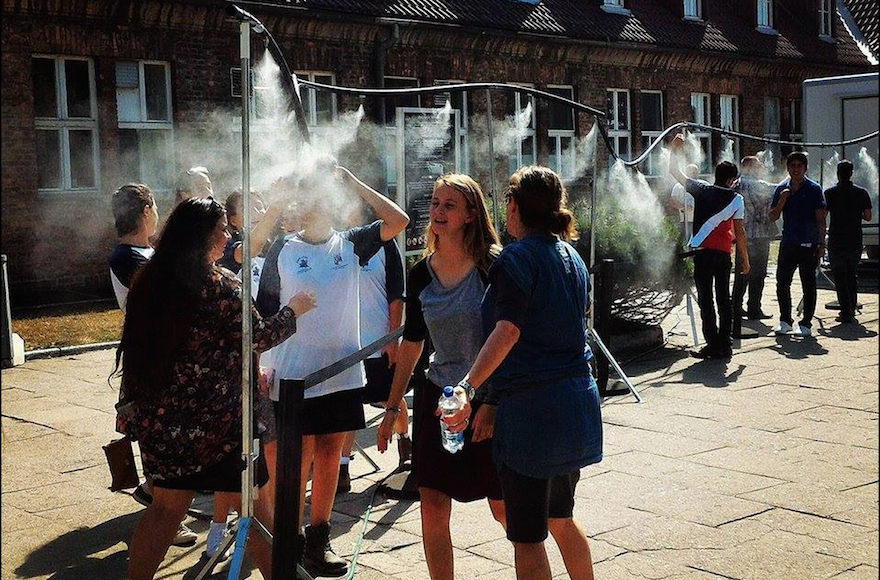
Israeli tourists who arrived at the Auschwitz death camp in Poland on Sunday expressed shock and outrage over what appeared to be the placement of showers near the entrance to the site. Asked about the outcry, a spokesman for the Auschwitz memorial told The Jerusalem Post that “no showers were placed at the parking lot of the museum.” “Because of the heat wave in Poland, sprinklers which cool the air were placed near the entrance to the museum. They are located near the area where – in the open sun and without any possibility of hiding in the shade – a queue of people who collect the entry cards to the memorial site is formed. “Among visitors there are many people who come from countries where such high temperatures as we have this summer in Poland do not occur. We have noticed cases of fainting among people. Therefore we must do everything possible to minimize the risks connected with the heat and high temperatures and take care of the safety of health of our visitors. The sprinklers are installed on the days of highest temperatures and removed with the temperature drops.”

“As a Jew who has lost so many relatives in the Holocaust, they looked like the showers that the Jews were forced to take before entering the gas chambers,” Meir Bulka, 48, told the Post . According to Bulka, he was not the only one deeply disturbed by this unusual scene. “All the Israelis felt this was very distasteful,” he said. “Someone called it a ‘Holocaust gimmick.’” Bulka decided to do something proactive about the situation rather than let it go. He went to the main office and asked the management for an explanation to the strange scene.

“The management decided that it was a good way to cool people off on a very hot day,” Bulka said.

There is something very wrong when those in charge of the Auschwitz historical site decide to erect nozzles misting water downwards at visitors outside the notorious death camp and nobody in involved in the decision detects the obvious problem. Whether the problem is with the administrators, the post-WWII generations, non-Jews, or something else, like Europe and the world, I am not sure. I do know that ethics alarms should have been ringing loudly. Did they malfunction? Or are they not installed?

Clues to what is wrong are suggested by the comments made by Ann Althouse’s readers to this story. I’m still trying to figure them out. Her audience is, I presume, ideologically-mixed, tilting to the left, and on the young side, since she is a law professor and many students read her posts. Is the utter insensitivity bordering on hostility to Jewish sensitivity on the little, insignificant matter of the Holocaust displayed here  attributable to ignorance (an excuse the Polish curators of the museum cannot claim), callousness, distance from the events memorialized, antipathy to Israel or anti-Semitism?

Here are 17 out of the 20 comments so far: Continue reading

KABOOM! Political Correctness Makes The University Of Tennessee Go Nuts!

headexplode

This isn’t a joke. I wish it was. If it was a joke, I wouldn’t need a rag on a long stick to wipe my brains off the ceiling.

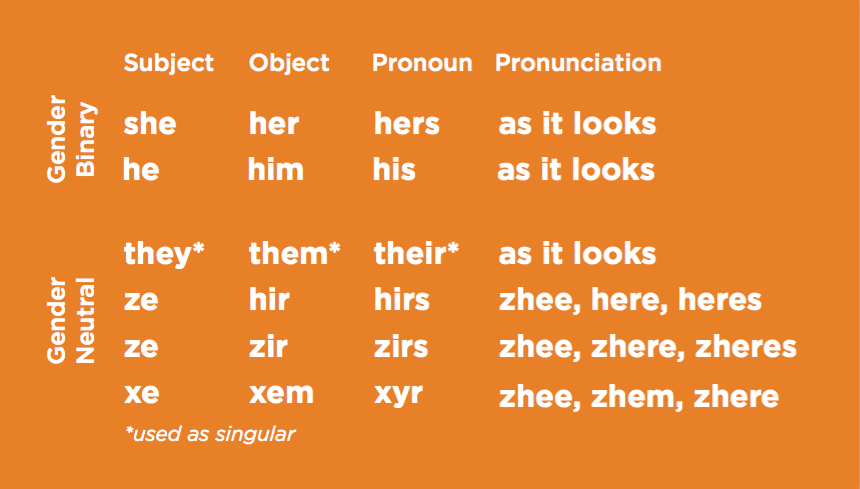
The University of Tennessee told its staff and students to stop calling each other ‘he’, ‘she’, ‘him’ and ‘her’, in order to “alleviates a heavy burden for persons already marginalized by their gender expression or identity. Instead they are to start referring to one another with terms like ‘xe’, ‘zir’ and ‘xyr.’  Like this…

gender-pronouns

Yes, they are quite, quite mad. If any UT student is still sane enough to understand how batty this is, in the sage words of the Amityville House,

“GET OUT!!!” Continue reading

Comment of the Day #1: Ethics Quiz: The Looney Tunes Cartoon Disclaimer

coonsongs

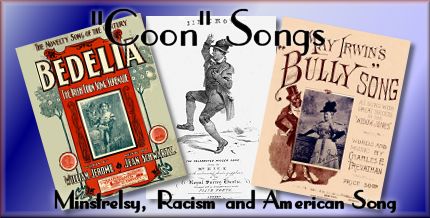
The Looney Tunes post was the latest in along line of those that I never anticipated provoking the rich discussions that they have, and this fascinating post by SamePenn really took off into an unexpected direction—ragtime and racist songs—that is  still relevant to the post. Just read, enjoy, ponder and learn; I did.

Here is SamePenn’s Comment of the Day, and there’s a second COTD coming,  on the post, Ethics Quiz: The Looney Tunes Cartoon Disclaimer: Continue reading

Ethics Mystery: What Was So Wrong With Curt Schilling’s Muslim Tweet?

schilling-tweet

ESPN pulled former baseball pitching star Curt Schilling from its Little League broadcast team yesterday after becoming aware of his tweet above, saying in a statement:

“Curt’s tweet was completely unacceptable, and in no way represents our company’s perspective. We made that point very strongly to Curt and have removed him from his current Little League assignment pending further consideration.”

Schilling then tweeted this apology: “I understand and accept my suspension. 100% my fault. Bad choices have bad consequences and this was a bad decision in every way on my part.” This appears to be a #1 on the Ethics Alarms Apology Scale...“An apology motivated by the realization that one’s past conduct was unjust, unfair, and wrong, constituting an unequivocal admission of wrongdoing as well as regret, remorse and contrition, as part of a sincere effort to make amends and seek forgiveness.” 

If I had delivered it, however, it might have been a #7: “A forced or compelled version of 1-4, in which the individual (or organization) apologizing may not sincerely believe that an apology is appropriate, but chooses to show the victim or victims of the act inspiring it that the individual responsible is humbling himself and being forced to admit wrongdoing by the society, the culture, legal authority, or an organization or group that the individual’s actions reflect upon or represent.”

What was it exactly that Schilling’s tweet showed, implied, suggested or stated that was” completely unacceptable,  in no way represent ESPN’s  perspective, and that justified his employer’s action? Curt Schilling is an inquisitive, politically active and opinionated man, and has always annoyed sportswriters because 1) he’s openly conservative 2) he’s a devout Christian, and isn’t shy about talking about it, 3) he can write and speak coherently and was capable, while playing, of challenging their criticism, and 4) he’s a lot smarter than most of them. I am assuming in this inquiry that nothing in Schilling’s contract or agreement with ESPN restricted his right to express non-sports opinions on his own time.

Here are some possibilities: Continue reading

Ethics Quiz: The Looney Tunes Cartoon Disclaimer

Warner Brothers Warning

Above is the disclaimer shown at the beginning of each DVD in the Looney Tunes Golden Collection: Volume 4, Volume 5, and Volume 6 sets, as well as the Daffy Duck and Foghorn Leghorn Looney Tunes Super Stars sets and the Warner Bros. Home Entertainment Academy Awards Animation Collection:

Your Ethics Alarms Ethics Quiz of the Day:

Is the warning that introduces the Warner Brothers classic cartoon videos fair and responsible?

Continue reading

Ethics Observations On The Old Dominion University Signa Nu Fraternity Freakout

It is times like this when I wonder if my theory that ethics evolves toward wisdom may be excessively optimistic.

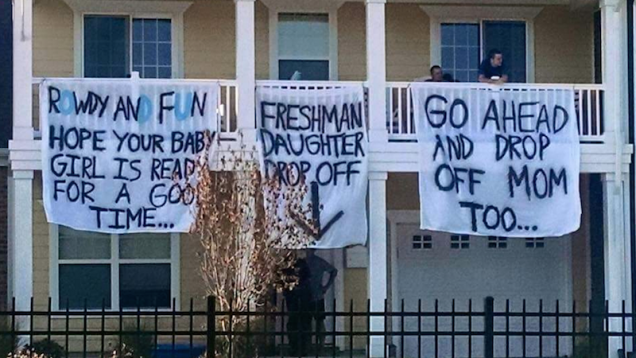
In Norfolk, Virginia, Old Dominion University officials went bananas when a fraternity engaged in randy verbal hijinks of questionable taste at its off-campus home across the street from the institution. ( “Hijinks of questionable taste” is synonymous with “acted like a fraternity.”) Some frat boys hung painted bedsheets as banners to welcome incoming freshmen co-eds, thusly:

Fraternity

Well, THE HORROR!

ODU’s leadership responded to the tomfoolery by issuing the following statement:

“Messages like the ones displayed yesterday by a few students on the balcony of their private residence are not and will not [be] tolerated. The moment University staff became aware of these banners, they worked to have them removed. At ODU, we foster a community of respect and dignity, and these messages sickened us. They are not representative of our 3,000 faculty and staff, 25,000 students, and 130,000 alumni.

Ours is a community that works actively to promote bystander intervention and takes a stand denouncing violence against women. The ‘It’s on Us’ video is just one example of ODU students’ leadership on this topic. In addition, the University ensures all students receive education on the prevention of sexual harassment and relationship violence.”

Old Dominion’s Student Government Association also issued their own verbal condemnation of the incident. They filmed a video directly addressing the banners and stated: Continue reading

Ethics Heroes: 64% Of African-Americans. There Is Hope!

black-lives-matter

From The Hill:

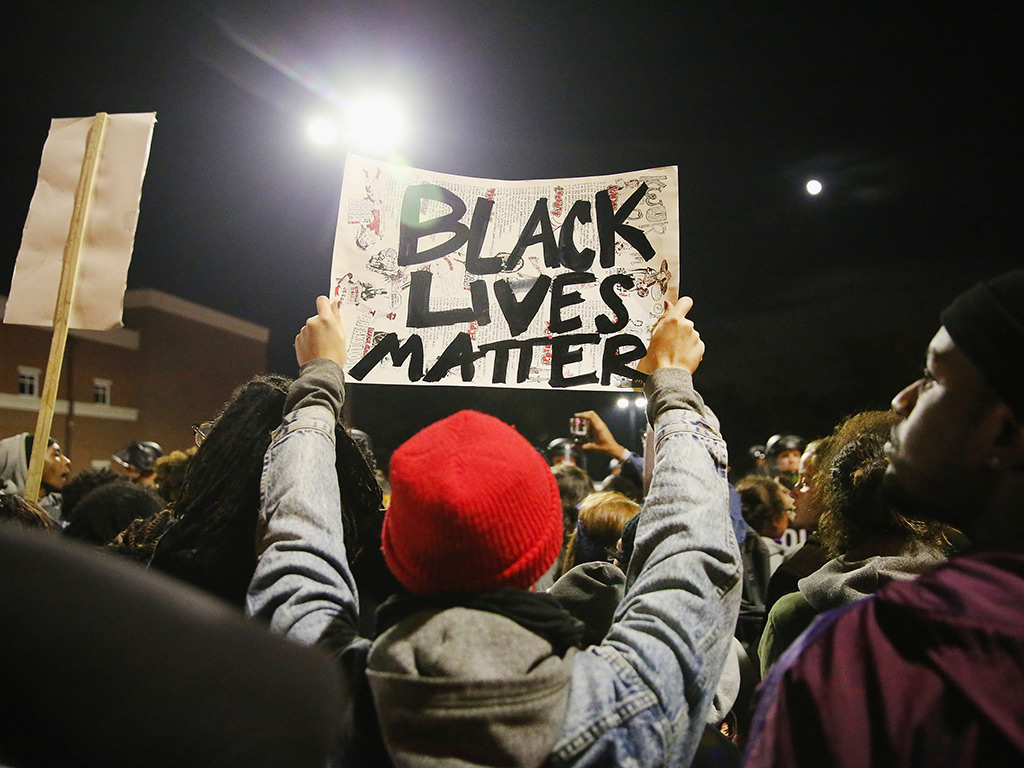
Two out of three black people prefer the term “all lives matter” to “black lives matter,” according to a Rasmussen poll released Thursday. Only 31 percent of black people surveyed said that the statement “black lives matter” most closely comports to their own beliefs, compared to 64 percent who chose “all lives matter.”Seventy-eight percent of total respondents also chose “all lives matter,” including 81 percent of white and 76 percent of minority respondents, according to the poll.

Now that is genuinely good news, and after the last couple Ethics Alarms posts, I bet you needed some.

Quick, you pandering, pusillanimous, finger-in-the-air, weak-kneed, race-baiting politicians like Martin O’Malley—better retract those apologies for not flagging down the racist #BlackLivesMatter train to board fast enough…at least until the next poll, then you can flip again.

___________________________
Pointer: Instapundit.

Othello Ethics: When Political Correctness Is Unethical

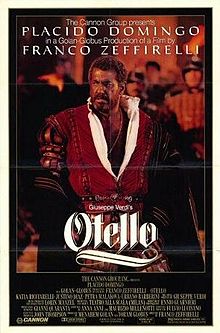
OtelloposterI don’t know how I missed the fact that opera producers and directors had stopped playing Shakespeare’s Othello in Verdi’s “Otello” as a black man, but I’m glad I did for this long—it allowed me a few more fleeting days of ignorant happiness without dreading the collapse of civilization as we know it. Apparently, however, that is the trend, and now the Metropolitan Opera is caving to the nonsense as well.

It makes perfect sense that most theater companies stopped using dark makeup on light actors for their “Othellos”, because there is seldom a valid reason to cast a white actor in the role: there are plenty of African Americans up to the task. Now, if a great white actor should want to play the role as a black man—like Laurence Olivier did in the 1960s—why not? Judith Anderson played Hamlet (“Hamlet lost” announced one critic); this is why it’s called “acting.” Still, I appreciate the position that the one black tragic hero in Shakespeare’s canon should not be casually distributed to an actor who can easily be cast in any of the other great roles, while black actors have far too few opportunities to star in the classics.

Opera, however, poses a different problem: Otello is a prime tenor role and there are not great black tenors in abundance. Moreover, it is one of the great tenor role: if you are a great tenor, it doesn’t matter if you are green—people want to hear you sing the role. Thus the Met’s new production of Verdi’s “Otello” that will open its season next month will star a white tenor, but not in black makeup. Continue reading