What Rudyard Kipling Taught My Father

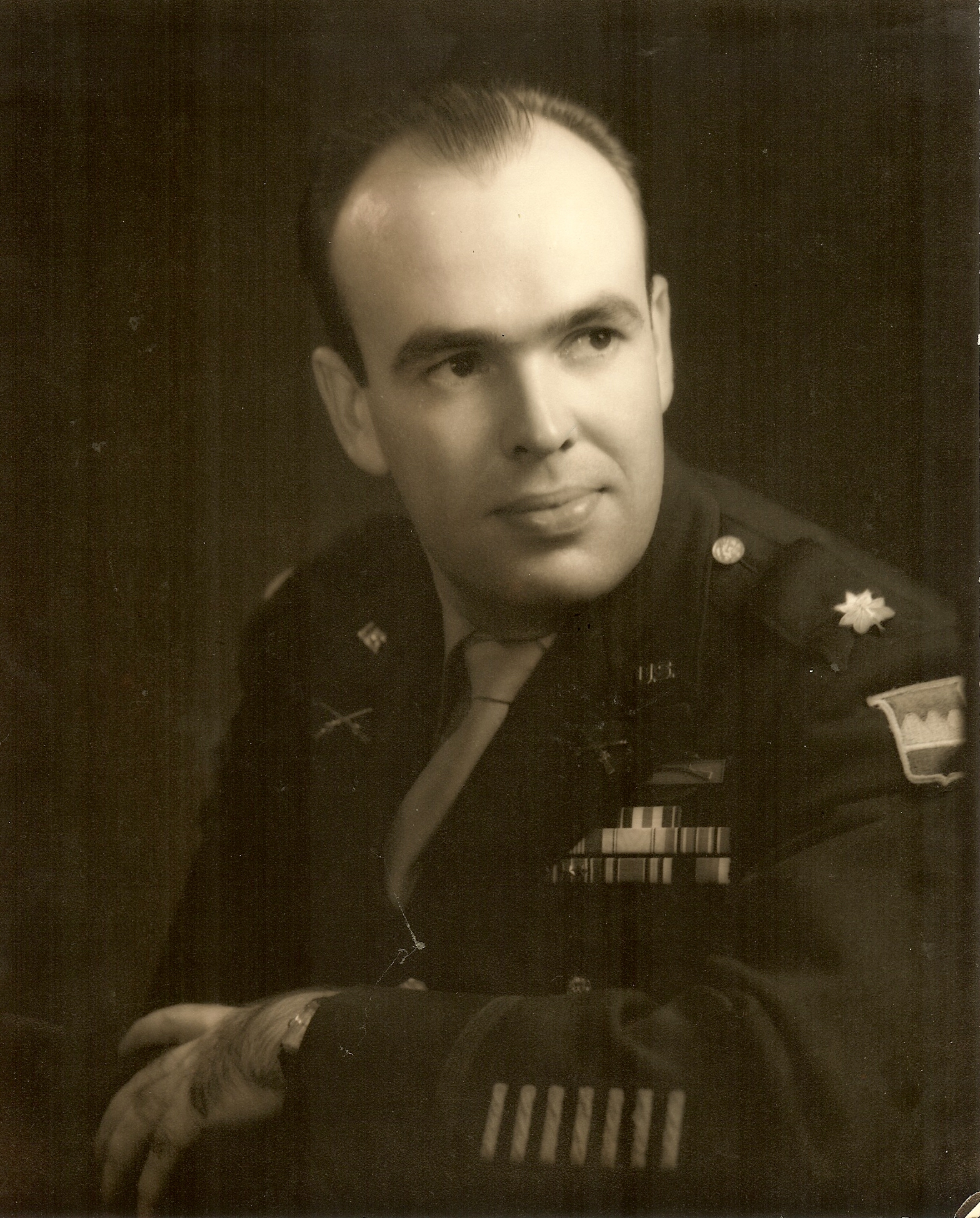
Jack Marshall Sr Army portrait

Today the Army buried my father, Major Jack Marshall, Sr., with full military honors. He had earned them, for he was a hero in World War II. Let me correct that: every soldier who serves in battle is a hero, but my Dad had a few special distinctions, like a Silver Star and a Bronze Star to go with his Purple Heart.  He  sustained a crippling wound to his foot from a hand-grenade, healed enough to jam what was left of it into a boot, and went on to fight in the Battle of the Bulge.

Under the clearest of blue skies, with the cemetery covered in snow, a caisson drawn by black horses, one without a rider, carried my father to a gravesite ceremony where the American flag draping his casket was carefully folded by six soldiers and given to my mother, following a 21-gun salute. My father was a hero off the battlefield as well, a profoundly ethical and courageous man throughout his life, and how he got that way is worth examining. Continue reading

Final Ethics Alarms on the Coakley-Brown Race: Fairness and Honesty Take a Holiday

Some concluding Ethics Alarms from the Brown-Coakley Senate race, many with the same dispiriting lesson: hyper-partisan zealotry is causing many Americans to abandon their senses of fairness, proportion, and common sense : Continue reading

Reid on Obama: When the Apology is Worse Than the Offense

Publicly apologizing for conduct that wasn’t wrong creates a cultural misconception that such conduct is wrong. This confuses and misleads everyone. It would be nice, not to mention responsible and courageous, for public figures who find themselves being attacked by public opinion mobs for “offending” the wrong person or group, to demand some precision regarding their so-called offense before begging for forgiveness.

This is obviously too much to expect from politicians, perhaps because they seem to have such a difficult time figuring out the difference between right and wrong in the best of circumstances. Rep. Joe “You lie!” Wilson apologized, but made it clear that he was proud of what he did, making his apology a formality rather than a genuine expression of regret. Now Senate Majority Leader Harry Reid has quickly apologized for private comments he made about Barack Obama, reported in a new campaign ’08 backroom gossip book by journalists Mark Halperin and John Heilemann. Because the reporting of Reid’s comments has resulted in his being accused of racism, and because Reid himself has been quick to accuse others of racism when it suited his purposes, the apology was inevitable. It also has written another incomprehensible definition into Washington’s “Things Politicians Can’t Say” Code. Continue reading

Lies, Scams, Fiascos, and “Saved By the Bell”

Some diverse ethics observations while living the lonely existence of a traveling ethics trainer… Continue reading

The Ethics of Bigotry, Part III:Tom Yawkey’s Red Sox Racism, and How Not to Prove It

Tom Yawkey owned the Boston Red Sox for four decades and his wife Jean owned them for one more; it is accurate to say that he was the most influential individual in the storied team’s existence. Yawkey bought the team in the mid-Thirties, after it had suffered through one of the worse stretches of awful play on record, sparked by an earlier owner’s fire sale of its best players, including Babe Ruth. Yawkey ran the Red Sox with an open checkbook and a stated objective of giving the city of Boston the best championship money could buy. Soon the once-pathetic team was fielding all-time greats like Jimmy Foxx, Joe Cronin, Lefty Grove, and a brash young phenom named Ted Williams. By the time Yawkey died in 1976, the Red Sox had one of the largest, most loyal and fanatic fan bases in sports, and the team was entrenched in New England culture. Boston remains properly grateful, and the re-naming of the street outside Fenway Park “Yawkey Way” is no perfunctory tribute. (The names of Yawkey and his wife Jean are spelled out, vertically,  in Morse Code on the famous hand-operated scoreboard on Fenway Park’s left field wall.

The Red Sox came close, but they never won that World Championship under Yawkey.  One of the primary reasons was that the Yawkey way was racist. Continue reading