A Presidents Day Celebration (PART 1): I Love These Guys, I Really Do. Yes, Every One Of Them.

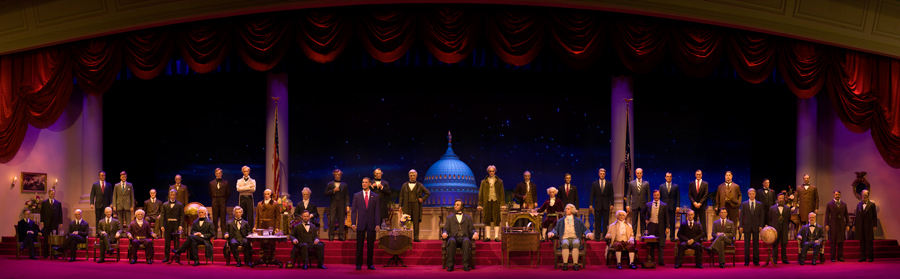
Hall of the Presidents

I have a lifetime love affair with the Presidents of the United States.

I love these guys, every one of them. The best of them are among the most skilled and courageous leaders in world history; the least of them took more risks and sacrificed more for their country than any of us ever can or will, including me. Every one of our Presidents, whatever their blunders, flaws and bad choices, was a remarkable and an accomplished human being, and exemplified the people he led in important ways. Every one of them accepted not only the burden of leadership, but the almost unbearable burden of leading the most dynamic, ambitious, confusing, cantankerous and often unappreciative nation that has ever existed. I respect that and honor it.

I have been a President junkie since I was eight years old. It’s Robert Ripley’s fault. My father bought an old, dog-eared paperback in the “Believe it or Not!” series and gave it to me. It was published in 1948. One of Ripley’s entries was about the “Presidents Curse”: every U.S. President elected in a year ending with a zero since 1840 (William Henry Harrison) had died in office, and only one President who had dies in office, Zachary Taylor, hadn’t been elected in such a year. The cartoon featured a creep chart—I still have it—listing the names of the dead Presidents, the years they were elected, and the year 1960 with ???? next to it. When Jack Kennedy, the youngest President ever elected, won the office in 1960, my Dad, who by that time was sick of me reminding him of the uncanny pattern, said, “Well, son, so much for Ripley’s curse!”

You know what happened. (John Hinckley almost kept the curse going, but Ronald Reagan, elected in 1980, finally broke it.) That year I became obsessed with Presidential history, devising a lecture that gave an overview of the men and their significance in order. My teacher allowed me to inflict it on my classmates.  Much later, Presidential leadership and character was the topic of my honors thesis in college. When I finally got a chance to go to Disneyland, the first place I went was the Hall of Presidents. When the recorded announcer said, “Ladies and Gentlemen, the Presidents of the United States!” and the red curtain parted to show the audio-animatrons of all of them together, it was one of the biggest thrills of my life.

Today I will honor our past Presidents with some of my favorite facts about each of them, trying hard not to get carried away. Is it ethics? It’s leadership, which has always been the dominant sub-topic here, but yes, it’s ethics.  I know I’m hard on our Presidents, as I think we all should be: supportive, loyal, but demanding and critical. I am also, however, cognizant of how much they give to the country and their shared determination to do what they think, rightly or wrongly, is in the country’s best long-term interests. File this post under respect, fairness, gratitude, and especially citizenship. And now…
“Ladies and Gentlemen, the Presidents of the United States!

Continue reading

Comment of the Day: “Ethics Alarms Encore: ‘Aesop’s Unethical and Misleading Fable: The North Wind and the Sun”

AESOPSFABLNever let it be said that we aren’t eclectic on Ethics Alarms! Today’s Comment of the Day is a thoughtful response to my objections to Aesop’s “The North Wind and the Sun,” a 2011 post that I republished this week in fascination over how it continues to draw traffic. The thread here and on the original has touched on many diverse topics, including theology; commenter Rich (in CT), however, just submitted the most interesting analysis yet.

Here is his Comment of the Day on the post, Ethics Alarms Encore: “Aesop’s Unethical and Misleading Fable: The North Wind and the Sun:

”The comparison of God and Satan in Job to the Sun and Wind is an apt comparison, because the fable relies on “divine privilege”. An exercise of divine privilege should not be taken as an example of behavior that non-divine entities should emulate. Rather, they are external parameters that set up a hypothetical environment to illustrate the lesson of the story.

I specifically say “lesson”, because the objective of the story need not be a superficial “moral”. The “moral” that was selected here was a lazy plot device by an author who attempted to pigeon-hole the fable into his limited definition of a fable. While the particular moral in the version you share is useless, the fable perhaps might better illustrate both the use of strategic thinking and well as illustrate the role of moral luck in one’s success. A more apt “moral”, if any, might be to be clever, but acknowledge the limit of cleverness.

Ethical behavior never takes place in a vacuum, but must balance certain principles with the current circumstances. In the fable, an arbitrary task is selected, and the two actors use the tools at their disposal to attempt to achieve the task. The wind has two tools: blow hard or soft; the sun has analogous tools: beat hard or soft. Given the task, arbitrarily set up as a competition, only one had tools that could creatively solve the task.

The tale here thus illustrates a few important principles that are of value to a child; creative use of ones tools can lead to success, and that not everyone has a every tool available. A non-lazy author might use the fable to teach the value of cooperation, pooling a group’s tools to complete a task.

The particular task is irrelevant, and is set up as an exercise of divine privilege. Mere mortals have no right to manipulate the weather, but the fable’s embodiment of the solar rays and moving air manipulate these elements in an ethically neutral manner. The selection of a mere mortal as a target of task, might be to lead the reader indirectly, through empathy, to the conclusion that some circumstances are arbitrary and beyond one’s control. The objective might be to teach humility, that one is never entirely responsible for one’s success, no matter how clever one might be.

I thus agree that the particular version of the fable shared is unethical. This is, however, the result of a lazy author. The premise, if used wisely, is ethically neutral; Aesop, or some other interpreter, could use the premise of the story to teach a valuable lesson if so desired.


Ethics Alarms Encore: “Aesop’s Unethical and Misleading Fable: The North Wind and the Sun”

north-wind-and-the-sun-story-oil-painting

[ I vowed that the next time I got a comment on this post, I would publish it again. It hails from four years ago, when  Ethics Alarms got a quarter of the traffic it gets now. I confess that I wrote it on a whim, having been talking with my wife about how Aesop’s Fables were joining Mother Goose stories,  Edward Lear limericks and American folks song in the Discarded Bin of our culture and then stumbling upon a fable I had either never read before or forgotten about.  To my surprise the post attracted intense criticism from fans of the story—I even had to ban a commenter who got hysterical about it—and the post joined a very eclectic group of early essays here that get considerable and consistent readership every week. Apparently there are a lot of Sun-worshipers out there. Anyway, since you probably missed it the first time, here it is.]

Today, by happenstance, I heard an Aesop’s Fable that I had never encountered before recited on the radio. Like all Aesop’s Fables, at least in its modern re-telling, this one had a moral attached , and is also a statement of ethical values. Unlike most of the fables, however, it doesn’t make its case. It is, in fact, an intellectually dishonest, indeed an unethical, fable.

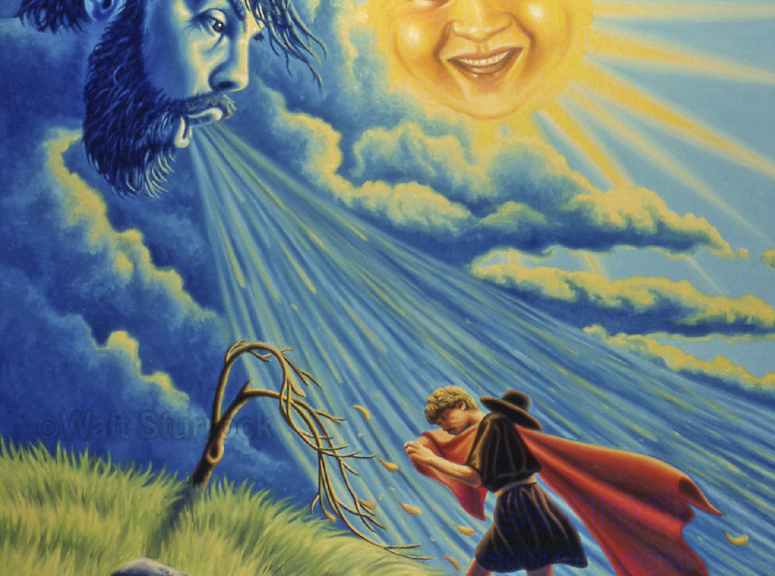
It is called “The North Wind and the Sun,” and in most sources reads like this:

“The North Wind and the Sun disputed as to which was the most powerful, and agreed that he should be declared the victor who could first strip a wayfaring man of his clothes. The North Wind first tried his power and blew with all his might, but the keener his blasts, the closer the Traveler wrapped his cloak around him, until at last, resigning all hope of victory, the Wind called upon the Sun to see what he could do. The Sun suddenly shone out with all his warmth. The Traveler no sooner felt his genial rays than he took off one garment after another, and at last, fairly overcome with heat, undressed and bathed in a stream that lay in his path.”

The moral of the fable is variously stated as “Persuasion is better than Force” , or “Gentleness and kind persuasion win where force and bluster fail.”

The fable proves neither. In reality, it is a vivid example of dishonest argument, using euphemisms and false characterizations to “prove” a proposition that an advocate is biased toward from the outset. Continue reading

Ethics Dunce: Monica Lewinsky

Under that bus is Monica Lewinsky, and it wasn't Matt Drudge who threw her there.

Under that bus is Monica Lewinsky, and it wasn’t Matt Drudge who threw her there.

It truly pains me to have to write anything negative about Monica, who was exploited and humiliated by a President of the United States, and had her life permanently derailed because she trusted and even loved a rogue who regarded her as little more than an animated sex toy. Her re-emergence now, however—yes it is sad and desperate and makes me furious at Bill Clinton all over again—in the new guise of a “cyber-bullying” victim is intolerable, a delusion on multiple levels, despicable blame-shifting, and a welcome weasel-out of-accountability-free card for the Clintons. Yeccch.

I’m sorry for what happened to you, Monica, but you’re 40 now: it’s time to start seeing life more clearly—especially your own and the reasons why you are in the mess you are.

“Overnight, I went from being a completely private figure to a publicly humiliated one. I was Patient Zero,” Lewinsky said in a speech Monday to Forbes’s Under 30 Summit in Philadelphia. “The first person to have their reputation completely destroyed worldwide via the Internet.”

It has to take a near-fatal injection of self-serving historical air-brushing for the ex-intern to say this with a straight face, and it tells us volumes about the audience that it didn’t start throwing tomatoes:

  • She wasn’t a “completely private figure.” She was a woman having a sexual affair with the President of the United States while he lied about it—to his wife, his staff, and under oath (I haven’t covered all of the lying, either.) That makes her an individual who is engaged in conduct with tremendous public and official consequences who is only “private” because a powerful official is using his power to make it so. The proper term is “inevitable public figure waiting for the dam to break.”
  • The reason for her humiliation was and is William Jefferson Clinton, and no other. He is the one who described her as “that woman,” while denying what was true. He is the one who made his relationship with her part of a legal record while he was trying to avoid the consequences of another “bimbo eruption,” as his long-time “fixer” liked to call them.

Continue reading

Comment of the Day: “Ethics Dunce: ESPN”

domestic_violence

I know I have written a lot about the Ray Rice domestic abuse case and its aftermath, most recently this morning, regarding CNN’s Carol Costello’s warped argument for suspending ESPN commentator Stephen A. Smith. (The Rice-related posts are here, here, here and here, with an earlier Comment of the Day here.) I keep coming back to it because it involves many ethics issues: sports and violence, the “Star Syndrome,” and the special treatment of cultural celebrities, race, domestic abuse, women’s enabling of domestic abusers, political correctness, scapegoating, corporate cowardice, incompetent journalism, and more.  Chris Marschner’s recent comment on one of those posts is better than anything I’ve written on the topic, I think. As is often demonstrated here, the readers make Ethics Alarms work.

One connection I didn’t make until I read Chris’s comment is the relevance of the Gaza crisis and the public’s reaction to it to some of the ethical principles involved. There is no question that Hamas provoked a violent attack by Israel, knowing that women and children would be harmed, and that Israel would be condemned by many as a consequence. Israel is much more powerful than Palestinian forces, and provoking it to defend itself when the inevitable results will be harm to the powerless is irresponsible. Yet we hear the same absolutist reactions to the Gaza casualties that are at the root of the anger focused on Smith’s comments. The victims of violence are never responsible in any way, and suggesting otherwise is immoral.

It’s a very flawed analogy in other respects. The civilians are not the ones provoking Israel, for example, though Hamas represents them–their harm is harm to Gaza, and therefor Hamas. Most of all, Israel is not an abuser, though I could quote many commentators who regard it as one, and who might see the comparison with Ray Rice as apt.

Here is Chris Marschner’s Comment of the Day on the post, Ethics Dunce: ESPN: Continue reading

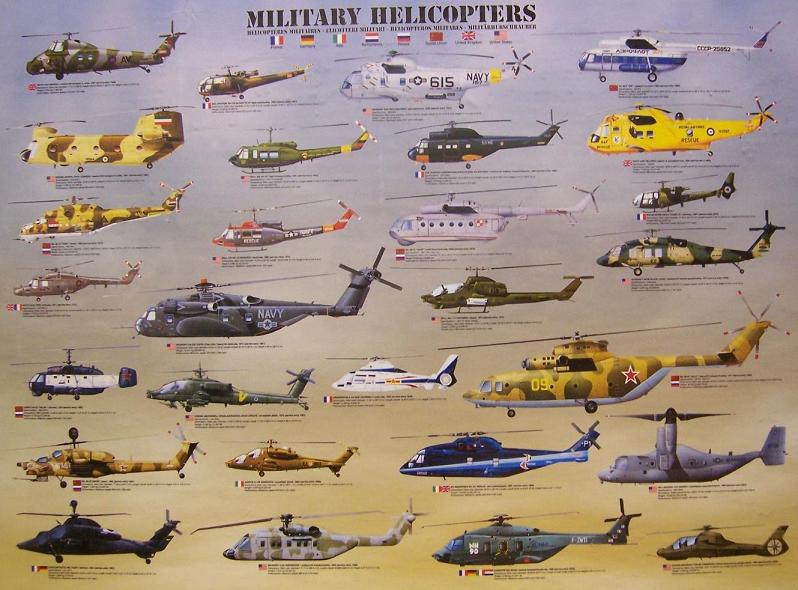
Political Correctness Delusions #2: The U.S. Military Naming Its Helicopters After Native American Tribes Is A Slur

Military Helicopters 0088

The scourge of political correctness causes many kinds of damage, but the most ominous is that it intentionally greases a steep slippery slope. The effort to constrain private and public expression according to an endlessly versatile definition of “offensiveness”  is a desirable weapon for political activists, grievance bullies, censorious and debate-challenged advocates, weenies, and busybodies. Once one specious argument for strangling another small sliver of free speech succeeds, usually after capitulation in the face of relentless vilification and hounding aided and abetted by the press, this ugly and anti-American faction of the progressive movement just moves on to another target. The process  will never end, although it will get more oppressive, restrictive and absurd. That is, it will never end until a backlash and an outbreak of rationality stops it in its tracks.

The Patent Office’s politically motivated (and doomed) attack on the Washington Redskins was an example of political correctness at its worst, and sure enough, here comes another deluded censor with a related and even sillier grievance. Simon Waxman wrote a jaw-dropping op-ed for the Washington Post arguing that the military’s use of Native American names and works on its helicopters and weaponry is a “slur.” Why, you ask? Because the white man cheated and defeated the Indians using superior fire power, that’s why. Yeah, sure, we pretend to honor their bravery now, but that’s just to salve our guilty consciences.  He blathers…

The message carried by the word Apache emblazoned on one of history’s great fighting machines is that the Americans overcame an opponent so powerful and true that we are proud to adopt its name. They tested our mettle, and we proved stronger, so don’t mess with us. In whatever measure it is tribute to the dead, it is in greater measure a boost to our national sense of superiority. And this message of superiority is shared not just with U.S. citizens but with those of the 14 nations whose governments buy the Apache helicopters we sell. It is shared, too, with those who hear the whir of an Apache overhead or find its guns trained on them. Noam Chomsky has clarified the moral stakes in provocative, instructive terms: “We might react differently if the Luftwaffe were to call its fighter planes ‘Jew’ and ‘Gypsy.’ ”

Continue reading

Five Ethics Observations On The Redskins Trademark Decision

Washington-Redskins

1. Several commenters predicted that the ruling of the U.S. Patent Office cancelling the registered trademark of the Washington Redskins would warrant a “Kaboom!” here, the Ethics Alarms designation reserved for occurrences or statements so outrageous that they make my head explode. Please. Even pre-weakened by previous cranial fireworks, my head isn’t that unstable. The decision was neither a major surprise, nor was it as momentous as the ignoramuses in the media, social media, and Harry Reid pronounced it to be.  (More on the decision here.) The Redskins retain their federal trademark registrations until all appeals have been exhausted, and that process could take years. The registrations will be canceled only if the team loses all appeals, and if I were owner Dan Snyder, I would appeal up to the Supreme Court if I had to. This should be done not to preserve the Redskins name, which is archaic and at this point more trouble than its worth, but to beat back the forces of government censorship of thought and words, of which the anti-Redskins campaign is a significant, if relatively trivial, part.

2. Washington Post sports columnist Sally Jenkins, not a fan of the name, beat me to a column about what is really troubling about the decision, as she wrote… Continue reading

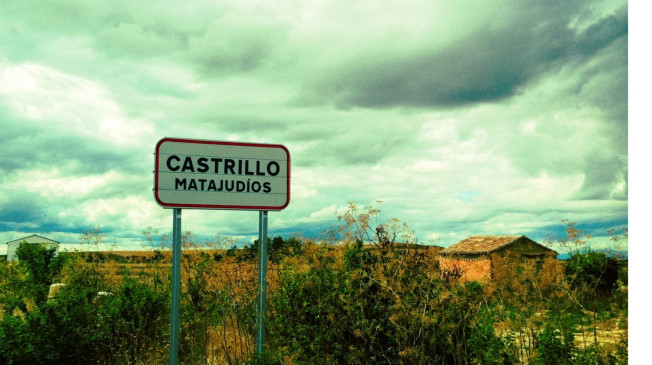
“Camp Kill Jews” Ethics

And they say “Washington Redskins” is offensive.

"What a charming name! What does it mean in your language? Oh...wait, WHAT???"

“What a charming name! What does it mean in your language? Oh…wait, WHAT???”

From Spain comes the news that the town of Castrillo Matajudios, which literally means “Camp Kill Jews,” has voted to change its name after 400 years. This appears to be part of Spain’s recent, rather belated, I would say, efforts to acknowledge and express regret to Jews for the persecution they endured during the Spanish Inquisition.

Strange as it seem, the current name probably came into being not to denigrate Jews, but to protect Jews in the town who had officially converted to Catholicism under threat of torture and death. As such, it is a piece of history, and the words convey information about the town, the country, and the people who lived there, not a slur….except to someone who knows nothing about the town.

I’m not aware of a perfect analogy for this situation. It has some similarities to the plight of the towns of Blue Ball, Pennsylvania, named for a famous and long-gone hotel in the area, and the Amish community of Intercourse, Pennsylvania, named when a common uses of that term conveyed “fellowship.” In a  parallel universe where political correctness was dictated by social conservatives rather censorious progressives, these towns might be getting coercive signed letters from Republican Senators “suggesting” that they change their names to something less offensive, even though, as with the Redskins name, history and context would be lost. Continue reading

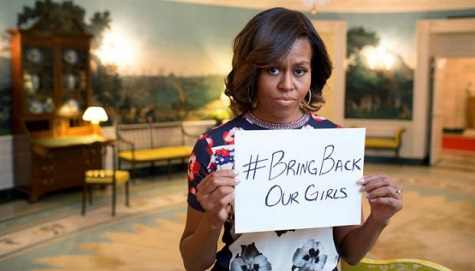
Michelle Obama’s Hashtag Mini-Train Wreck

mo_selfie_lg

The debate over Michelle Obama’s ill-advised foray into hashtag diplomacy–itself a misbegotten creature whose birth we will live to regret, if we don’t already–has turned nasty and stupid, and, of course, partisan, with the media, so incapable of objective analysis now that it hurts even to watch it pretend, rushing to defend the First Lady who walked right into this spinning blade, and should have known better.

Some observations and conclusions:

  • When the First Lady, any of them, presumes to wade into policy matters with the force of her husband’s office behind her, he is presumed to approve. When the policy matter involves international diplomacy, which, we hope, is carefully planned, whatever action or statement the First lady makes is indistinguishable from a Presidential action. Would the President of the United States appear anything other than weak and ridiculous if his response to any international crisis was to hold a sign in a photograph for Twiiter and make a frownie-face? No. Therefore, it was damaging to the President, the office and the nation for Michelle to tweet the same, but with her in his place, out to the world.
  • Two analogies, one real and one hypothetical, come to mind. In his short term of office, President Gerald Ford’s major domestic problem was exploding inflation, and he obviously had no idea what to do about it. His “program,” essentially, consisted of publicizing the mantra “Whip Inflation Now!,” most prominently embodied with the infamous “WIN” buttons. Ford was widely ridiculed by this exercise in futile gesture and magical thinking. He deserved it. Michelle’s stunt—it is a stunt—is redolent of Ford’s buttons.

The hypothetical: Imagine if the U.S. and the world’s (disgraceful and ) general policy of contrived ignorance of the Holocaust prior to our entering World War II was addressed by FDR having his “legs,” Eleanor, pose for a photo as she held up a sign reading “Save the Jews”…and frowning. Continue reading

Ethics Quiz: If There Is Going To Be A Racial Double Standard For Bigoted Statements, Can We Please At Least Know What It Is?

stop-sign2

Item: Donald Sterling, billionaire owner of the NBA Clippers, while speaking with his mistress/girl friend/ escort in the bedroom, announces that he doesn’t want her bringing black men to Clippers games. In the process, he does not say anything specifically derogatory about African- Americans. He believes the statement is private, and that he is talking to someone he could trust.He was wrong. A recording of the conversation was leaked to the press, and Sterling has been roundly vilified as a vile racist, threatened with a boycott by the players, mostly African-American, in the NBA, fined 2.5 million dollars and banned from the game.

Item: Via Mike Wise, Washington Post sports writer—

“Following Wednesday’s Pacers-Wizards game in Indianapolis, during the time when NBA rules permit media members to be present, the music blaring in the Indiana locker room was filled with vile language: racist, homophobic and misogynist. Afterward, I complained on Twitter that if Commissioner Adam Silver truly wants an inclusive league, he ought to address this (common) practice.”

Result: Wise, who is white, was attacked as a racist. What NBA players listen to in the locker room is none of his business, he is told (but what Donal Sterling says in his bed room is their business.) The NBA has done, and is expected to do, nothing.

Item: Appearing on ESPN where he is a commentator, Charles Barkley, former NBA star (and an African-American), decided to deride the women of San Antonio, Texas as fat. “There’s some big ‘ol women down there,” said Barkley. “That’s a gold mine for Weight Watchers.” He added, “Victoria is definitely a secret. They can’t wear no Victoria’s Secret down there.” A spokesperson for a fat acceptance group protested:

“Making slurs about body size is just as offensive as making comments about body color. One would think being a black man, he’d be more sensitive to having his physical body criticized. It’s totally out of line. He should absolutely apologize.”

Barkley not only refused to apologize, but defiantly challenged anyone objecting to his remarks, jokes or future comments to “change the channel.”  Nobody expects Barkley to suffer any consequences from this series of events.

Item: In 2007, talk show provocateur Don Imus got into a facetious discussion with a broadcast team member about how te women’s basket ball team from Rutgers was “rough looking” and had some “nappy-looking ho’s.” He also referenced Spike Lee’s “Do the Right Thing,” and the film’s “Jigaboos vs.  Wannabes.” Imus apologized profusely, pronouncing the exchange inappropriate, thoughtless and stupid. Under pressure from various civil rights groups,  WFAN, which produced his show, fired Imus, who has never regained his previous prominence.

Item: In 2013, media professional Justine Sacco tweeted a race-based joke before boarding a plane to Africa: “Going to Africa. Hope I don’t get AIDS. Just kidding. I’m white!” A furious cyber mob condemned her as a racist, and demanded her punishment. When she landed in Africa, she learned that she had  been fired.

Your Ethics Alarms Ethics Quiz for today is…

What the hell is going on here?

Continue reading