
Comment Of The Day: “Comment Of The Day: ‘Catching Up: Professional Ethics And The Challenger Disaster’”
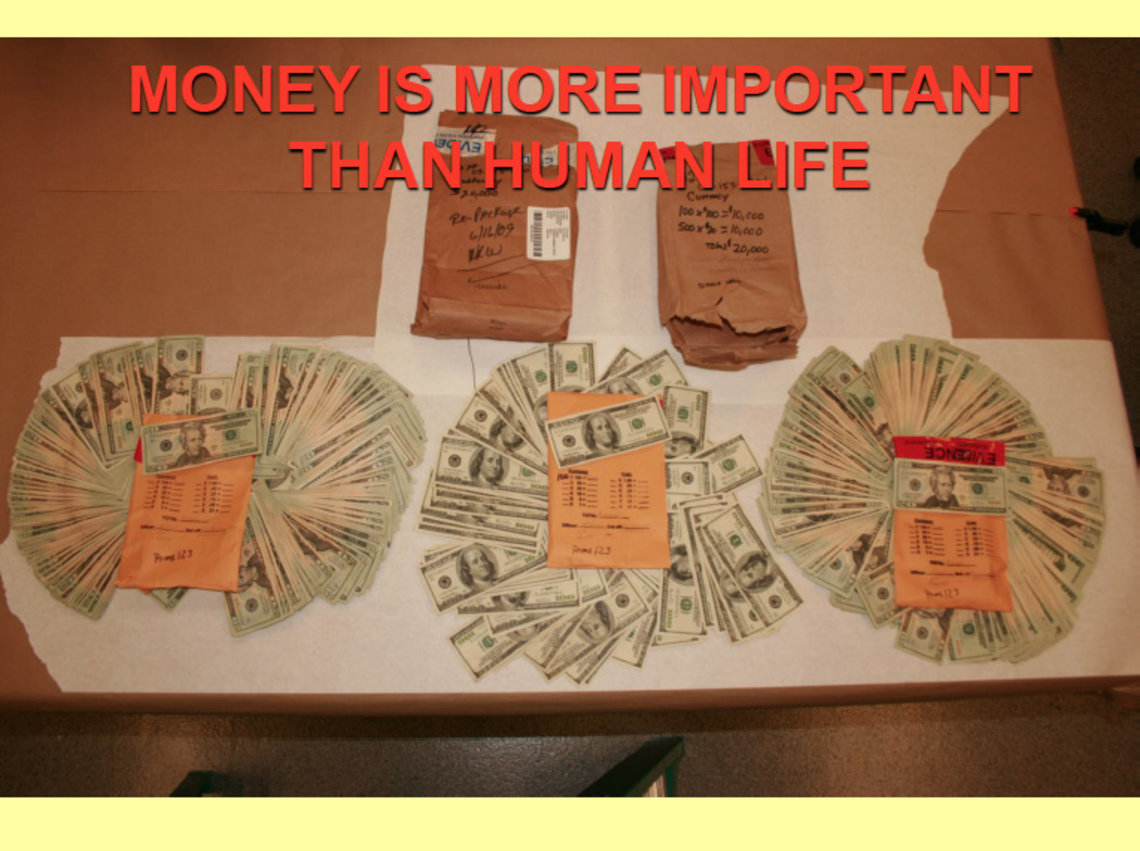
Why didn’t I see this coming? The Washington Supreme Court overturned the conviction of Odies Walker for murder and other crimes in the slaying and robbery of an armored car guard because the prosecutor’s PowerPoint presentation during his closing argument constituted “flagrant, pervasive, and prejudicial” prosecutoral misconduct. While lawyers “may use multimedia resources in closing arguments to summarize and highlight relevant evidence,” the court ruled, “advocacy has its limits.”
The prosecutor presented a whopping 250 PowerPoint slides to the jury during the summation, including 100 with the caption “defendant Walker guilty of premeditated murder.” The slide above with the caption, “Money is more important than human life,” was typical of the problem assailed by the justices: it was never alleged that Walker said this, or even thought it. Continue reading
Karen Owen is a recent graduate of Duke. Either they don’t comprehend the nature of the internet at Duke, or are graduating more than their share of cruel, thoughtless, reckless dolts, because Owen decided it would be a hoot to make a faux “senior thesis” Powerpoint presentation documenting her sexual activity with thirteen Duke athletes, none of whom gave consent to be named in her “study”. She classily dubbed it her “fuck list,” but it was unofficially titled “An education beyond the classroom: excelling in the realm of horizontal academics.” (“Horizontal academics…get it?) Then she e-mailed the file to three “friends,” and, as you’ve probably guessed, one or more of them sent it around to their friends, who eventually made it viral. Soon two websites decided to maximize the harm to all concerned, as websites are prone to do…especially websites called “Deadspin.” Continue reading
The headline on the website Wired reads:
“Colonel Kicked Out of Afghanistan for Anti-PowerPoint Rant”
Slate picked up the story and gave it a slightly different spin in its headline, taking its cue from Wired:
“Colonel Fired for Hating PowerPoint”
These are provocative headlines, raising issues about the First Amendment, a fanatic insistence on conformity in the military, and even dark conspiracies involving the U.S. Army and Microsoft. However, they are completely and intentionally misleading. The colonel was not fired for hating PowerPoint, and he didn’t go on any “anti-PowerPoint rant.” Here is what really happened, in Wired’s own words: Continue reading
 Ethics Alarms
Matthew B. scored a Comment of the Day by raising an issue I had never thought about before: how the misapplication of PowerPoint leads to inadequate training and information dissemination within organizations and bureaucracies. He also references the reluctance of managers to know when to hand over decision-making to subordinates. That is something I have thought about, a great deal.
Two of my favorite movies illustrate how competent leaders and managers know when to delegate a crucial decision down. “Topsy-Turvy,” the superb 1999 film depicting the creation of “The Mikado” by Gilbert and Sullivan, accurately depicts the real incident when, after the final rehearsal, W.S. Gilbert told the “Mikado” cast that he was cutting “My Object All Sublime,” also known as “The Mikado’s Song.” Gilbert was a tyrannical director, and the cast was terrified of incurring his wrath. This time, however, they stood up to him. The cast as one told him that he was making a mistake. The soloist, Richard Temple, they told their shocked and steaming director who also had conceived of the song, should have the chance to perform it in front of an audience. His fellow cast members were certain it would be a hit. Gilbert, recognizing the certitude the cast must have had to risk his fury at being contradicted, decided that his performers might have a clearer understanding of the show even that he had, and relented. Temple would sing about letting “the punishment fit the crime” on opening night.
The song was an instant sensation, like “The Mikado” itself, and is still one of the most quoted of all G&S songs.
The other example is at the climax of “Hoosiers,” the great basketball film based on the true story of the miraculous Indiana state championship won by a tiny school from Milan, Ind. in 1954. During the last time-out before the team’s last chance to score, which would, if successful, give the team a one-point victory over their greatly favored competition in the championship game, the coach (Gene Hackman), who has led the ragtag group this far by emphasizing teamwork over individual achievement, lays out a play in which the team’s superstar, Jimmy Chitwood will be a decoy. He plans for another player to take the final shot, but the team doesn’t move. “What’s the matter with you?” he shouts as his players just stare, looking hesitant. “If I get the shot, I’ll make it,” Jimmy says, after a long pause. So the coach, who has insisted all season that his word was law, makes the same decision Gilbert did. When your subordinates are that sure, trust them. They know better than you.
Jimmy shoots and scores the winning basket as time runs out.
Here is Matthew B.’s Comment of the Day on “Comment Of The Day: ‘Catching Up: Professional Ethics And The Challenger Disaster’”:
Continue reading →