No, Insurance Companies Treating People With Pre-Existing Conditions Differently From Other Customers Is Not “Discrimination.”

Here is a prime example of how the news media’s intentional or careless use of words warps public perception and policy.

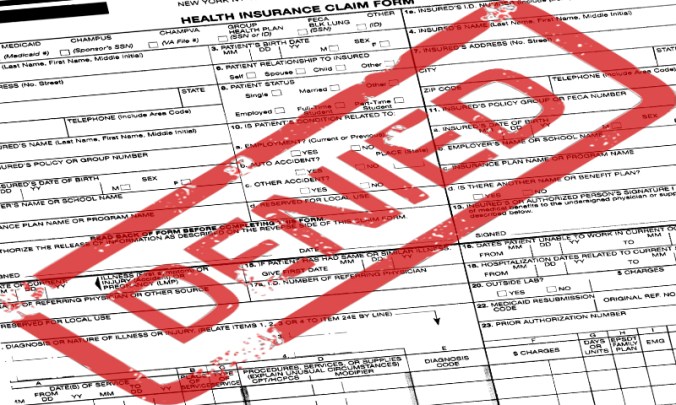
Yesterday, the New York Times front page story about the GOP House’s health insurance bill noted in its second paragraph that the bill wouldn’t do enough to prevent “discrimination” by insurance companies against those with per-existing conditions. I have seen and heard that term, discrimination, used over and over again to describe the per-existing condition, and I apologize for not blowing the whistle on it long ago.

Using the term, which is usually used in other contexts to signal bigotry, bias and civil rights violations, is misleading and virtually defamatory. Insurance companies are businesses. They are not charities. They are not public resources. If an automobile company turns down an offer of half what a car costs it to make, it is not discriminating against that customer who made the offer. If a restaurant customer says to a waiter, “I have just four bucks, but I want you to bring me a dozen oysters, a steak, and a nice bottle of wine,” the establishment isn’t discriminating against the diner for sending him to McDonald’s.

Insureds with per-existing conditions want to pay premiums that are wildly inadequate for the coverage they know and the insurance company knows they are going to need. Insurance companies are portrayed as villains because they don’t eagerly accept customers who they know will cost them money, often a lot of money. That’s not discrimination. That’s common sense, basic business practice, fiscal reality,and responsible management. The news media and the under-cover socialists among us want to create the illusion that a company not wanting to accept customers who lose money rather than add to profits is a mark of corporate greed and cruelty, hence the use of “discrimination” as a falsely pejorative term, when the fair and honest word is “problem.” Continue reading

Unethical Quote Of The Week: Mediaite Reporter Tommy Christopher

“When I had a heart attack a few years ago, I was uninsured and I haven’t been able to get insurance ever since then. Listening to all the pressure on the President to negotiate, some of it coming from inside this room, made me think: Is there a chance the President would be willing to delay Obamacare for a year if Republicans would agree to delay heart attacks for a year?”

—- Tommy Christopher, Mediaite reporter, questioning White House spokesman Jay Carney in this week’s press briefing.

Naaa, there’s no media bias! That’s just a right wing myth!

So let us just say that Christopher’s question is unprofessional, evidence of a conflict of interest, unethical journalism and worthy of employer sanctions, if not outright firing. That wasn’t a question; that was a pro-Administration talking point and outright advocacy. It was an abuse of his position and obligation to the public.

The shutdown isn’t about his personal needs, and whether or not the Affordable Care Act is especially helpful to his health problems shouldn’t influence his coverage of the dispute or his questions to Carney. Since Christopher is apparently incapable of keeping his personal biases from influencing the performance of his job, at least on this issue, he needs a different assignment, as well as a refresher course in journalism ethics.

____________________________

Source: The Blaze

Ethics Observation of the Week: the Wall Street Journal’s James Taranto

Dissecting a Washington Post op-ed in which Attorney General Eric Holder and HHS Secretary Kathleen Sibelius argued for the constitutionality of Obamacare,  Wall Street Journal wit and political commentator  James Taranto argued that the two Obama officials…

“…can’t even muster a coherent argument in favor of ObamaCare as a matter of policy. The op-ed opens with what is meant to be a heartstring-tugging anecdote: Continue reading