Back Off, Progressives: Dwight David Eisenhower Was An Excellent President In His Time.

Which is, after all, the only time that matters.at the time.

I just wrote a long rebuttal to a recently Trump Deranged friend of impressive mind and credentials, who decided to go after, of all people, President Dwight Eisenhower for a speech in which he extolled moral values because, my friend’s Facebook post declared, “in real life the years of Eisenhower’s administration—essentially all of the 1950s—did not even come close to measuring up to the tenets of social, racial, ethnic and sexual justice and economic equity that most of us today believe are the standards of a just society.”

“That is an important reminder for all of us us that times do change,” he continued, “and that as right-thinking as Eisenhower’s words seem on the surface, they were spoken by the leader of a society that was very repressive in many ways—economically, socially, racially, sexually and otherwise.” This, to use the vernacular, pissed me off greatly. Ike has gone higher in my estimation of him as President the more I read about him and especially the more I watch other President struggle with the job he seemed to do effortlessly. (Of course, Ike may be the only one of our Presidents for whom the office could be considered a step down in difficulty and responsibility, after overseeing the Allied effort to save the world in World War II.)

Here, with minor edits to protect the guilty, is what I posted in response to that slap at Ike:

***

But this is the purest form of Presentism, and a grossly unfair assessment of Ike, one of our most under-rated and effective Presidents. It is always easy to go back and condemn figures of the past who did not have the benefit of many decades of accumulated experience and wisdom; easy and wrong. It is by this standard that we saw efforts in demented regions like San Francisco (and our own) to strip historical honors from, among others, the Founders, because they were not sufficiently psychic to reject their society’s and culture’s mistaken beliefs, such as the inherent inferiority of other races to theirs.

 I’ve studied Eisenhower’s own writings and those about him. His vision of the Presidency was that his job was to protect and preserve the culture, not change it; that the culture would evolve and change in its own time, when society was ready for it. As a result, Eisenhower led a United States that honored and trusted its institutions at a level that seems astonishing today. He had a great part in that.

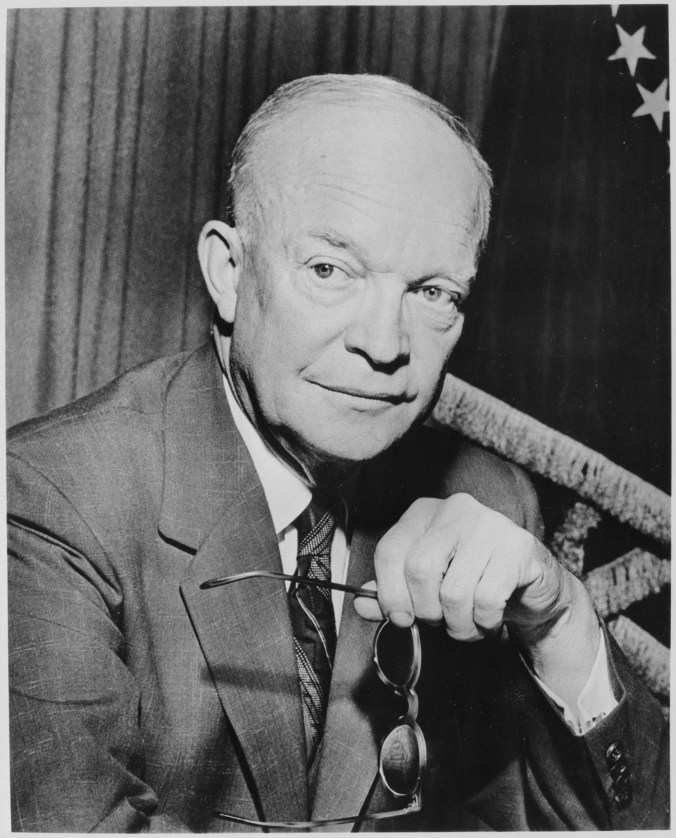
Nobody accused him of being a “king,” but in Boston, even then a bulwark of the Democratic Party, kids listened to “Hail to the Chief” on the most popular children’s show (creepily titled “Big Brother”!) as a photo of Ike appeared (the one above, in fact) on the screen and we “toasted” the President of the United States with a glass of milk. The Horror.


Continue reading

I’ve Been Looking For an Excuse to Note the Passing of Harrison Ruffin Tyler, and I Finally Found One…

Harrison Tyler was the grandson of John Tyler, our tenth President of “Tippecanoe and Tyler too” fame, who became President when William Henry Harrison died. When my late wife Grace and I were on our honeymoon, we met Harrison Tyler as we toured Sherwood Forest, the Tyler family home and plantation. He was still working as a chemical engineer at the time. I knew that Tyler had many offspring and was still spawning them in his 60s, but I found it astounding that his grandson was still among us. John Tyler was 63 when son Lyon Gardiner Tyler was born, and Lyon was 75 when Harrison was born.

The ethics connection popped up in Ann Althouse’s post about Harrison Tyler, who died on Memorial Day. She quoted from a biography of Tyler that called him a racist. One of Ann’s astute commenters criticized the label as injecting “a kind of modern commentary” into a biography of a 19th Century historical figure. Ann bristled at that, writing that the conduct so described was “out and proud racism” and asking, “You think that’s modern commentary”?

Another commenter slapped Ann down decisively. “The Oxford English Dictionary’s first recorded utterance of the word racism was by a man named Richard Henry Pratt in 1902,” the commenter wrote. “Yes, I think labeling the mindset of an 1840’s person using a word that wasn’t in their vocabulary is an author’s intrusion.” Yet another commenter wrote, “Racism was the water people swam in back then.”

Bingo. At a time when blacks were almost universally believed to be an inferior sub-species of human, “racism” as we now define it didn’t exist. Calling a President in the 1840s a racist is like saying that physicians who practiced bleeding in the 18th century engaged in medical malpractice. It’s presentism.

I’m surprised Althouse fell into that trap.


Why DEI Must DIE: Exhibit A

On the bright side, I suppose its reassuring to know that The Great Stupid is even worse “across the pond” than it is here…

Shakespeare’s Birthplace Trust, which cares for buildings in the immortal playwright’s home town of Stratford-upon-Avon, has announced that it wants to “create a more inclusive museum experience.” Therefore, the center of Great Britain’s essential public appreciation of the fact that it was so fortunate to be the birthplace of the greatest writer the world has ever known (unless the Bard was really a visitor from another planet, which has been my personal theory since I had to study “King Lear” in detail in order to direct a production of it) will seek ways to act on the diagnosis that Shakespeare’s works have been used to advance white supremacy.

Yes, these are morons. The legacy of one of the most vital catalysts of Western civilization is in the hands of morons. Now what?

Continue reading

On President Biden’s Unethical Apology

Barack Obama was the all-time champion of cynical, politically motivated Presidential “apologies.” It’s election time, though: the Democrats are in trouble, and clearly some bright propagandist assisting those faceless apparatchiks pulling poor Joe’s strings suggested that what the hell, it couldn’t hurt to have Biden grovelling to Native Americans right now.

It was a loud and angry grovel: Joe was shouting into the mic for some reason, telling the Gila River Indian Community in Arizona in part,

“The federal government has never, never formally apologized for what happened, until today. I formally apologize as president of the United States of America for what we did. I formally apologize. I have a solemn responsibility to be the first president to formally apologize to the Native people. It’s long, long, long overdue. Quite frankly, there’s no excuse this apology took 50 years to make….One of the most horrific chapters of the American history. We should be ashamed. The vast majority of Americans don’t know about it.” 

Bite me. Biden probably didn’t know about it until he was told that he was making the speech. This was his first diplomatic visit to a tribal nation in his four-year term. Gee, what a coinkydink that it came right before an election! He should be ashamed to engage in such obvious pandering, but the shame threshold of his party is at an all-time high right now. Have you noticed?

Let’s look at everything wrong with this “apology”:

Continue reading

Ethics Survey: Ann Althouse’s “Big Question” [Corrected]

Reflecting on one of the mini-essays (by essayist/novelist Natasha Staggin) today’s obnoxious Times feature, “Future Cringe/One day we’ll look back on this moment and wonder: What were we thinking?,”  my favorite quirky blogger, Ann Althouse writes,

I love the big question, what are we doing now that we are going to be embarrassed/ashamed of in the future? I noticed this question when I was a child and heard things said about people in the past, as if those people were benighted and ridiculous. We are those people to people somewhere out there in the future. How can I avoid being looked at by them the way people today are looking at the people of the past?

One answer is to be more charitable to the people of the past. Realize that some day you’ll be in their position, and don’t you want those future people to be charitable toward you? Embarrassment is over-worried about. Maybe those people in the future are looking back at us and laughing about how prudish and uptight we were to think of them feeling embarrassed about us. That is, one day we’ll look back and be embarrassed that we were embarrassed.

Typical Ann: raising what she calls a “big question,” and almost immediately suggesting it isn’t so big after all, writing, “Embarrassment is over-worried about,” which is also an interesting sentence coming from a writer who is so often a language pedant.

As an ethicist who believes that human understanding of what is right and wrong constantly evolves and usually improves, my initial reaction to Ann’s question is, “What do you mean we?” I’ve been around a while, and I can honestly say that I’m not “embarrassed” by anything I once believed in, or any major reaction to the data life gave me. Individual deeds, words and moments, sure. I have plenty of past moments I wince to think about.

Stagg was talking about the Wuhan virus freak-out, so don’t look my way. I didn’t freak out, and I did my best to try to keep others from doing so, failing miserably. However, the pandemic is the kind of event one’s response should only be embarrassed about if one knew, or should have known, that one’s response was dishonest, cowardly, or destructive, or if one had a genuine choice and foolishly took the wrong one. The pandemic was a unique challenge, and we were, as Marty Baron ( Liev Schreiber) says in “Spotlight” when a Boston Globe staffer is admitting that he could have blown the whistle on the Catholic Diocese predator priest scandal sooner, just “stumbling around in the dark.”

Yes, I think Dr. Fauci should be embarrassed. Andrew Cuomo should be embarrassed. The New York Times should be embarrassed, and the health “experts” who endorsed the mass George Floyd demonstrations as an exception to their warnings about large gatherings should hide their heads under bags. But for the most part, I think the pandemic is a poor example for Ann’s question. Continue reading

Ethics Dunce (And Preening Jerk): Actor Alan Cumming

Yecchh.

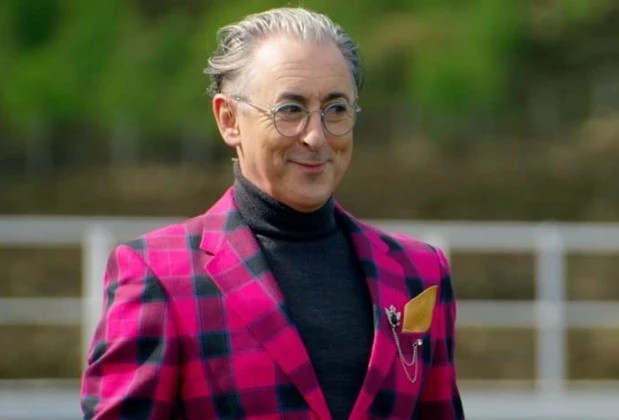
Alan Cumming, whose ticket to stardom was punched by acquiring his initial acclaim reprising a role that was originated by a superior performer (Joel Grey, the first “MC” of “Cabaret”) gladly accepted an OBE, the British award bestowed on the Scottish performer in 2009 by the late Queen Elizabeth II as part of her annual birthday honors list. Cumming was allegedly honored for his work as an actor as well as his campaigning for LGBTQ+ rights: the Crown was trying to pander to the LGBTQ crowd at the time. There is no way Cummings’ acting career warranted the honor itself. It was the equivalent of the Academy of Motion Picture Science giving a Lifetime Achievement Award to Demi Lovato.

Cumming happily accepted the honor and the prestige and publicity that go with it. Now, 11-years later, whatever momentum the Order bestowed on him has waned, as has Cumming’s career. ( His short-lived CBS series “Instinct,” where he played, badly, an academic who assists the NYPD solve crimes, was unwatchable.) And thus it is that he decided he could once again get headlines and stir social media controversy by marking his 58th birthday by announcing on Instagram,

Continue reading

Institutional Ethics Dunce: The U.S. Congress

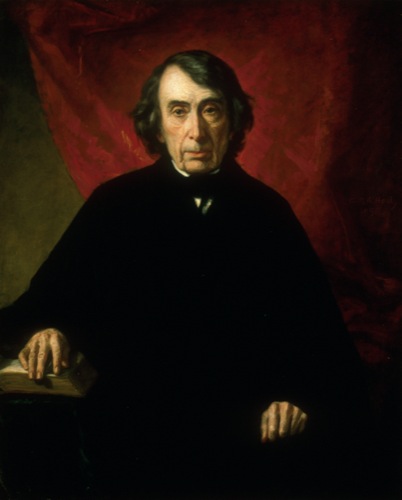
The House of Representatives passed legislation last week ordering the Capitol’s bust of Roger Taney, the Supreme Court Chief Justice who wrote the Dred Scott decision, to Hell, or someplace. It will be replaced by a new bust of Thurgood Marshall, the first black judge to serve on Court.

Of course it will. This naked political grandstanding wouldn’t be complete without installing a black judge’s image as a rebuke to the evil white judge. The legislation now heads to President Biden’s desk to be signed, probably followed by a victory jig.

The pandering legislation says that Taney’s bust is “unsuitable for the honor of display to the many visitors to the Capitol.” It currently sits at the entrance of the Old Supreme Court Chamber in the Capitol where the Supreme Court met from 1810 to 1860. Taney led the court from 1836 to 1864.

“While the removal of Chief Justice Roger Brooke Taney’s bust from the Capitol does not relieve the Congress of the historical wrongs it committed to protect the institution of slavery, it expresses Congress’s recognition of one of the most notorious wrongs to have ever taken place in one of its rooms, that of Chief Justice Roger Brooke Taney’s Dred Scott v. Sandford decision,” the legislation says. I wonder how many of the members who voted for the legislation know anything about Taney or have ever engaged in an objective reading of his opinion. My guess: not many. Maybe none.

Continue reading

An Abject Grovel That Explains So Much

Ethics Alarms has frequently discussed the ethical and professional deterioration of the historian profession, as it, like so many other professions and institutions, has given up integrity for ideology and political agendas. History itself is under attack as a result, with historical censorship and airbrushing increasingly being favored over objective and balanced examination that does not distort past figures and events by the viewing them through the lens of “presentism.”

In an essay on the website of the American Historical Association, the organization’s president, James Sweet, offered constructive criticism of the trend, writing in part,

Continue reading

Comment Of The Day: “More On Nichelle Nichols: Regarding Althouse’s Misguided Snark”

This Comment of the Day by Tom P (who has been on a roll of late) is one of those “in case you missed it…” COTDs. Here he is on the ever-green topic of attacks on past conduct of others by those residing in the present, as raised in by the post, “More On Nichelle Nichols: Regarding Althouse’s Misguided Snark”…in case you missed it:

***

The thing about the past is that it is past. The past serves only two purposes. One role is to bring pleasure in the present as you remember past enjoyable episodes of your life. The second is as a guide toward future action. No matter how hard you try, the past cannot be changed or undone. Althouse’s  protestations serve no purpose. Slavery has been abolished for a few years now and all slaves and slaveholders are dead. The original producers of Star Trek are dead or no longer in business. There are no living aggrieved parties nor remedies available to them if they were alive.

More On Nichelle Nichols: Regarding Althouse’s Misguided Snark

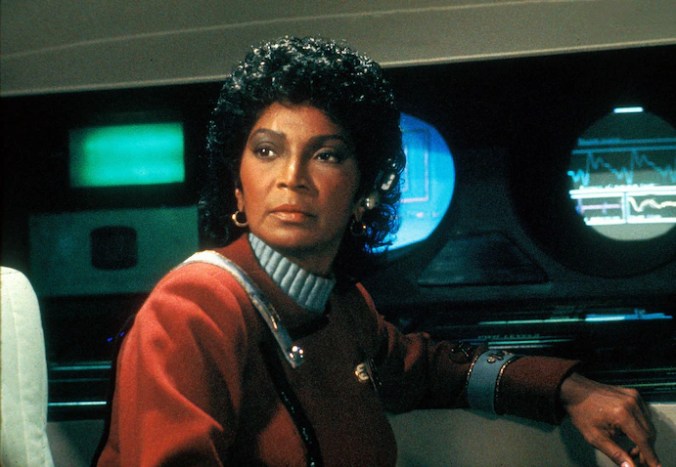
In the introduction to this post, Ethics Alarms mentioned the passing of “Star Trek” icon Nichelle Nichols, whose obituaries prominently noted her participation in TV’s first inter-racial kiss. I wrote in part,

“She was more model than actress, and as her role developed, much to her disappointment, the part of “Uhura” became little more than set dressing. But she played one of the first  black female characters on TV to have a non-subservient role, indeed Uhura was fourth in the “Enterprise” chain of command…. In her autobiography, Nichols wrote that Martin Luther King told her that she was advancing civil rights objectives, and convinced her not to quit when William Shatner was getting too obnoxious” …

But Ann Althouse complained on her blog yesterday,

They got away with putting a beautiful woman in a minidress in the background of as many shots as possible, but what did she do other than provide eye candy for the little boys and little men who watched? She was the secretary, seated at the switchboard, receiving calls.

Come on. The sexual politics was ridiculous, and blackness was the device to make it seem progressive, or at least to shut up the critics.

And I mean no disrespect to Ms. Nichols or to any other black actor who accepted a role constrained by stereotypes. There should have been more offers. There should have been more roles.

Continue reading