So Maybe Biden’s Georgia Tantrum Wasn’t Necessarily The Worst Presidential Speech Ever…

President Biden’s angry, shouting, hyperbolic speech condemning anyone and everyone who opposes him was, most objective critics agree, an epic botch: unpresidential, undemocratic, nasty and bad politics as well. “[It] was aggressive, intemperate, not only offensive but meant to offend, ” was Peggy Noonan’s assessment in the Wall Street Journal. “It seemed prepared by people who think there is only the Democratic Party…in America, that’s it, everyone else is an outsider who can be disparaged. It was a mistake on so many levels…. The over-the-top language of the speech made him seem more emotional, less competent. The portentousness—’In our lives and . . . the life of our nation, there are moments so stark that they divide all that came before them from everything that followed. They stop time’—made him appear incapable of understanding how the majority of Americans understand our own nation’s history and the vast array of its challenges. By the end he looked like a man operating apart from the American conversation, not at its center…”

Noonan’s evaluation was just about the consensus, and it sent historians to the archives to find another POTUS speech of similar rotten timber. Professor Andrew Busch at Claremont McKenna College believes he found one: as Harry Truman fought for his political life as the underdog to Republican Presidential nominee Tom Dewey in the 1948 campaign, he stooped to similarly vile demagoguery. “In our time,” Truman told a Chicago audience little more than a week before the polls opened, “we have seen the tragedy of the Italian and German peoples, who lost their freedom to men who made promises of unity and efficiency and sincerity…and it could happen here.” He went on to say, “Republican leaders, of course, give lip service to the principles of democracy. But the Republicans preach one thing and practice another. The actions of the Republican 80th Congress opened the gate to forces that would destroy our democracy…This is not just a battle between two parties. It is a fight for the very soul of the American Government.” Truman also implied that Dewey was a “front man” for fascist interests, just as Mussolini and Hitler had been.
Continue reading

Ethical Quote Of The Week: President Obama, Threading The Needle In Hiroshima

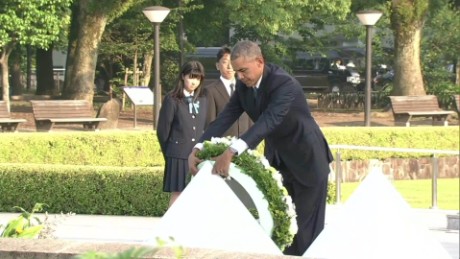
Obama at hiroshima

“We come to mourn the dead, including over 100,000 Japanese men, women, and children, thousands of Koreans, a dozen Americans held prisoner.”

—-President Obama, speaking at the Hiroshima’s Peace Memorial Park in Japan, in a controversial visit to the site of the Unites States’ decisive use of the atom bomb to defeat Japan without an invasion in 1945.

Good job. Whoever drafted the speech—it may well have been Obama himself—perfectly threaded the needle, simultaneously making a compassionate diplomatic gesture and yet including an unmistakable reference to who was really at fault for the carnage. Those Korean casualties were captured and enslaved citizens of a sovereign nation, acquired as Imperial Japan swept over Asia like locusts. Those prisoners were prisoners of war, and horribly mistreated ones.

The passage of time made Obama’s subtlety more appropriate than President Harry Truman’s typically blunt response to an Aug. 9, 1945 telegram from  Samuel Cavert, the general secretary of the Federal Council of the Churches in Christ in America, saying he was “greatly disturbed” by Truman’s use of the bomb: Continue reading

Encore! Presidents Day Ethics: The Presidents of the United States on Ethics and Leadership

It’s President’s Day, and I see that it has been five years since the most popular Ethics Alarms President’s Day post was published. That one, from 2011, reminds us of the ethics wisdom and leadership acumen of the remarkable men who have served their country in the most challenging, difficult, and ethically complicated of all jobs, the U.S. Presidency.

In the middle of a campaign season littered with some disturbingly unethical candidates, it seems especially appropriate to re-post that entry now….with some updates. In 2011, I left out three Presidents, including the current one. Now all are represented, most of them well.

So…

Ladies and Gentlemen, the Presidents of the United States of America:


George Washington: “I hope I shall possess firmness and virtue enough to maintain what I consider the most enviable of all titles, the character of an honest man.”

John Adams: “Because power corrupts, society’s demands for moral authority and character increase as the importance of the position increases.” 

Thomas Jefferson: “On great occasions every good officer must be ready to risk himself in going beyond the strict line of law, when the public preservation requires it; his motives will be a justification…”

James Madison: “No government any more than any individual will long be respected without being truly respectable.”

James Monroe: “The best form of government is that which is most likely to prevent the greatest sum of evil.”

John Quincy Adams: “Always vote for principle, though you may vote alone, and you may cherish the sweetest reflection that your vote is never lost.”

Andrew Jackson: “One man with courage makes a majority.”   (Attributed)

Martin Van Buren: “No evil can result from its inhibition more pernicious than its toleration.”

William Henry Harrison: “There is nothing more corrupting, nothing more destructive of the noblest and finest feelings of our nature, than the exercise of unlimited power.” Continue reading

Hiroshima Ethics And The Washington Post’s Misleading “Five Myths” Feature

Atom bomb cloud

The Washington Post’s Sunday “Five Myths About…” feature is a weekly irritation, as it begins with a misleading definition, and proceeds to a series of dubious and sometimes dishonest conclusions. In spirit it is like the fact-checking columns,  (though, ironically, the Post’s less than most) in that it claims to “disprove” opinions. This week’s installment, however, was too much.

Gregg Herken was this week’s guest bloviator, and the Post gave the emeritus professor of U.S. diplomatic history at the University of California a chance to plug his books on the atomic bomb, so I don’t blame him for taking it. I do blame him for allowing the column’s format and the editors to turn what could have been informative and edifying into lazy scholarship, sophistry, and nit-picking. Now I don’t want to read his books.

His entry was called “Five myths about the atomic bomb.” As is typically the case, no myths were debunked. Myths, in the parlance the Post is evoking, are a “traditional stories of ostensibly historical events that serve to unfold part of the world view of a people or explain a practice, belief, or natural phenomenon.” They are, by definition, false. Herken, however, neither identifies nor disproves any true myths. What he does is offer contrary opinions to those of others that are as provable as true as the opinions he claims to be debunking, which is to say, not provable at all. That means that the headline/title states an unprovable assertion as fact: “These statements are untrue.” Herken cannot ethically say that, but he does anyway.

Bad historian. Bad.

Herken starts off well:

“On Aug. 6, 1945, the United States dropped an atomic bomb on the Japanese city of Hiroshima. Another bomb fell Aug. 9 on Nagasaki. Decades later, controversy and misinformation still surround the decision to use nuclear weapons during World War II. The 70th anniversary of the event presents an opportunity to set the record straight on five widely held myths about the bomb.”

His first myth is that “The (Hiroshima) bomb ended the war.” Continue reading

How Do I Write A Measured Ethical Analysis When I Am Shaking With Indignation and Rage?

None of these men had the arrogance to believe it would be appropriate to apologize for the difficult choices made by their predecessors. They were right.

UPDATE, 10/13 Readers: This post has been proven wrong, based on a misinterpretation of a diplomatic cable that has been clarified to Ethics Alarms by a reliable and objective source. You can read  the explanation, and my apology, here.

I will try.

A secret cable dated Sept. 3, 2009 was recently released by WikiLeaks.  Sent to Secretary of State Clinton, it reported that Japan’s Vice Foreign Minister Mitoji Yabunaka told U.S. Ambassador John Roos that “the idea of President Obama visiting Hiroshima to apologize for the atomic bombing during World War II is a ‘nonstarter.'”*

The Japanese did President Obama and the United States an enormous  favor, but the utter foolishness and lack of comprehension of national principles, American history and the duties of presidential leadership shown by the fact that the idea of such an apology could get to the point where the Japanese had to reject it goes beyond mind-boggling and shocking to frightening, infuriating and offensive. Continue reading

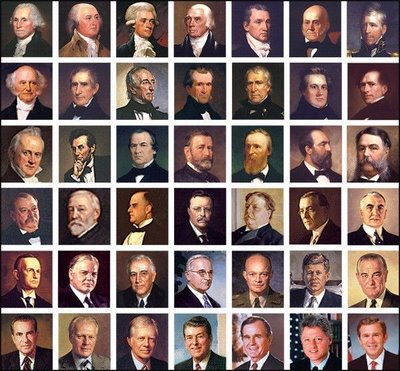
Presidents Day Ethics: The Presidents of the United States on Ethics and Leadership

In commemoration of President’s Day, Ethics Alarms presents the ethics wisdom of the remarkable men who have served their country in the most challenging, difficult, and ethically complicated of all jobs, the U.S. Presidency.

Ladies and Gentlemen, the Presidents of the United States:

George Washington: “I hope I shall possess firmness and virtue enough to maintain what I consider the most enviable of all titles, the character of an honest man.” Continue reading

Rahm Emanuel, History and Hyperbole Ethics

There are times when obvious exaggeration is nothing worse than politeness, nothing more than an expression of admiration and affection. “You’re the best boss anyone ever had,” is in this category, especially when the boss is retiring or dying. But when one is speaking in public about controversial and historical matters involving well-known public figures, the margin between excusable hyperbole and unethical dishonesty or worse is much smaller. Al Gore learned this when he played loyal Vice-President on the day his President was impeached by vote of the House of Representatives. Gore’s statement that Bill Clinton was “a man I believe will be regarded in the history books as one of our greatest Presidents” was intended as supportive, but interpreted as a toadying endorsement of Clinton’s unsavory and dishonest conduct, impeachable or not. It probably cost Gore the Presidency.

Worse yet was Trent Lott’s clumsy effort to praise the ancient, infirm and mentally failing Sen. Strom Thurmond at his 100th birthday party. Lott said, “I want to say this about my state: When Strom Thurmond ran for president we voted for him. We’re proud of it. And if the rest of the country had followed our lead, we wouldn’t have all these problems over all these years, either.” Thurmond, running on the Dixiecrat ticket, had opposed segregation, and Lott’s comment, less fact than flattery, made him sound like he longed for the days of Jim Crow and “white only”rest rooms. The lessons of these hyperbolic gaffes are similar: if the well-intentioned compliment concerns a public figure in historical context, historical exaggerations either appear to be unjust to history or its important figures, seem to make inappropriate value judgments, or come off as a blatant effort to mislead the public.

Rahm Emanuel hit the Trifecta with his fawning farewell to President Obama, as he left the White House to run for Mayor of Chicago. Obama, he said, is “the toughest leader any country could ask for, in the toughest times any president has ever faced.”

Wow. Continue reading

The Pentagon’s “Don’t Ask, Don’t Tell” Survey

Politico obtained a copy of the survey the Pentagon has sent out to randomly selected military spouses to help the military, Sec. Gates writes in his introduction, “assess the impact of a change in the “Don’t Ask, Don’t Tell” law and policy on family readiness and recruiting and retention.” It is thirteen pages long, and after some basic questions, presents queries like these: Continue reading

The Ethics Of The Ground Zero Mosque

The proposed Ground Zero mosque should be a straightforward ethics issue, but it is not. Now it is bound up in a thoroughly confusing  debate that confounds and blurs law, ethical values, history, rights, and human nature.  Everyone is right, and everyone is wrong.

Yes, it’s an Ethics Train Wreck, all right. This one is so bad I hesitated to write about it—ethics train wrecks trap commentators too—in the vain hope that it would somehow resolve itself with minimal harm. That is obviously not in the cards, however; not when the Anti-Defamation League weighs in on the side of religious intolerance, thus forfeiting its integrity and warping its mission. The wreck is still claiming victims, and there is no end in sight. Continue reading

Easy Ethics Call: Gen. McCrystal Must Go

Ignore, for the time being, the fact that several other high-ranking Obama officials richly deserve to be fired for egregious failings of honesty and competence. Gen. McChrystal, the commander in charge of  U.S. combat in Afghanistan, has followed in the unfortunate footsteps of General Douglas McArthur, who openly criticized President Harry Truman and lost his command as a result. McChrystal has to go too. Continue reading