Ashley Judd, Hillary Clinton, and Celebrity Malpractice

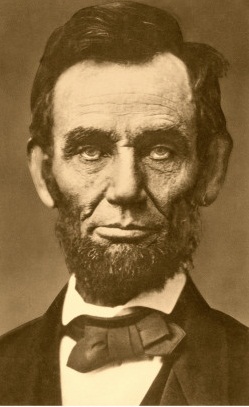
Mount Rushmore

I had hoped to have my “Celebrity Code of Ethics” complete for this post, but it isn’t, so I’ll just allude to some of its likely provisions.

I like Ashley Judd, I really do. I’m not sure why she never became the reigning female light drama star of her generation; she’s every bit as good as Sandra Bullock or Julia Roberts, and that voice! Now she’s routinely relegated to repetitious action movies and will be playing Jennifer Lawrence’s mother any day now—oh well, that’s show biz. Judd is also more articulate and intellectually curious than the average celebrity, so it was with great pain and disappointment that I learned that she had recently said this, in an interview with Larry King, about the presidential prospects of Hillary Clinton:

“I think she might be the most overqualified candidate we’ve had since – you know, Thomas Jefferson or George Washington.”

Now, I don’t expect celebrities to be historians or experts on anything  other than their profession and areas of specialty. However, one tenet of celebrity ethics is the same as that of doctors: “First, do no harm.” That means, for someone like Judd, a celebrity has an ethical duty to recognize that a disturbing number of people think that because she is rich and famous, she is necessarily  informed, responsible and wise, as well as a role model, and therefore, unlike the usual drunk on a barstool, when that celebrity says something outrageously ignorant, stupid and misleading, hundreds of thousands of people believe it and align their own beliefs accordingly. That’s harmful, and doing it is unethical. Continue reading

Ethics Dunce: Jon Stewart

Meanwhile, Lincoln pretty much just lay around after he was President...

Meanwhile, Lincoln pretty much just lay around after he was President…

Face the Nation had George W. Bush on today as its primary guest,  so the show’s lead in, CBS This Morning, asked its guest, “Daily Show” host Jon Stewart, what question he would ask the man who preceded President Obama in the Oval Office.  Stewart’s smirking reply,

“ ‘Tell me about umber and how it helps you in painting cats.’ Jimmy Carter’s like 108? He’s out in Africa pulling guinea worms out of children’s feet, trying to cure them. Bush is at home. ‘Bring me my fruit bowl. Doin’ a still life!”

The technical term for this is, I believe,“being a dick.” Yes, it’s vulgar, but the usual terms don’t quite do Stewart’s gratuitous and unfair nastiness justice in trhis instance.

I recognize that Stewart, who eschewed a flood of well-deserved Democrat jokes over the past five days because he could not get around his massive anti-Republican biases, is in mourning over the GOP electoral avalanche that turned the nation red at all levels of government in all regions. Poor baby. Nonetheless, mocking one President of the United States for his activities in retirement because they do not measure up, in Stewart’s value system, to what Presidents are supposed to do is evidence of a stunning lack of grace, decency,proportion, self-awareness and common sense. Continue reading

Comment Of The Day #2: “Nobody Should Be Cheering The Poll Showing President Obama As Regarded As ‘The Worst President Since World War II’”

Film-ProjectorI had barely posted the first Comment of the Day on the recent post regarding the explosive poll showing President Obama sinking below all previous post-war Chief Executives in the public’s estimation, when another excellent deserving one, by Mark, arrived.

Mark doesn’t comment often, but when he does, his posts are always eloquent and thoughtful. Here is his Comment of the Day on the essay, Nobody Should Be Cheering The Poll Showing President Obama As Regarded As “The Worst President Since World War II”.

I don’t go all the way with you on this one, Jack, but certainly a part of the way. A few years ago I learned about projections – how we project what we want/see/expect onto other people even when, or especially when, the projection has nothing to do with who they really are, and the consequence of not seeing clearly the person in front of us. If nothing else, President Obama has been a victim of that idea.

In 2008, he was a blank screen onto which people projected what they wanted to see after the Bush years and a rapidly tanking economy. He was HOPE, CHANGE, and perhaps worse, we ennobled him with the idea that he was something other than a standard-issue Washington politician. The fact that he was African American only amplified the idea of his actually making a difference in Washington because he was, indeed, so different from any other candidate we had seen since Kennedy and his Roman Catholicism. I think our ultimate projection might have been that if we could do this, elect a black man, then we would bring change to the country simply by “curing” the centuries-old race issues in the US or making a good run at it. Projections are powerful and in the hands of a collective even more so. After a time during the 2008 election, it didn’t matter what he said or did, he WAS hope and change, not a candidate.

And, in the absolute cynicism of American politics, all the pollsters, pundits, and creatures of his campaign knew and exploited this (and they’ll do it again for someone else come 2016).

In the moment he was elected, as an African American, I felt something incredible – a man like me in the White House, a supreme victory after slavery, Jim Crow, and the spilled blood of Till and King. I also felt an unease – could he govern? We knew he could run a crackerjack campaign, but could he replicate that kind of success from the Oval Office? In 2008, I figured only time would tell and to an extent it has. He was neither an outsider to Washington nor a maverick, both projections, not to mention a relative lack of experience compared to other presidents. I will say – and I know you agree – that he did not come to Washington to cause harm, but with a deep love for the country and an expectation that he could do what he had intended and promised. Perhaps those were his own projections upon a system that had no intention of bearing them out. I don’t know.

Like I said – I won’t go all the way with you on this and the points of disagreement are about perception of events and we each have our own. I will not say, either, that he is the worse president since WWII – that is, again, a matter of perception. Where we absolutely agree is a share of this lies with the American people who have not figured out how to counter systems – both political and governmental – that are increasingly cynical, unethical, and devoid of any sense of the common good for our nation. “Have you no sense of decency, Sir?” is truer today than it was in 1954 and should be asked of every politician in Washington from the President on down. In the last eight years everybody of every political stripe has some blood on their hands for this mess. We lay it at his feet because – unfortunately for him – the buck does stop there.

So now we wait for the curtains to part on another blank screen onto which we’ll project our hope for a country that is different from the one we’re living in now. We’ll hear from sincere, well meaning candidates who will tell us what we want to hear rather than what is true and doable, and we’ll buy it. The first woman in the White House is ripe for that, as is the first Hispanic, or a TRUE American Tea Party candidate. They’ll all present themselves and we’ll beam on.

Continue reading

If Your Institution Is Named After George Washington, Shouldn’t We Be Able To Trust It To Tell The Truth?

The General is not pleased.

The General is not pleased.

Shame on George Washington University (in Washington, D.C.), not only for lying to its students and community, but also for dishonoring the name of the scrupulously ethical American icon which they presumed to expropriate as their own. Such things carry with it some crucial obligations.

For years, the GW admissions and financial aid offices have claimed in printed materials and on the University website that admissions were independent of need. The admissions process does not consider financial need during the first round of screening applications. Before applicants are notified, however the University examines its financial aid budget and decides which students it can actually afford to admit. Wealthier students are accepted, taking the spots of students who would need more financial aid from the University.

Last week, a GW administrator confessed to a student newspaper—one ironically called “The Hatchet” after the apocryphal axe little George used to cop down that cherry tree in Parson Weems’ fable—– that financial resources indeed were considered in the admissions process, and have always been considered despite University statements to the contrary.  As  recently as last weekend, admissions representatives told prospective students that their applications would be judged without consideration of their financial aid profiles. Until it was removed Saturday evening, the newspaper reports, the undergraduate admissions website read, “Requests for financial aid do not affect admissions decisions.”

That site now confirms a “need-aware” policy that has always been in place. George Washington University just had another policy of lying about it. Continue reading

Unethical Quote Of The Week: Jeff Shesol

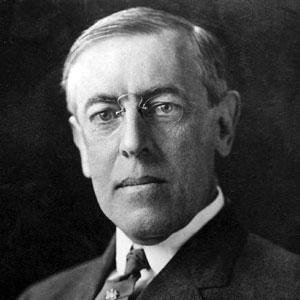
“Berg is not uncritical of Wilson’s biggest lapses — his tolerance of segregation, his suppression of civil liberties and his “highly questionable” actions (or paralytic inaction) after the stroke he suffered in 1919, during his grueling campaign to win Senate approval of the League of Nations.”

—Former Clinton Speechwriter and author Jeff Shesol, in his Washington Post book review of historian Scott Berg’s new biography of Woodrow Wilson, “Wilson.”

All right, he was a racist, but he was GREAT racist, right, Jeff?

All right, he was a racist, but he was GREAT racist, right, Jeff?

There is a nasty piece of dishonesty in this quote, all the more sinister because it slides right by, altering your understanding of history and reality without you even knowing it. (Is it any surprise that Shesol wrote speeches for Bill Clinton?) Did you catch it?

It is the phrase, “[President Woodrow Wilson’s] tolerance of segregation.”] Continue reading