Once Again, The Unwarranted Presumption Of Racism

“What’s that kid doing up there?”

If something undesirable happens to an African American, the culture is pushing the norm that the misfortune ought to be presumed to be the result of racism until decisively proven otherwise. Similarly, if a white individual is responsible for a black citizen’s plight, deserved or not, the white individual’s motivations are also presumed to be based on racial animus.

Both presumptions are nothing less than sanctified bias and prejudice, as much so as racism itself.

A case study from Washington, D.C.:

About a hundred seventh and eighth-grade students from Shelton Intermediate School in Shelton, Connecticut were visiting the nation’s Capital last week. The group was supervised by twelve chaperones, and the itinerary included the usual museums, monuments and landmarks, including the newest attraction, the Smithsonian’s  African American Museum.

While touring the museum, a male student leaned over a balcony and drooled or spit down on the visitors below. His saliva struck one of them, and the victim was black.  As a result of the incident, the entire group was ejected from the museum. Continue reading

A Jury Gets An Unarmed Black Victim Cop Shooting Right, But The Reasons Why Are Significant

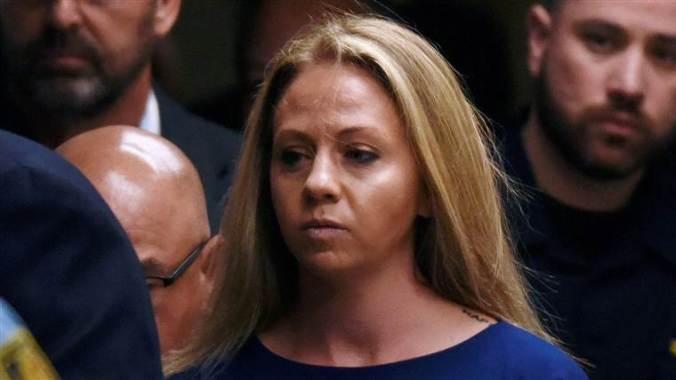
From the AP: “A white former Dallas police officer who said she fatally shot her unarmed, black neighbor after mistaking his apartment for her own was found guilty of murder on Tuesday. A jury reached the verdict in Amber Guyger’s high-profile trial for the killing of Botham Jean after six days of witness testimony but just a handful of hours of deliberation. Cheers erupted in the courthouse as the verdict was announced, and someone yelled “Thank you, Jesus!”

I am surprised at the murder verdict; I expected a manslaughter conviction, and thought that prosecutors may have over-charged.

Nonetheless, a guilty verdict was necessary. It must be remembered, however, that few of the factors typically present in cases where cops have been acquitted for shooting unarmed black citizens existed here. The victim, Botham Jean, did nothing to justify his shooting, indeed nothing to justify having a confrontation with police at all. He didn’t resist a lawful arrest or threaten the officer. Amber Guyger was absolutely and completely responsible for his death in every way. She may have thought her life was in danger, but she was ridiculously wrong, and even if Jean had threatened her, he had every right to do so. She was, to him, a home invader.

In such circumstances as these, none of the usual sympathy that juries have for police officers and their dangerous duties while protecting the public applies. Guyger wasn’t trying to protect the public; she wasn’t even on duty. A jury would naturally sympathize with the victim; if a confused cop could barge into his home and start shooting, it could happen to any juror. Did race play a part in the verdict? I hope not. Whatever the verdict was, there was no evidence to suggest that Jean was killed because of his race.

It will be interesting to see what sentence the jury recommends. I feel sorry for Guyger: she was badly trained, she may have been exhausted from an over-long shift, and there is no reason she wanted to kill Jean, or anyone. Yet with power comes responsibility, and with responsibility comes accountability.

I just re-read my post from a year ago about this case. You might want to read it again too. I’ve re-posted the whole essay below.

I could easily put this story in the Ethics Alarms Zugzwang file, because I see no analysis or result that won’t make the situation worse.

A white off-duty police officer named Amber R. Guyger  entered the apartment of  Botham Shem Jean, a 26 year old accountant, and fired her service weapon twice at him, killing the St. Lucia immigrant. She claims that she mistakenly entered the wrong apartment after returning home from her 14-hour shift and believed  Jean, who is black, was an intruder.

Indeed, her apartment was directly below his. She had inexplicably parked her car on the 4th floor, where Jean’s residence was, rather than the 3rd floor, where hers was. So far, there is no indication that the shooter and the victim knew each other. Guyger had a clean record. Other facts are in dispute. The officer told investigators the apartment door was  ajar and then fully opened when she inserted her computerized chip key. That seems possible but unlikely.  Lawyers for  Jean’s family say the door was closed. How could they possibly know that?  Guyger said in court documents that when she opened the door,  she saw shadows of someone she thought was a burglar, and shouted commands before shooting. Lawyers for Jean’s family have elicited testimony from neighbors that they heard someone banging on the door and shouting, “Let me in!” and “Open up!” before the gunshots.  Why would the officer do that if she didn’t know Jean, or if she thought it was her own apartment? They also said they then heard Jean, say, “Oh my God, why did you do that?”

Boy, that sounds like an awfully convenient exclamation to be remembering now, don’t you think? But who knows? Maybe it proves the two knew each other. (Why didn’t Jean say, “Who are you?”) Maybe it is another “Hands Up! Don’t shoot!” lie for cop-haters and race-baiters  to adopt as a rallying cry.

Surprise! Jean’s family is being represented by Benjamin Crump, the same lawyer who represented the relatives of Trayvon Martin and Michael Brown and managed to manipulate media accounts and public opinion into the narrative that those shootings were motivated by racial hate. If nothing else, Crump is diligent and zealous in creating an atmosphere that maximizes the opportunity for civil damages whether they are warranted or not.

Crump is referring to Jean’s death as an assassination. Of course it is! After all, Guyger’s a white cop, and they live to oppress, brutalize and kill unarmed black men for no reason whatsoever, except to protect white power in a racist nation. Dallas’s black citizens and white activists do not believe the officer’s story, because they presume racism. (Similar impulse: progressives and feminist believe Brett Kavanugh’s accuser, because they want to,)  Protesters chanted and disrupted a City Council meeting last week. There have been escalating  threats against the police. Officers say they believe Officer Guyger’s version of events, as weird and inexplicable as they are. The same bias is at work: they want to believe her.

Things don’t work when they are hemmed in by biases and agendas like this. Let’s say that an investigation yields no clarification. An innocent man was shot in his own home by a police officer who lived beneath him for no discernible reason, and the cop’s only explanation is that she was tired, confused, and made a mistake. What is the ethical course at that point?

There are a few easy calls. The police department has civil liability, and it is high time to put the same kind of limitations on police shifts that airline pilots must abide by. The accident, if it was an accident, may have been caused by unethical working conditions. It would also be sensible for apartment and condo complexes to be required to make all floors recognizably distinct. I have tried to enter the wrong hotel room, apartment, condo unit and dorm room at various times, in addition to walking into ladies rooms and the occasional closet. Luckily, I don’t carry a gun. However, my own experiences make me at least willing to consider that this might have been nothing but a terrible, tragic accident.

Obviously, Officer Guyger’s career is over no matter what the truth is, and should be. Thus I agree with the argument that she should be suspended without pay or simply fired. Off-duty cops are required to carry guns, and once a cop makes this kind of “mistake,” she can’t be trusted. I wouldn’t want her wandering around my neighborhood.

Beyond that, however, what is Dallas supposed to do? The race hucksters want to protest and exacerbate racial divisions. Guyger will be painted as a cold-blooded racist killer, and typical of all police. Any result that doesn’t have her sentenced to prison for a long time will be condemned as proof that the white fix is in. The city has a duty to prevent riots and deaths, but not to squelch protests, no matter how cynical and unfair. Should it indict and try Guyger for murder rather than manslaughter, knowing that over-charging could result in an acquittal?  This was Baltimore’s approach in the Freddie Gray case, and now police passivity has made the city a runner-up to Chicago as U.S. Murder Central. What if the investigation suggests that this was indeed an accident, and no more? Is it fair to try Guyger at all, then? Will jury members concede that she has lost her occupation and her reputation, and that imprisoning her is cruel—that she has suffered enough? Or will Guyger really stand trial not as an individual, but as a symbol of all cops who shot unarmed black men and escaped accountability?

Not only do I see no satisfactory ethical outcome, I can’t even decide what an ethical outcome would be.

I do know this, however. Bias not only makes us stupid, it makes fairness, justice and law enforcement impossible.

 

The Shooting Of Justine Ruszczyk: How Mindless Tribalism Makes Justice Impossible

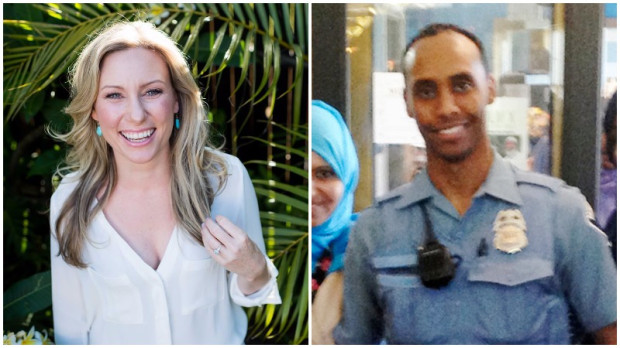
The shooter and the shot.

Former police officer Mohamed Noor  was sentenced last week to spend 12 and a half years in a Minnesota prison for shooting Justine Ruszczyk, an unarmed woman he killed while on patrol in 2017. I don’t see how anyone could read the facts of the case and not conclude that Noor was guilty of negligent homicide. I don’t see how anyone could rationally complain that his sentence was excessive, either.

 Ruszczyk, who was white—unfortunately this fact is relevant—and  soon to be married, called 911 twice to report what she thought was a sexual assault going on in the alley  behind her Minneapolis home. Officer Noor and his partner responded  to investigate.  Ruszczyk  came out to the darkened alley to meet them, presumably to explain what she heard or saw,  and was soon dead of a single shot, fired from the  open patrol car window by Noor.  At the trial,  Noor said he feared for his life when he  saw Ruszczyk approaching his cruiser and fired. “She could have had a weapon,” he said .

The reported crime, sexual assault, the officers were investigating  did not involve a weapon. If Noor’srationale was enough to justify shooting Janet Ruszczyk, presumably an officer could justify shooting anyone, at any time.

Prosecutors argued that Noor acted unreasonably by  firing at unknown  figure out his window without shouting a warning,  and that it amounted to third-degree murder.  Well, of course it did. He was convicted by a jury in April . Twelve years for recklessly killing an unarmed woman who was trying to be a responsible citizen is not an unreasonable sentence, and is within the sentencing guidelines for the crime.  Continue reading

From The Ethics Alarms “Now What?” Files: The Hopeless Dallas “Cop Shoots Black Neighbor” Tragedy

I could easily put this story in the Ethics Alarms Zugzwang file, because I see no analysis or result that won’t make the situation worse.

A white off-duty police officer named Amber R. Guyger  entered the apartment of  Botham Shem Jean, a 26 year old accountant, and fired her service weapon twice at him, killing the St. Lucia immigrant. She claims that she mistakenly entered the wrong apartment after returning home from her 14-hour shift and believed  Jean, who is black, was an intruder.

Indeed, her apartment was directly below his. She had inexplicably parked her car on the 4th floor, where Jean’s residence was, rather than the 3rd floor, where hers was. So far, there is no indication that the shooter and the victim knew each other. Guyger had a clean record. Other facts are in dispute. The officer told investigators the apartment door was  ajar and then fully opened when she inserted her computerized chip key. That seems possible but unlikely.  Lawyers for  Jean’s family say the door was closed. How could they possibly know that?  Guyger said in court documents that when she opened the door,  she saw shadows of someone she thought was a burglar, and shouted commands before shooting. Lawyers for Jean’s family have elicited testimony from neighbors that they heard someone banging on the door and shouting, “Let me in!” and “Open up!” before the gunshots.  Why would the officer do that if she didn’t know Jean, or if she thought it was her own apartment? They also said they then heard Jean, say, “Oh my God, why did you do that?”

Boy, that sounds like an awfully convenient exclamation to be remembering now, don’t you think? But who knows? Maybe it proves the two knew each other. (Why didn’t Jean say, “Who are you?”) Maybe it is another “Hands Up! Don’t shoot!” lie for cop-haters and race-baiters  to adopt as a rallying cry. Continue reading

Morning Ethics Warm-Up, 11/27/2017: Gibberish From Congress, Race-Blindness in the UK, Cruel Law Enforcement In Atlanta, And More

Mornin’!

1 “Rarrit!!” You will seldom see or hear as excellent an example of Authentic Frontier Gibberish than this word salad belched out by the leader of House Democrats on “Meet the Press” yesterday. Nancy Pelosi attracted so much negative attention with her “Rep. Conyers is too much of an icon to hold accountable” blather that this masterpiece was relatively ignored. Pelosi was asked by Chuck Todd whether she would support releasing to the public the full information behind heretofore secret settlements of sexual harassment accusations against Congressmen, even indispensable, virtuous icons like John Conyers. She said…

“Well, here’s the thing. It’s really important. Because there is a question as to whether the Ethics Committee can get testimony if you have signed a nondisclosure agreement. We’re saying we think the Ethics Committee can, but if you don’t agree, we’ll pass a law that says the Ethics Committee can, a resolution in Congress that the Ethics Committee can…. But there’s no– I don’t want anybody thinking there’s any challenge here to our changing the law and see how people– when we know more about the individual cases. Well, because you know what our biggest strength is? Due process that protects the rights of the victim, so that, whatever the outcome is, everybody knows that there was due process….”

http://www.youtube.com/watch?v=0_2Npp-euLU

If Chuck Todd wasn’t a partisan hack, he would have recognized his journalistic obligation to say, “That made no sense at all, Congresswoman. Please try again.”

Public pressure is increasing to force Congress to release the names of the members of Congress who paid taxpayer funds to settle with their accusers. Good. Democrats are obviously terrified, and presumably Republicans are as well.

2. That mean Trump Administration insists on enforcing the law. The New York Times had a front page story Sunday about the plight of illegal immigrants in Atlanta. The story, entirely sympathetic to the arrested, deported, and those afraid of being arrested and deported, saying in one headline that “immigrants” (that’s illegal immigrants, NYT editors, a material distinction) fear “even driving.”

“Even driving” without a license.

Here’s a quote to make any rational American’s head explode, about a local journalist who uses social media to warn illegal immigrants when ICE is lurking,

“Asked whether he had any reservations about helping readers evade immigration law, he said he preferred to think he was helping people with no criminal records stay in the country. “Honestly, I believe it’s an honor as a journalist if the people can use your information for protecting their own families,” he said.”

Translation: “I prefer to think of what I am doing as something other than what I am really doing.”

It’s kind of like a newspaper calling illegal immigrants “immigrants.” Continue reading

14 Ethics Musings On The Death Of Francisco Serna

keith-scott

Scott and Serna.

From The Washington Post:

Slightly after midnight on Monday, police in Bakersfield, Calif., received a call concerning a man thought to be brandishing a weapon in a residential neighborhood.

Shortly after police arrived, 73-year-old Francisco Serna — who family members said was suffering from the early stages of dementia — walked out of his home and into his driveway. When Serna, who was unarmed, did not comply with officers’ orders to remove his hands from his jacket pocket, one officer fired seven shots at him, killing him.

During a canvass of the premises that lasted at least until the following afternoon, police did not find a firearm on or near Serna. Instead, they found a crucifix.

Questions and Observations:

1. The shooting occurred two days ago, on December 12. There have been no organized protests, or community groups, family lawyers or anyone else suggesting that the shooting was murder, or an example of police animus toward the community. Why not?

2. The circumstances of the shooting were notably similar to the police involved shooting of Keith Scott in Charlotte, North Carolina, except that in the case of Scott, the officer believed the victim had a gun, and he did have a gun. Nonetheless, that shooting triggered two days of rioting. Why?

3. In the Scott shooting, both officer and victim were black. In the recent shooting in Bakersfield, officer and victim were white. Why did one shooting become a racial incident and the other not, when the conduct of the police officers were essentially identical, and the provocation for the shootings  were similar as well?

4. One difference in the two episodes is that in Charlotte, a false narrative was launched by a family member to make the shooting appear to be a case of excessive force with a police cover-up. Is it just felicitous that this did not occur in Bakersfield, or was the Charlotte episode different in some way that caused events to resemble the aftermath in the Ferguson and Freddie Gray police-involved deaths?

5. If Francisco Serna had been black and all other facts the same, is there any reason to believe that the aftermath, including recriminations, accusations and attacks on police, the justice system and the nation’s culture, would have been any different than they have been every time an unarmed black man, or a black man who was reported as being unarmed, has been shot by police? If there is not, what does that tell us? Continue reading