The Ethical Christmas Carol

Considering that Christmas is our culture’s ethical holiday, it is remarkable that only one traditional carol—and no modern holiday songs—celebrates ethical conduct. The one carol is “Good King Wenceslas,” and a strange one it is.

The lyrics are by J. M. Neale (1818-66), and were first published in 1853. Neale is a superstar in the Christmas Carol firmament: he also is responsible for the English lyrics of “Good Christian Men, Rejoice,” and “O Come, O Come, Emmanuel,” both of which you hear much more frequently than “Good King Wenceslas.” One reason is that the ethical carol tells a story in ten verses, and if you don’t sing them all, the story doesn’t make sense. There are very few recordings of the song in which all the verses are sung. Ten verses is also a lot to remember for any song. My elementary school used to teach the whole carol to sixth graders for the Christmas assembly, but let them have crib sheets. This was before it was decreed that allowing children to learn, sing and listen to some of the most lovely and memorable songs in Western culture was a form of insidious religious indoctrination.

Here is the whole carol:

Good King Wenceslas looked out
On the feast of Stephen,
When the snow lay round about
Deep and crisp and even;

Brightly shone the moon that night
Though the frost was cruel,
When a poor man came in sight,
Gath’ring winter fuel.

‘Hither, page, and stand by me,
If thou know’st it, telling
Yonder peasant, who is he?
Where and what his dwelling?’

‘Sire, he lives a good league hence,
Underneath the mountain,
Right against the forest fence,
By Saint Agnes’ fountain.’

‘Bring me flesh and bring me wine,
Bring me pine logs hither,
Thou and I will see him dine
When we bear them thither.’

Page and monarch forth they went,
Forth they went together,
Through the rude wind’s wild lament
And the bitter weather.

‘Sire, the night is darker now
And the wind blows stronger;
Fails my heart, I know not how,
I can go no longer.’

‘Mark my footsteps, good my page,
Tread thou in them boldly:
Thou shalt find the winter’s rage
Freeze thy blood less coldly.’

In his master’s steps he trod,
Where the snow lay dinted;
Heat was in the very sod
Which the Saint had printed.

Therefore, Christian men, be sure
Wealth or rank possessing,
Ye who now will bless the poor
Shall yourselves find blessing.

For one thing, “Good King Wenceslas” has little to do with Christmas Day, and doesn’t mention Jesus or the Nativity. The Feast of St. Stephen is also known as Boxing Day, the day after Christmas, December 26. It is a British Commonwealth tradition that never caught on in the U.S. In some European countries like Germany, Poland, the Netherlands and the Nordic countries, the day is celebrated as a Second Christmas Day. Continue reading
The Professor and the Insensitive Law School Exam Question

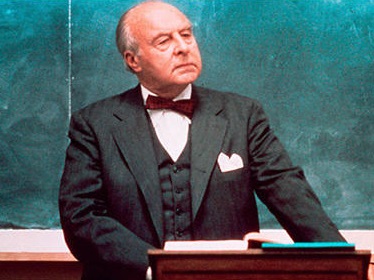
"Go ahead, tell Prof. Kingsfield that his exam is unfair because it triggers your emotions and you can't think straight. I dare you."

“Go ahead, tell Prof. Kingsfield that his exam is unfair because it triggers your emotions and you can’t think straight. I dare you.”

A Constitutional Law exam at UCLA Law School included this question:

CNN News reported: On Nov. 24, St. Louis County prosecuting attorney Robert McCulloch announced in a publicized press conference that Police Officer Darren Wilson (who has since resigned) would not be indicted in the August 9 shooting of Michael Brown. Michael Brown’s stepfather, Louis Head, was with hundreds of protesters assembled outside the police station, listening on loudspeakers and car radios when they learned Officer Wilson was not being charged. Standing on the hood of a car, Mr. Head embraced Michael Brown’s mother. Mr. Head asked someone for a bullhorn but it was not passed to him. He turned to the crowd, stomped on the hood and shouted, repeatedly, “Burn this bitch down!”

Police Chief Tom Jackson told Fox “News,” “We are pursuing those comments … We can’t let Ferguson and the community die [as a result of the riots and fires following McCulloch’s announcement]. Everyone who is responsible for taking away people’s property, their livelihoods, their jobs, their businesses — every single one of them needs to be prosecuted to the fullest extent of the law.”

County Attorney Robert McCulloch asks lawyers in his office whether to seek an indictment against Head by relying on a statute forbidding breach of the peace and another prohibiting rioting (six or more persons assembling to violate laws with violence). A recent hire in the office, you are asked to write a memo discussing the relevant 1st Amendment issues in such a prosecution. Write the memo.

The question is a fair and legitimate one, and very typical of law school exams, which often ask students to apply course content to current events. Nonetheless, it provoked a controversy.

Shyrissa Dobbins, a second-year law student in the course and is chair of the Black Law Students Association, complained, “Daily I think about Michael Brown and Eric Garner, and I have a challenge. Every day I think about this injustice and how I’m in a law school that won’t even make a statement about it.” Hussain Turk, a second-year law student who took the exam, argued that  exams should not ask students to address controversial events, and that the question was unfair, as it could be more emotionally difficult for black students to answer. “These kinds of questions create a hostile learning environment for students of color, especially black students who are already disadvantaged by the institution,” Turk said.

There is only one proper rebuttal for this foolishness:

“Grow up, deal with your biases, start thinking like lawyers or find a profession you can handle.”

Pathetically, the law professor, Robert Goldstein apologized in an email in an e-mail to students, saying, “I recognize … that the recent disturbing and painful events and subsequent decisions in Ferguson and New York make this subject too raw to be an opportunity for many of you to demonstrate what you have learned in this class this year,” and promised to discount scores students receive on the question if it lowers the overall score of the student.

Law school Dean Rachel Moran added to the misplaced sensitivity-fest, and her e-mail, said…

“In retrospect, however, he understands that the question was ill-timed for the examination and could have been problematic for students given the anguish among many in our community over the grand jury decisions in the Michael Brown and Eric Garner cases.”

Observations: Continue reading

Moonwalk Ethics: One Small Word

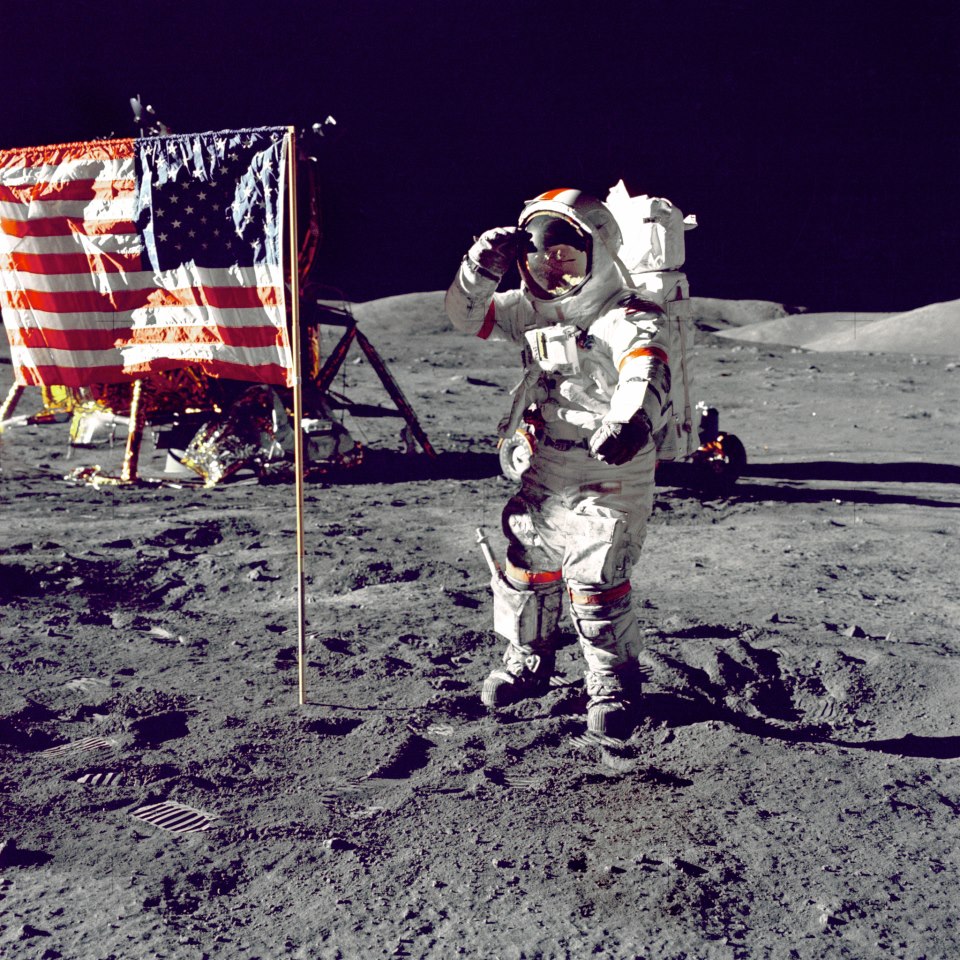
Neil-Armstrong-on-the-Moon-in-1969July 20 will be the 45th anniversary of Neil Armstrong’s first step on the moon, a day of achievement, hope and pride for Americans that seems very long ago and far away in the bleak cynicism of 2014. As I was pondering how to note the landmark in an ethics context, I remembered a section of a post on the Ethics Scoreboard that dealt with the controversy surrounding Armstrong’s famous quote upon placing his foot on the moon’s surface. Here it is, my earliest foray into what has become a frequent theme on Ethics Alarms, “print the legend”  ethics:

“When the legend becomes truth, print the legend.”

This cynical endorsement of our culture’s preference for soothing fantasy over harsh historical truth was the intentionally disturbing message of John Ford’s film, “The Man Who Shot Liberty Valence.” But rejecting Ford’s grizzled old newspaper editor’s warped ethic does not justify the equally objectionable modern practice of using spurious logic to substitute one dubious historical account for another. Even more ethically suspect is the common practice of replacing an accepted, well-supported version of an historical event with a “new improved” version that exists less because of its accuracy than because of its advocates’ biases….

An Australian computer programmer says he has discovered that Neil Armstrong’s first words after he stepped onto the moon in 1969, “One small step for man, one giant leap for mankind” were misquoted by NASA, misheard by millions of listeners around the world, and printed incorrectly in the history books. For decades, wags have criticized Armstrong for botching his iconic moment, since “man” and “mankind” mean the same thing, so the literal meaning of his famous words would be “One small step for man, one giant leap for man.” Armstrong has sometimes grudgingly acknowledged his gaffe and at other times maintained that he thought he included the elusive “a.” He hasn’t fought the consensus verdict very vigorously, as represented by NASA’a transcript:

109:24:48 Armstrong: That’s one small step for (a) man; one giant leap for mankind. (Long Pause)… Continue reading

“Print The Legend” Ethics Again: The Cuban Missile Crisis “Blink”

blink map

It is certainly in part a case of tweeking a rival, but the Washington Post and its “Factchecker,” Glenn Kessler, properly exposed a New York Times columnists’ perpetuation of a popular historical misconception, and worse, that paper’s adamant refusal to correct it.

The columnist was Thomas Friedman, one of the Times’ stable of liberal pundits, and the quote was this, in the opening sentence of of one of the many Obama foreign policy reclamation columns that have appeared lately from the President’s journalistic Maginot Line:

“There was a moment at the height of the Cuban missile crisis in October 1962 when Soviet ships approached to within just a few miles of a U.S. naval blockade and then, at the last minute, turned back — prompting then-Secretary of State Dean Rusk to utter one of the most famous lines from the Cold War: ‘We’re eyeball to eyeball, and I think the other fellow just blinked.’”

Kessler gives Friedman a full “four Pinocchios,” for the simple reason that this is untrue, a myth, a proven historical inaccuracy that has been enshrined in film, print, and Kennedy hagiography. He writes… Continue reading

Comment of the Day: “Print the Legend Ethics: The War of the Worlds Panic”

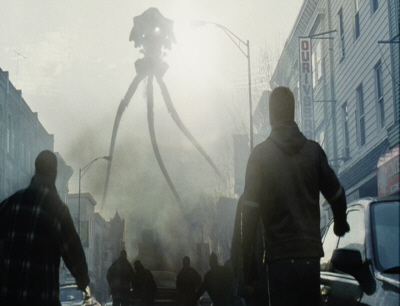
war_worlds

Bravo and thanks to penn for a thoughtful and thought-provoking personal reminiscence that supports my recent post about the claim that the famous panic over Orson Welles’ famous 1938 “War of the Worlds” radio drama never happened. Here is his fascinating Comment of the Day on Print the Legend Ethics: The “War of the Worlds” Panic:

This story came up every Hallowe’en in my family as I was growing up. We had family living in Toms River and in Lakewood, NJ (about 35 miles from Grover’s Mill) at the time Orson did his thing. The different reactions to the broadcast by the people living in the two places resulted in a minor family schism which continues to this day in the attitudes of their descendants.

It was a city mouse/country mouse situation. The Lakewood adults were elementary school teachers — the sophisticates. They listened to that program as a matter of course and as they later reported, they declared this one silly from the very beginning. But then, all science fiction was silly to them (really! space ships and aleeums? pshaw!) — my father (it was his side of the family) always contended they had no imagination. My mother recalled, however, many years later (and after taking several psychology courses at the New School), that commercials or not, she was convinced they had been very disturbed, if not downright scared. Scared enough to sit through the whole “silly” program in the first place, and for the rest of their lives to focus an uncharacteristic rage on the writers … for using the name of a real location in the program. [I think this naming of Grover’s Mill may account for some of the anxiety, if not the panic — people were sooo trusting of the media in those days .. . .] Continue reading

Print The Legend Ethics: The “War of the Worlds” Panic

OrsonWellesDailyNews

One of the worst results of an untrustworthy news media is that it becomes difficult, as time passes, to determine with any certainty what the truth is.

A classic example is on display today, in Slate, which celebrates the 75th anniversary of young, svelte, Orson Welles’ famous Halloween Eve broadcast of his radio adaptation of H.G. Wells’ “War of the Worlds,” with no Tom Cruise or Dakota Fanning but a nice conceit that involved telling the story through fake news flashes and eye-witness interviews. (One reporter is fried on the air by the Martian invasion vehicles.) An new NPR program and a PBS documentary both tell the familiar story of how the realistic-sounding radio play caused widespread panic among radio listeners who missed the opening credits, leading them to think that Earth was really under attack. Newspapers of the day headlined mass panic, and gave accounts of citizens running for cover, huddling in the basement, and cringing in terror.  The episode made Orson Welles a national celebrity, and launched him on his meteoric, long and strange career.

According to Slate authors Jefferson Pooley and Michael Socolow, it never happened. Declaring the story of the “War of the Worlds” panic a myth, the authors state without equivocation that the newspaper accounts, headlines, commentary and interviews, were fabricated:

“Radio had siphoned off advertising revenue from print during the Depression, badly damaging the newspaper industry. So the papers seized the opportunity presented by Welles’ program to discredit radio as a source of news. The newspaper industry sensationalized the panic to prove to advertisers, and regulators, that radio management was irresponsible and not to be trusted. In an editorial titled “Terror by Radio,” the New York Times reproached “radio officials” for approving the interweaving of “blood-curdling fiction” with news flashes “offered in exactly the manner that real news would have been given.” Warned Editor and Publisher, the newspaper industry’s trade journal, “The nation as a whole continues to face the danger of incomplete, misunderstood news over a medium which has yet to prove … that it is competent to perform the news job.” Continue reading

“Print the Legend” Ethics (Again): Does It Matter If Matthew Shepard’s Death Was Really A Hate Crime?

Powerful story; moving story; useful story. Does it matter if it isn't a true story?

Powerful story; moving story; useful story. Does it matter if it isn’t a true story?

It apparently matters to a lot of people for the wrong reasons—unethical reasons, in fact. As a result, legitimate efforts to determine what really happened to the gay rights icon, then a 21-year-old University of Wyoming student, who was beaten,  tortured and murdered  in Laramie, Wyoming  in 1998, have been exploited for ideological goals by adversaries of gay rights, and attacked by the media, gay rights advocates and good progressives everywhere. Just as it is important to the civil rights establishment, the black grievance community and anti-gun advocates that Trayvon Martin be seen as the innocent victim of a racist vigilante with murder in his heart—a characterization of Martin’s murder at war with all known facts and rejected by a jury after a fair trial—thus is it crucial to gay advocacy groups and others that Shepard be remembered as the victim of a hate crime, brutally killed because he was gay.

And facts be damned. Continue reading

Jackie Mitchell, The Girl Who Struck Out Ruth And Gehrig: A Legend And Ethics Conundrum

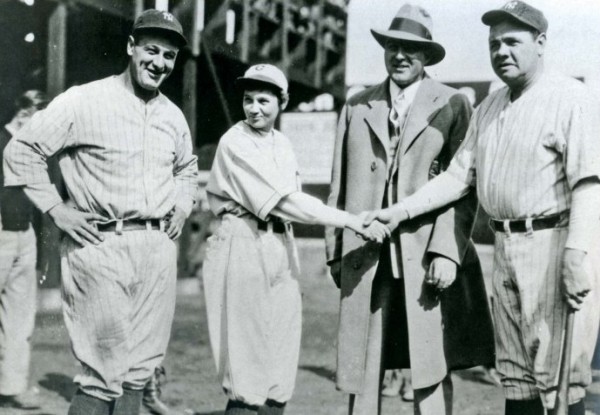
jackie-mitchell

The Jackie Mitchell saga is a great, feel-good story ruined by ethics rot. On one level, it is exactly the kind of tale that compels the treatment recommended by the old newspaper editor in John Ford’s “the Man Who Shot Liberty Valence”: “When the legend becomes fact, print the legend.” On another, it is an ethics mess, which might explain why I had never heard of Jackie Mitchell, once a proto-feminist icon, until I cracked open my new issue of Smithsonian Magazine.

Mitchell was a Depression era Chattanooga teenager who had been taught how to pitch by her friend and neighbor, Major League ace Dazzy Vance. A star on local women’s baseball teams, the tomboy southpaw was signed to a pro contract by the promotion-minded owner of a local AA level minor league team, the Lookouts, in 1931. Her big moment came when the New York Yankees came through Chattanooga from Spring Training on the way to opening the season up North. Lookouts owner Joe Engel arranged for two exhibition games against the Bronx Bombers, who, you baseball fans should know, included Babe Ruth and Lou Gehrig. Engel promoted the game as a David and Goliath showdown with Jackie playing David, and he was rewarded with a full stadium. Then this happened: Continue reading

Neil Armstrong’s Disputed Words: “The Ethics of Changing History”

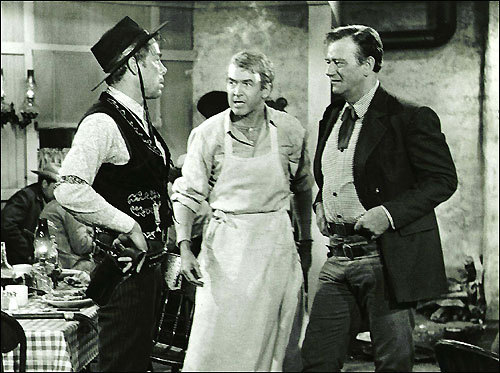
Pop Quiz: What does Neil Armstrong and this classic Western have in common?

[The death of mo0n-walking astronaut Neil Armstrong  ate the age of 82 reminded me of a 2006 essay about Armstrong’s famous quote that I wrote in 2006 on The Ethics Scoreboard. The AP just revisited the issue, and you can read the full text of my 2006 piece, The Ethics of Changing History: Of Crockett, the Titanic and “One Small Step” on the Scoreboard archive site. Here is the relevant portion of that article:] Continue reading

Oprah and the Icons: the Ethics of Lying to Make a Difference

Kitty Kelley’s unauthorized, rip-the-mask-off-the-icon bio is out, and now Oprah Winfrey must weather the inevitable de-construction of some of her meticulously self-created image. Oprah is pretty much untouchable now; I was a guest at her “O” Magazine Expo last Fall in Kansas City, and it was clear that her status with he legion of followers is somewhere between a guru and a goddess. There aren’t many revelations, short of proving that she is secretly Dick Cheney in an elaborate disguise, that could do much to reduce her cultural influence or undo her popularity.

Still, it used to be that heroes, celebrities and cultural icons could count on the whole truth about their personal and career embellishments to surface only late in life, or more often, long after death. Thus it has been a standard tool of rising figures in America to carefully craft an inspiring story and an appealing persona that excite and engage the public, and the truth has had little to do with it. It’s worked, too. Continue reading