Comment the Day: “Exposing America’s Dungeons…”

Maybe Tom Cruise knows how they stored the prisoners in "Minority Report"---that seemed to be a quiet and pleasent prison environment...

Dwayne N. Zechman makes trenchant observations and raises difficult questions in his comment to the post, “Exposing America’s Dungeons: The New York City Bar Report on Supermax Prisons.” The report to some extent answers Dwayne’s primary point by stating that the need for special high-security prisons to prevent violence to inmates and guards cannot justify an unconstitutional solution. If the conditions in the supermax prisons are as described in the report, there can be no doubt that it violates the prohibition against “cruel and unusual punishment.” That is an absolutist position like the prohibition against torture: ethically, arguing that “it works” or “there’s no other way” or “oh yeah? What would YOU do?” won’t and cannot prevail…unless we conclude that when we have to choose the lesser of two evils, forcing violent and otherwise uncontrollable criminals to live in dungeon-like condition is preferable to having them kill people might be the winner. Continue reading

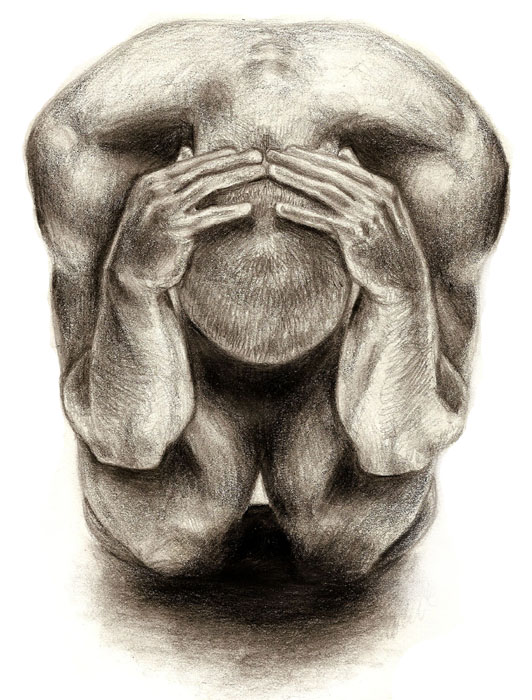
Exposing America’s Dungeons: The New York City Bar Report on Supermax Prisons

“…The overriding rationale for supermax confinement is to impose order  and maintain safety in the prison environment.  The unmitigated suffering caused by supermax confinement, however, cannot be justified by the argument that it is an effective means to deal with difficult prisoners. The issue, we believe, is not whether supermax achieves its purposes or is effective at controlling and punishing unruly inmates.
Instead, the question is whether the vast archipelago of American supermax facilities, in which some prisoners are kept isolated indefinitely for years, should be tolerated as consistent with fundamental principles of justice. Even prisoners who have committed horrific crimes and atrocities possess basic rights to humane treatment under national and international law. Although the Constitution “does not mandate comfortable prisons,” it does require humane prisons that comport with the Eighth Amendment’s prohibition against punishments that are “incompatible with ‘the evolving standards of decency that mark the progress of a maturing society” or which “involve the unnecessary and wanton infliction of pain.” More recently, the Supreme Court stated that “[p]risoners retain the essence of human dignity inherent in all persons. Respect for that dignity animates the Eighth Amendment prohibition against cruel and unusual punishment.”

“Supermax confinement as extensively implemented in the United States falls short of this standard and must be substantially reformed.”

—-The New York City Bar in its just-released report on “supermax” prisons in the United States.  The report declares supermax imprisonment, which currently holds 80,000 prisoners, to be the equivilent of torture and a violation of international human rights standards.

The report is harrowing, horrifying, and a source of shame for all Americans. The lack of concern by the public and its elected representatives in maintaining humane conditions in our prisons is understandable but inexcusable nonetheless. The New York City Bar has performed  a great service by issuing the report; it is up to us to insist that it is acted upon without delay. The United States of America should not be operating dungeons.

You can, and must, read it here.

America’s Untouchables

Americans allow prisoners in its penitentiaries to get raped, despite the fact that it is a blatant violation of the prisoners’ civil rights. They even tolerate TV shows making light of the situation, which is a human rights scandal: how many times have you heard the FBI agent or police in shows like “Law and Order” or “The Mentalist” taunt an arrested criminal with the prospect that he will soon be a prison sex-toy? Never mind: American don’t really care about the abuse of prisoners. Similarly, the nation is systematically making it impossible for convicted sex offenders who have served their time to live a normal life anywhere. They might as well be in prison. Well, except then they might get raped. Continue reading

In Search of Accountability, Fairness, Justice and a Champion: the Unending Persecution of Anthony Graves

Job would pity Anthony Graves

Governments and other bureaucracies are capable of unimaginable callousness, stupidity, and wrongful conduct, allowing individual fools to multiply their power to harm exponentially, and then to see an inhuman computer-driven monstrosity run amuck as everyone denies responsibility. You could not devise a better example of this process than what Texas is doing to Anthony Graves.

He is an innocent man convicted of murder in 1994 who was released last October after spending 18 years in prison, condemned to death. He had been convicted with fabricated evidence and coached testimony employed against him by former Burleson County District Attorney Charles Siberia, and a state investigation got a Texas judge to set Graves free. But the maw of Texas bureaucracy wasn’t through ruining his life. Continue reading

Unethical Quote of the Week: Wrongly Imprisoned Victim John Thompson

“I don’t think training would have had anything to do with nothing really, to be honest with you, because you could have trained them and they would still do it. You need to punish them for doing it, then they won’t do it.”

John Thompson, who was wrongly and illegally convicted of murder in Louisiana and spent 14 years on death row because prosecutors withheld exculpatory blood evidence from his lawyers and his trial. His civil suit against the prosecutor’s office, run by Harry Connick, Sr. (yes, the singer’s father) for millions in punitive damages, on the theory that the prosecutors who framed him were inadequately trained, was overturned last week by the U.S. Supreme Court.

This statement apparently was made by Thompson last October, when the Supreme Court took the case, and I missed it. It surfaced again this morning in a Washington Post editorial calling for harsher punishment for prosecutors who violate the rights of accused suspects and send innocent people to prison or execution. The Post has never been more right, and the $14 million originally awarded to Thompson by an appalled jury for his ordeal is still inadequate compensation for the 18 years he spent behind bars because of a prosecutor’s dishonesty.

But the theory used to get Thompson his money—that the tragedy would have been prevented if Connick’s office hadn’t been negligent in training its lawyers in prosecutorial ethics—was a sham, and deserved to be rejected by the Court, no matter how much Thompson deserved the money, or indeed, ten time the money. Continue reading

Home-Grown Mengeles, And What We Must Learn From Them

Josef Mengele: researcher, utilitarian, monster

We knew, or should have known, that this extremely ugly shoe was bound to drop eventually.

Last autumn, when the U.S. apologized for federal doctors infecting prisoners and mental patients in Guatemala with syphilis 65 years ago, it put us on notice that a vile and unethical cultural standard had taken hold of the American medical and scientific communities in the 20th century, one that held  it was “right” for the weakest, most powerless and most disposable of human beings to be tricked, coerced or bribed into serving as subjects for experiments that could lead to miraculous cures and treatments for the rest of the population. This–depriving human beings of their rights and lives in the interest of science—is “the ends justify the means” at its worst. But the Guatemala experiments proved that this was once flourishing and respectable in the U.S. scientific and medical research communities, so it would have been surprising if there weren’t more stories of home-grown Mengeles, and sure enough, there were. The U.S. acknowledged as much when it apologized for the Guatemalan tests. Now we have details. Continue reading

The Supreme Court Rejects a Bad Argument

The U.S. Supreme Court has turned down the appeal of Massachusetts prison inmates who argued that the 1964 Voting Rights Act guaranteed them the right to vote. Continue reading

The Training Myth and Connick v. Johnson

The U.S. Supreme Court is deliberating on the issue of whether a District Attorney’s office can be held liable when individual prosecutors commit serious misconduct, on the grounds that the government breached its duty to train its prosecutors and ensure their competence. The case is Connick v. Thompson, and it began when it was discovered that a New Orleans man had been sent to Death Row for 18 years for a crime he hadn’t committed. John Thompson was innocent, and a lab report proving that the blood found at the crime scene belonged to someone else would have proven it. Prosecutors withheld the evidence from the defense attorneys.

When Thompson was freed he was understandably angry, but the options for redress when the criminal justice system ruins your life are severely and unjustly limited. In 1976, the Supreme Court decided in Imbler v. Pachtman that prosecutors have absolute immunity from lawsuits, even when there is genuine, malicious and illegal conduct. The Court acknowledged that its ruling “does leave the genuinely wronged defendant without civil redress against a prosecutor whose malicious or dishonest action deprives him of liberty,” but declared the alternative was worse: making prosecutors timid and fearful of making a mistake that could leave them penniless. The Court suggested that professional discipline would be enough to keep prosecutors honest, but that hasn’t been the case: a USA Today study found that even in egregious cases of prosecutorial misconduct, attorneys who put innocent people in jail almost never had to endure any punishment at all. Thompson sued the District Attorney’s Office on a theory of negligent training, and won 14 million dollars from a sympathetic jury. Now the Supreme Court is deciding whether such suit can stand in light of the ruling in Pachtman.

It should, but the theory behind the lawsuit is a myth, and I suspect that everyone knows it. Continue reading

The Ethics of Compensating the Unjustly Imprisoned

The New York Times last week published the stories of two men, in different states, who were recently freed from prison after it was proven that they were wrongly convicted. Michael A. Green spent 27 years in a Texas penitentiary for a rape he didn’t commit. Thomas Lee Goldstein was locked up 24 years ago for a murder committed by someone else.

The lives of both men have been destroyed, obviously. The important question now is, who is accountable? What is owed to a human being who has been robbed of what should have been the best and most productive years of his life, and who owes it?

Both men will be getting some compensation from the state governments involved, though obviously no amount of money could make them whole: what would you accept in exchange for spending the years from 35 to 60 in a maximum security prison? Goldstein settled a lawsuit for nearly eight million dollars; Green is mulling an offer of $2.2 million from Texas, and may decide to sue to get more. 2.2 million dollars for 27 years in prison…let’s see, that works out to less than $81, 500 a year. Should he take the deal? I would not accept 2.2 million dollars to spend one year in jail, much less 27. Continue reading