Ethics Heroes: NFL Owners

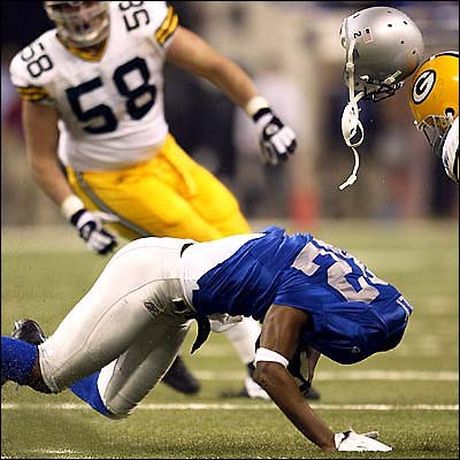
The less THIS happens, the better.

I was wrong about the N.F.L.

On Tuesday, the N.F.L. owners voted to move kickoffs back to the 35-yard line, where it was until 1994. The new rule will make the game less exciting but more safe. I didn’t think they’d do it.

The league has a problem—I mean, other than the impasse in labor negotiations that threatens to disrupt the coming season and lose owners and athletes millions. Its game is more popular than ever, but little by little, the evidence is mounting that it is also lethal. Playing pro football injures the brains of a higher percentage of the athletes than anyone suspected, and far worse than suspected. Players are quite literally sacrificing their lives, or at least two or three decades of them, for the Sunday entertainment of America. Continue reading

The NFL’s Looming Choice: “Chickafication” or Bloodsport

At a recent conference, a physician panelist discussing NFL player head injuries said that if the average NFL player walked into a doctor’s office for a typical checkup, he’d be rushed immediately to a hospital for treatment.

The fact is slowly dawning on NFL management, the players and the public that pro football, indeed all football, is even more dangerous than everyone thought, and that normal, accepted play may still routinely cripple players in the worst possible place: their brains. The problem, ethical as well as medical, is that no one knows whether the sport can fix the problem and still be what fans regard as NFL pro football. It is a medical problem, because the data increasingly indicates that serious head trauma and long-term disability is frighteningly common. It is an ethical dilemma, because the very aspect of football that many of its fans most relish—the bone-crushing violence—is leaving players unacceptably vulnerable to depression, memory loss, personality disorders, rage, dementia, and suicide. Continue reading