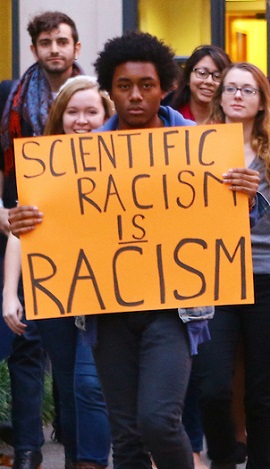
Sunday Morning Ethics Warm-Up, 5/13/2018: A Strange Philanthropist, A Redeeming Cadet, A Good Idea, And An Obvious Observation

Good Morning!

(This was definitely the oddest LP in my Dad’s Jimmy Durante collection….And good night, Mrs. Calabash, wherever you are…)

1. Ethics Hero, I guess. A sad one…The Henry Street Settlement , a community charity, was shocked to receive $6.24 million donation, the largest single gift from an individual in its 125-year history, from the estate of the late Sylvia Bloom, a legal secretary from Brooklyn worked for the same law firm for 67 years until she retired at age 96 and died  in 2016. When one of the wealthy lawyers she worked for bought a stock as she made the transaction for him (or her; I don’t know), she bought the same stock for herself, in a smaller amount. The woman amassed all this money, which she could have used while she was still breathing to assert some beneficial influence over society, help others, or just to expand her own experiences and life opportunities, but instead delegated the responsibility to a non-profit organization to handle after her death. She spent a lifetime in thrall to a law firm, and never could take the initiative to be free.

I view this story as a strong argument for feminism.

2.  Progress: For the first time in The Citadel’s 175-year history,  the Corps of Cadets command was awarded to a female cadet, Class of 2019 Regimental Commander Sarah Zorn. This was no affirmative action or gratuitous diversity moment, but an honor well-earned. In addition to her academic record and demonstrated leadership abilities, Zorn can do 70 pushups in two minutes (I’ve done 7 push-ups in two decades) and has three martial arts black belts. This triumph finally eradicates the humiliating beginnings of the South Carolina military academy’s gender integration, when Shannon Faulkner won a lawsuit against the school’s strict male-only admissions policy, became the first female cadet admitted, then showed up out of shape and irresolute, washing out after five days, four of which were spent in the infirmary. I have always regarded Faulkner as the anti-Jackie Robinson, the perfect example of how a trailblazer without sufficient character can make the trail worse than it was before.

3. An ethics inspiration from Europe. 15,000 European 18-year-olds will be able to travel free of charge in Europe this summer, using special free travel passes valid for 30 days. The European Parliament initiative was passed “to enhance a sense of European identity and European values.” . The cost will be about $14.2 million dollars in American currency.

Great idea, and better, in fact, for the United States to try than Europe, since the United States actually has a national culture and one that a majority of young people are neither learning about nor understand. The U.S. version should include tickets to a baseball game, of course.

4. Duh. Imagine my surprise when, after opening the Sunday New York Times Sunday Review section, I found leading off the insert that has been dominated by anti-Trump hate and hysteria since last November an essay that dovetails nicely with this Ethics Alarms post from yesterday.  Liberals, You’re Not as Smart as You Think” by Gerard Alexander, professor of political science at the University of Virginia, was given the front page of the section to make a point, a full year and a half into President Trump’s administration, that has been a theme on Ethics Alarms for all of that time, and should have been screamingly obvious to anyone whose own ethics alarms still had functioning clappers. Alexander writes in part, Continue reading
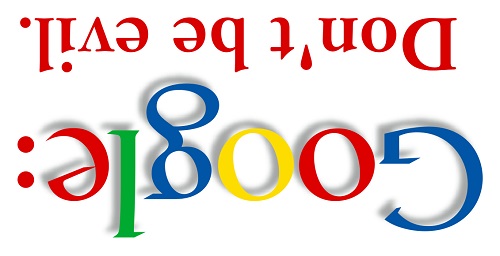

Google And The Bail Bonds: When Virtue-Signaling Goes Horribly Wrong

..or, in the alternative, go ahead and BE evil, but make sure you’re pretending to be progressive while you’re doing it.

“With great power comes great responsibility not to be reckless and stupid.”

Google recently announced this policy change. See if you can spot what is wrong with it: I shouted, “What???” pretty much through the second paragraph.

At Google, we take seriously our responsibility to help create and sustain an advertising ecosystem that works for everyone. Our ads are meant to connect users with relevant businesses, products and services, and we have strict policies to keep misleading or harmful ads off of our platforms—in fact, we removed 3.2 billion bad ads last year alone. Today, we’re announcing a new policy to prohibit ads that promote bail bond services from our platforms. Studies show that for-profit bail bond providers make most of their revenue from communities of color and low income neighborhoods when they are at their most vulnerable, including through opaque financing offers that can keep people in debt for months or years. We made this decision based on our commitment to protect our users from deceptive or harmful products, but the issue of bail bond reform has drawn support from a wide range of groups and organizations who have shared their work and perspectives with us, including the Essie Justice Group, Koch Industries, Color of Change and many civil and human rights organizations who have worked on the reform of our criminal justice system for many years. According to Gina Clayton, executive director of the Essie Justice Group, “This is the largest step any corporation has taken on behalf of the millions of women who have loved ones in jails across this country. Google’s new policy is a call to action for all those in the private sector who profit off of mass incarceration. It is time to say ‘no more.’” Enforcement of this policy will begin in July 2018. This policy change is part of our ongoing efforts to protect users on our platforms.

Maybe this isn’t as stupid as it appears. Maybe Google is trying to protect its users by ensuring that potential predators accused of crime rot in jail while they are awaiting for trial because they don’t have access to bail.  Now that would be sinister and cruel, but not idiotic. Maybe? Perhaps?

No, this is just idiotic.

Prof. Alex Tabarrok, the Bartley J. Madden Chair in Economics at the Mercatus Center and a professor of economics at George Mason University, explains:

Bail bonds are a legal service. Indeed, they are a necessary service for the legal system to function. It’s not surprising that bail bonds are used in communities of color and low income neighborhoods because it is in those neighborhoods that people most need to raise bail. We need not debate whether that is due to greater rates of crime or greater discrimination or both. Whatever the cause, preventing advertising doesn’t reduce the need to pay bail it simply makes it harder to find a lender. Restrictions on advertising in the bail industry, as elsewhere, are also likely to reduce competition and raise prices. Both of these effects mean that more people will find themselves in jail for longer.

And may I add, with respect, “Duh.” You don’t begin reforming the bail system by making it harder for people who need bail to get it….that is, you don’t do that unless you have a cranial vacuum.  Moreover, Prof. Tabbarrak has the same message based on his experience with bail bond companies as I did when I had criminal defendants as clients—and when I have had to help family members and friend deal with the bail system: Continue reading

Comment Of The Day: “Ethics Dunces: Jeremy Lam And The Cultural Appropriation Police”

Huh! I didn’t know this was traditional Chinese business attire! Imagine: This is what Marco Polo must have seen!

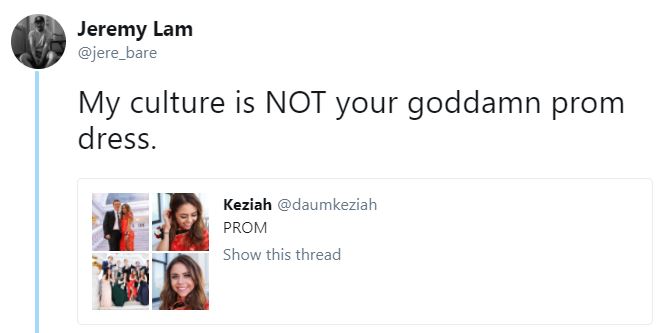
The most amusing reaction to the apotheosis of progressive silliness that was the attacks on Utah high-schooler Keziah Daum for wearing a Chinese-style prom dress came from China, where the South China Post’ s Alex Lo, who authored a column titled, “Go ahead, appropriate my culture.” He wrote in part,

If anyone thinks social media is harmless, this incident should prove otherwise. A person called Jeremy Lam apparently first tweeted about her transgression, which is now being called “cultural appropriation”. “My culture is NOT your goddamn prom dress,” he posted…I apologise in advance for contributing to the silliness, but just needed to get it off my chest.  A publication as esteemed as The Independent of London ran a column supportive of the criticism.“The debate her prom pictures have prompted is justified,” the columnist wrote. “Cultural appropriation is about power, and to many she is the embodiment of a system that empowers white people to take whatever they want, go wherever they want and be able to fall back on: ‘Well, I didn’t mean any harm’.”

I would argue those who scream loudest about cultural appropriation are themselves after power…Why does Jeremy Lam think Chinese is his culture? Is his the same as mine? Is it some kind of property like an inheritance? If so, where is the will, written in our DNA, perhaps? And is it taxable or payable, and by whom? Why did Lam write in English? Isn’t he inappropriately appropriating English-speaking culture? …SJWs turn culture into some kind of finite asset, a zero-sum rather than a growing-sum game. They are oblivious or ignorant of how human cultures actually work: culture is cultural appropriation.

The topic sparked many excellent comments here, including this Comment of the Day by Alexander Cheezem…on the post, Ethics Dunces: Jeremy Lam And The Cultural Appropriation Police:

It’s worth noting the issue of what I can only call — with much irony — aggregation bias here. There _has_ to be a term for it that doesn’t rely on punning off a statistical concept, though…”

In reflection, I suppose that what’s going on is technically a variant of the ecological fallacy — but it’s manifesting as a form of bias (in the non-statistical sense) based on the aggregation of behavior… so the term isn’t quite right, leading me right back to punning off of the statistical concept. I can’t explain the issue without a massive amount of technical language (e.g. “the emergent nature of many features of a complex system”).

And that is a huge problem with modern liberalism. Continue reading

Ethics Dunces: Jeremy Lam And The Cultural Appropriation Police

Utah high school student Keziah Daum posted a picture of herself looking lovely in a prom dress, and thanks to the warped values and cracked ethics of a young social justice warrior tweeter named Jeremy Lam, was set upon by the social media Furies.

Here is the tweet:

The tweet received 179 THOUSAND likes, and was retweeted 60 thousand times. Yes, a young woman going to her high school prom was condemned by all those strangers for liking and wearing an Asian-themed dress.

I don’t know what broken-chromosome mutation of progressive thought creates Americans like Jeremy—who is living in our culture, which is an amalgam of all cultures, but better—but the fact that he could attract such support with his divisive, segregated version of what our society should be is one more sign that the hard-Left is getting more anti-American by the hour. David French nicely puts this episode in perspective:

“Just so we’re clear, the radical progressive position is (1) America’s borders should be flung wide open to people from every culture in the world; (2) when American white people encounter people from those hundreds of different cultures, they need to stay in their lane; and (3) white people staying as white as possible will help our nation totally unify and diversity will be our strength.”

That’s about right. Kaziah Daum is the victim of racism here. Reasonably for someone unfairly thrust into the culture wars without justification or warning, she responded that she wasn’t trying to upset anyone; she just thought it was a pretty dress. The rest of  us, French suggests, need to be more assertive: Continue reading

Morning Ethics Warm-Up, 4/18/2018: The Bad, The Beautiful, And The Stupid

Good morning, everyone…

1. Tales of the King’s Pass. Fox News put out a statement saying that Sean Hannity had its “full support.” We can assume that means no punishment, no sanctions, not even any public regrets, despite the fact, and it is a fact, that the right-wing talk-show host-turned-Trump propagandist went on the air and defended Trump’s fixer, Michael Cohen, without mentioning the fact that Hannity was Cohen’s client. Thus Fox is announcing, in effect, that undisclosed conflicts of interest are just fine and dandy if your ratings are good enough. This also means that Fox News is admitting that it really doesn’t care about candor, honesty, and objectivity, since it will ignore blatant violations of all three if the profit is sufficient.

In fairness to Fox, Hannity’s blatant biases toward all things Trump are no more egregious than the open Obama bias displayed across the mainstream media’s full spectrum of journalists and pundits; it just stands out more because he has less company. However, this is a specific conflict of interest, with Hannity having undisclosed connections to a newsmaker that could reasonably affect his commentary. The closest parallel would be ABC’s George Stephanopoulos reporting on the Clinton Foundation’s dubious activities without telling viewers that he was a $75,000 donor. ABC didn’t discipline him, either, but at least he made a public apology on the air.

To make the King’s Pass case even stronger, after Politico reported this week that dinnertime news anchor Bret Baier played nine holes of golf with President Trump over the weekend, Fox News acknowledged that Baier was admonished by the president of the network.  I don’t agree with the reprimand at all. The opportunity to spend that kind of time with a President is invaluable, a rare opportunity to acquire insight and access over an extended period of time. The idea, I assume, is that it creates the illusion of chumminess. It’s a dumb illusion. If I were a journalist,  I would play golf with anyone if it allowed me to learn something. If I were president of a network, I’d reprimand a reporter for turning down such an opportunity.

2. The Virtue-Signaling Hall Of Fame. Starbucks is reacting to the PR nightmare arising out of the arrest of two black men for refusing to order anything while waiting for a companion in a Philadelphia Starbucks by a grand gesture: it will close all U.S. stores and corporate offices on the afternoon of May 29 for “employee racial bias training.” I suppose this is good crisis management, though cynical and non-substantive. It also permanently tars as a racist the Starbucks ex-manager, who says she was following a locale-specific company policy in an area that had experienced problems with loitering. Continue reading

Morning Ethics Warm-Up, April 9, 2018: Experiment Results, Flowering Trees From Hell, And Ominous Signs From The Left..

Good morning…

…Mrs. Calabash, wherever you are…

1. Apologies for a lost Sunday. I was never able to get back to my computer yesterday. The combination of my responsibilities to the Georgetown Gilbert & Sullivan Society as it celebrated its 46th year of operation against daunting odds, some pressing client matters and important family matters just overwhelmed my schedule, plus I was wiped out by the early evening. Of course, based on the blog’s traffic this month and the continuing ethics rot, I console my self in the message of the most famous song from “Ruddigore,” GG&SS’s student production for the anniversary…especially the final line…

“This particularly rapid unintelligible patter isn’t generally heard, and if it is, it doesn’t matter.”

Ethics commentary in a nutshell.

2. However: The regulars came through in a pinch. The free swim produced at least four  Comment of the Day quality posts, including a history of the Gettysburg address. Thanks everybody. The experiment was a ringing success, and I will have more open forums in the future.

3.  This kind of thing is why I have a hard time taking environmentalist doom-saying seriously. We planted Bradford Pear trees, which are now blooming beautifully as is their wont, in front of our house almost 20 years ago. They have their downsides, to be sure, and you have to trim them back or they are likely to split or fall over. However, here is an environmentalist claiming that they are trees from hell, and who writes in part: Continue reading

Ethics Hero: Andrew Sullivan

Once again, Ethics Alarms is honoring Andrew Sullivan for unusual courage in the field of punditry. In this case, the honor is less for what he has written than the fact that he wrote it at all.

His general topic is genetic research, taking off from a recent op-ed appeared in the New York Times by Professor David Reich, a  Harvard geneticist, which broached the virtually taboo topic genetic variations between subpopulations of humans, that is to say, races. On the way through Sullivan’s essay, called “Denying Genetics Isn’t Shutting Down Racism, It’s Fueling It,” Sullivan makes many perceptive observations, like…

“This argument should not be so controversial — every species is subject to these variations — and yet it is. For many on the academic and journalistic left, genetics are deemed largely irrelevant when it comes to humans. Our large brains and the societies we have constructed with them, many argue, swamp almost all genetic influences.

Humans, in this view, are the only species on Earth largely unaffected by recent (or ancient) evolution, the only species where, for example, the natural division of labor between male and female has no salience at all, the only species, in fact, where natural variations are almost entirely social constructions, subject to reinvention. We are, in this worldview, alone on the planet, born as blank slates, to be written on solely by culture. All differences between men and women are a function of this social effect; as are all differences between the races. If, in the aggregate, any differences in outcome between groups emerge, it is entirely because of oppression, patriarchy, white supremacy, etc. And it is a matter of great urgency that we use whatever power we have to combat these inequalities.”

Agreed, and stipulated: the progressive position on this aspect of science is, as in so many other areas, a deliberate refusal to deal with reality in order that ideological goals may proceed.

More from Sullivan later in his piece… Continue reading

Morning Ethics Warm-Up, 4/2/2018: The Unreliable Authorities Edition

Good morning!

1.  Another baseball ethics dispute! This is an exciting time of changes in the traditional wisdom of how to play Major League Baseball, all sparked by that new ethics bugaboo, Big Data. Now that so many aspects of the game can be measured and analyzed, tradition and assumptions rarely challenged are now under fire. One massive shift is, ironically, in the matter of shifts, radical defensive alignments in which players are not fielding their normal positions, but rather are places where computer spray charts for each batter suggest that the likelihood of fielding a ball is highest.  This can mean anything from one lonely fielder on the left side of the infield, or four outfielders.

Shifts are not new, but they used to be used on a handful of super-sluggers with dead-pull propensities, notably Ted Williams, who famously refused to bunt for easy hits to the unoccupied side of the field, and instead usually tried to hit through or over the shift. It has been estimated that the Williams Shift, combined with the player’s infamous stubbornness, cost him many points off of his lifetime batting average, especially since Williams defeating the shift by bunting might have discouraged its use.

But he was Ted Williams, the second greatest hitter of all time.  The question of whether lesser batters should bunt against shifts, for now many teams shift against everyone, has an easy answer: Of course they should.

In yesterday’s Twins-Orioles game, Twins starter Jose Berrios had  a one-hit shutout in the ninth inning. leading with one out and no runners on base. O’s rookie catcher Chance Sisco came to the plate—he has my favorite baseball name this season–and the Twins put on a shift like the one Ted Williams despised:

So, knowing he wasn’t Ted Williams and also knowing that in baseball even seven run leads aren’t a sure thing, Chance dropped down a bunt to the left side for a single. Berrios then walked two batter Davis and Manny Machado to load the bases, but finished his shutout by getting the next two outs without further disruptions.

After the game, the Twins players questioned the ethics of Sisco’s hit. Berrios said, “I just know it’s not good for baseball [to bunt] in that situation. That’s it.” Twins outfielder Eddie Rosario said, “Nobody liked that. No, no, no. That’s not a good play.” Second baseman Brian Dozier added, “Obviously, we’re not a fan of it. He’s a young kid. I could’ve said something at second base but they have tremendous veteran leadership over there. I’m sure they’ll address that. It’s all about learning. You learn up here.”

When do you “learn” not to try to win the game and get on base? For Sisco, a rookie, sending the message that shifting against him is a bad risk also is a wise career move. There is a long-standing, and stupid, unwritten rule in baseball that it is “bush league” to try to break up a no-hitter with a bunt, but extending that dubious logic to a mere shutout breaks the Stupid Meter.

2. Coffee is good for you, but be worried when you drink it. Continuing its rapid devolution into Bizarro World, just as increasing scientific evidence suggest that coffee is good for you, California is demanding that it carry a tobacco-like warning label. Last week a judge ruled that Starbucks and  other coffee companies in California must carry a cancer warning label because of a chemical produced while beans roast has been shown to cause cancer in high doses. California’s Safe Drinking Water and Toxic Enforcement Act  requires companies with more than 10 employees to warn their customers about the presence of carcinogenic and toxic chemicals in their products, even in tiny amounts. Acrylamide, a chemical compound that is produced naturally during the roasting of coffee beans, is on the state’s list of chemicals known to cause cancer or reproductive toxicity. The judge ruled that the coffee company had the burden of proof  to show that acrylamide posed no significant health risk to coffee drinkers, even though there is no evidence that coffee does pose a risk. Continue reading

Morning Ethics Warm-Up, 3/19/18: Unethical Wedding Gifts, The Fairness Conundrum, What Really Makes Students Unsafe, And More

Good Morning!

1 A Not Exactly Hypothetical… A family member is getting married, and the social justice warrior spouse has decreed that no gifts should be sent, just contributions in the happy couples’ name to designated charities and causes, all political, partisan, and ideological. Does this obligate guests to give money to causes and organizations they object to or disagree with? One might be tempted to teach a life-lesson in abuse of power, and pointedly give a contribution to, say, The Family Research Counsel, the NRA, or Paul Ryan’s re-election campaign, but that would be wrong. Wouldn’t it?

2. “Progressive fines” poll update. The percentage of readers who regard so-called “progressive fines” as fairer than fining all law violators the same amount regardless of resources is about 6%, in contracts to 40% who think this is less fair. As I suspected, the schism is driven by the long-standing (and resolvable) arguments over what constitutes “fair” government policies, and whether it is the government’s job to try to make life less unfair. Is it “fair” to treat everyone the same, when we know that life doesn’t treat everyone the same? Are those who argue that life’s unfairness should be addressed by individuals, not society, taking that position because they are winners in life’s chaotic lottery? Can society and governments be trusted to address “unfairness” and inequality without being influenced by the conflicts and biases of the human beings making and carrying out laws and policies. I don’t generally care to spend a lot of Ethics Alarms time or space on abstract ethics questions, but some of them can’t be avoided. You can take the poll, if you haven’t already, here.

3. On the topic of fairness, here is a study that will make you bang your head against the wall: Following on the heels of this discouraging study I posted about on March 3 is this report by researchers at Stanford, Harvard and the Census Bureau, as described here by the New York Times. A taste sufficient to ruin your day: Continue reading

Ethics Quiz: Income-Based Legal Penalties

In an op-ed in the Times,  lawyer Alec Schierenbeck argues for “progressive fines”:

“For a justice system committed to treating like offenders alike, scaling fines to income is a matter of basic fairness. Making everyone pay the same sticker price is evenhanded on the surface, but only if you ignore the consequences of a fine on the life of the person paying. The flat fine threatens poor people with financial ruin while letting rich people break the law without meaningful repercussions. Equity requires punishment that is equally felt.”

Your Ethics Alarms Ethics Quiz of the Day is..

Do you agree that “progressive fines” are a more ethical policy than having the same fines for the same violation, regardless of the offender?

Continue reading