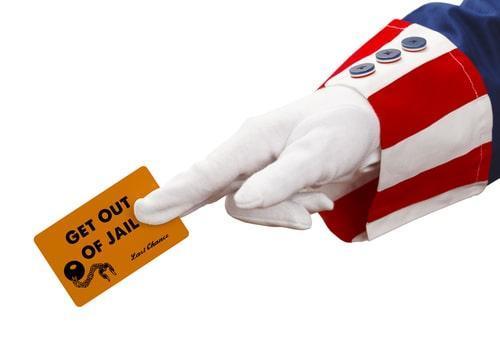
When Ethics Alarms decided what had been a close competition between Woodrow Wilson and Joe Biden for “Worst President Ever,” I honestly thought all of the evidence was in. There were only eight days to go, after all; it had finally been made sufficiently clear that our so-called President was on his way to becoming a zucchini, and worse, had been transitioning for years under the protection of an Axis cover-up. But then came Biden’s endorsement of censorship and the most unethical exit speech in U.S. Presidential history, followed by Biden’s embarrassing announcement that he was ruling the 28th Amendment ratified when it was not. Today, I woke up to the news that Biden had issued prospective pardons to Gen. Mark A. Milley, the former chairman of the Joint Chiefs of Staff who betrayed his country with unauthorized contact with China; Dr. Fauci, the perjuring, lying, Deep State hack who was significantly responsible for the disastrous response to the Wuhan virus, Trump Deranged former Representative Liz Cheney and all the other members of the Pelosi-rigged House committee that dragged out and manipulated a partisan investigation of the Jan. 6, 2021 riot.
The close call now is whether this last official act by Biden is the worst of the batch. It may well be.
To chase the metaphorical elephant out of the room, prospective pardons are legal, constitutional, and probably irreversible. Presidents have issued general pardons applying to groups of people involving many offenses yet to be proven, and many times. There have been at least thirty amnesties before puppet Joe entered the White House: Presidents Lincoln and Andrew Johnson issued them during and after the Civil War to benefit Confederates, and Jimmy Carter issued a mass pardon for Vietnam war draft dodgers. My favorite was President Madison’s 1815 pardon of pirate Jean Lafitte and his crew, who joined Andy Jackson’s American forces at the Battle of New Orleans. Madison’s grateful proclamation covered all who assisted in the defense of Louisiana in the battle (that occurred after the War of 1812 had ended), granting “a full and free pardon of all offenses committed in violation of any act or acts of the Congress of the said United States touching the revenue, trade, and navigation thereof or touching the intercourse and commerce of the United States with foreign nations at any time before the 8th day of January, in the present year 1815, by any person or persons whomsoever being inhabitants of New Orleans and adjacent country, or being inhabitants of the said island of Barrataria and the places adjacent . . .”
The fact that this vague and general sweeping Presidential pardon was issued by James Madison, the primary author of the Constitution, makes it about as irrefutable a precedent as one could ask for. And thus the U.S. Supreme Court has repeatedly held that the pardon power “extends to every offense known to the law, and may be exercised at any time after its commission, either before legal proceedings are taken or during their pendency or after conviction and judgment.”
Nonetheless, just because one can do something (or get away with it) doesn’t mean it is ethical, prudent, responsible or right. Biden’s pardons for alleged crimes never investigated or proven to individuals holding his favor stretches the existing precedents to the breaking point, or perhaps gagging point is a more apt description. After all, Jean Lafitte was a pirate; the Confederate soldiers fought against their country, and the draft-dodgers were, you know, draft dodgers. Even Richard Nixon, pardoned by President Ford in what may be the nearest thing to a precedent for Biden’s pardons today, was a President of the United States whose potential indictable crimes had only been uncovered in the course of a House impeachment inquiry. At that point, the precedent could have been limited by those not insignificant details. Then came Biden’s Once and Future pardon of his black sheep son for crimes he had been convicted of committing and anything else he might have done yet undiscovered, just in case darling Hunter has been a serial killer when he wasn’t high. Today’s pardons take us to the end of the slippery slope.
 Ethics Alarms