Morning Ethics Warm-Up, 8/27/2019: Desperation

http://www.youtube.com/watch?v=uI5Q505MqIk

Good morning.

1. Here is why the breast-beating about “doing something” about climate change is dishonest, disingenuous, futile and pointless. Brazil is telling the rest of the world, especially nations that developed their own economies with reckless impunity on the way to wealth and power, to back off its demands that Brazil stop burning its own rain forest. Of course it is taking this stance, and Brazil isn’t the only developing nation that will take that position and has every right to take that position.

Brazil’s defiance is also a definitive rebuttal to the argument that the United States should spend billions—trillions?—in virtue-signaling climate change policies that under the most optimistic scenarios won’t “fix” anything without mass cooperation by nations in Brazil’s position—and that’s not going to happen.

2.  The theory: somebody has to pay. A judge in Oklahoma yesterday ruled that Johnson & Johnson  intentionally hid the risks and hyped the benefits of opioids, ordering the company to pay the state $572 million in damages. This is the first trial of a drug manufacturer for the destruction wrought by prescription painkillers.

I don’t know if the verdict is fair, having not seen the evidence and heard the arguments. I don’t know that the verdict will hold up on appeal. The theory used by the state was questionable: the judge found that Johnson & Johnson perpetuated a “public nuisance” by  contributing to an ongoing public health crisis that could take decades to address successfully. Yet there was no proof offered that doctors who prescribed the drugs were misled, or that Johnson & Johnson violated federal drug regulations.

Public nuisance laws typically apply in cases where something interferes with a right common to the general public and results in danger on roads, parks,and other public areas, and not usually public health, which is what the state argued in this case. Johnson & Johnson’s lawyers contended that the state was contorting public nuisance law to the point of being unrecognizable. Of course, the same argument was made when product liability laws started moving beyond the “buyer beware” stage.

Not reading and hearing all the evidence, I can only wonder if this is case of deep pockets being held responsible for a tragedy that had no single, obvious villain. Doctors prescribed drugs approved by federal regulators, and the drug manufacturers supplied them, legally. Then citizens took the drugs, voluntarily, in a political and social culture that increasingly shrugs off drug use and abuse. Continue reading
Ethics Quiz: The Natural Lawn

lawn

(Commenters complained that the last quiz was too easy. This one is not.)

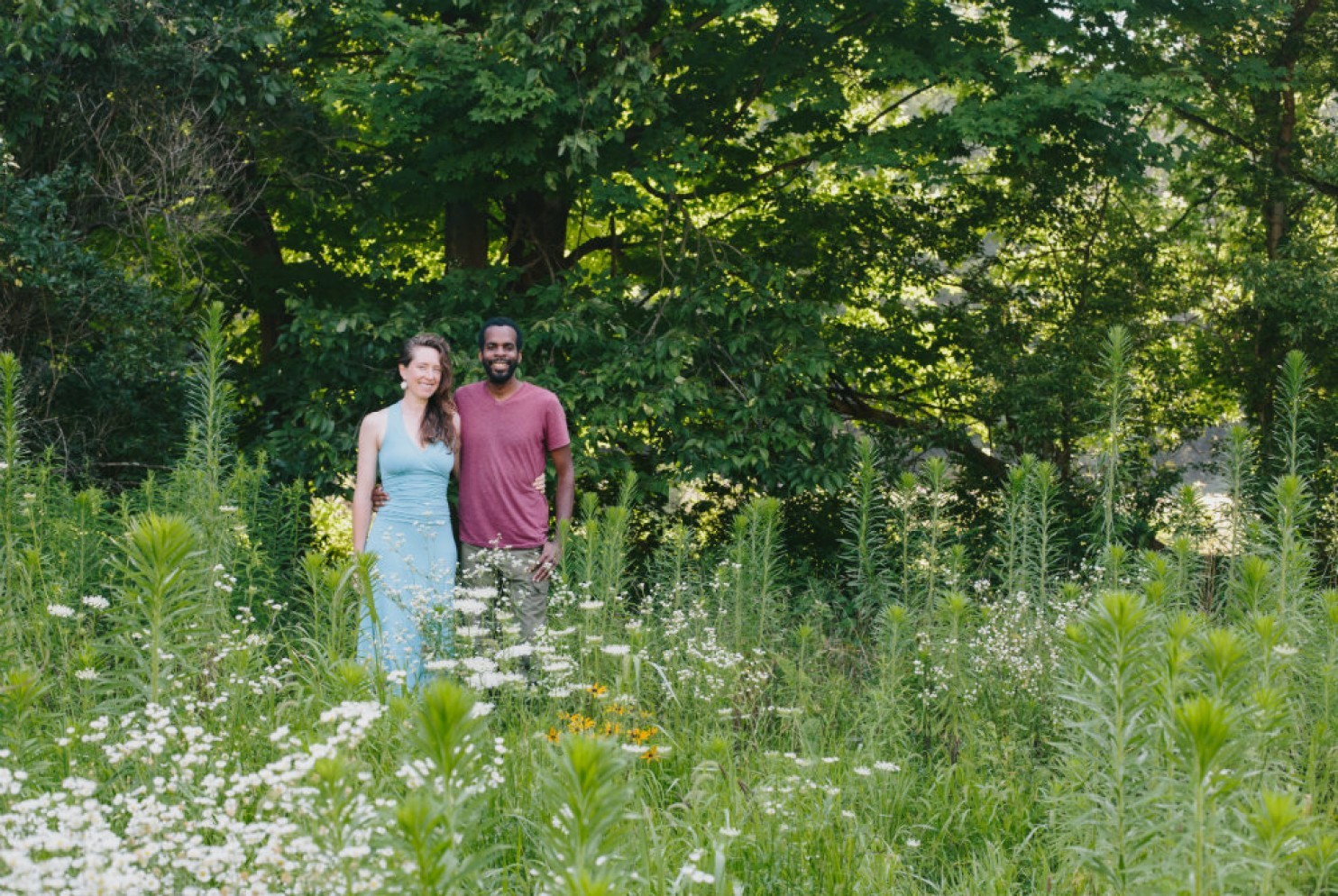
In the St. Albans Township, outside of Alexandria, Ohio, Sarah Baker and her partner  violated the local ordinance and stopped mowing their one acre of property. “A potpourri of plants began to flourish, and a rich assortment of insects and animals followed. I had essentially grown a working ecosystem, one that had been waiting for the chance to emerge,” she wrote in the Washington Post. The first time the couple tried this, they were fined a thousand dollars but capitulated and mowed their lawn. Now, though they have been found to turn their property into a “public nuisance” due to neglect, they are defying the town and certain that they are in the right. Baker writes in part:

” About 95 percent of the natural landscape in the lower 48 states has been developed into cities, suburbs and farmland. Meanwhile, the global population of vertebrate animals, from birds to fish, has been cut in half during the past four decades. Honey bees, on which we depend to pollinate our fruits and other crops, have been dying off at an unsustainable rate. Because one in three bites of food you take requires a pollinating insect to produce it, their rapid decline is a threat to humanity. Monarch butterflies have been even more affected, with their numbers dropping 90 percent since the 1990s. Butterflies are an important part of the food chain, so ecologists have long used them to measure the health of ecosystems.

Nature preserves and parks are not enough to fix the problem; much of wildlife is migratory and needs continuous habitat to thrive. Natural yards can act as bridges between the larger natural spaces…[M]aintaining a mowed and fertilized lawn also pollutes the air, water and soil. The emissions from lawnmowers and other garden equipment are responsible for more than 5 percent of urban air pollution. An hour of gas-powered lawn mowing produces as much pollution as four hours of driving a car. Americans use 800 million gallons of gas every year for lawn equipment, and 17 million gallons are spilled while refueling mowers — more than was leaked by the Exxon Valdez oil spill in 1989. Homeowners use up to 10 times more chemical pesticides per acre on their lawns than farmers use on crops, chemicals that can end up in drinking water and waterways…I’m not alone. Homeowners across the country have latched on to the natural lawn and “no mow” movement.

… If we allow ourselves to see a mowed lawn for what it is — a green desert that provides no food or shelter for wildlife — we can recondition ourselves to take pride in not mowing.”

Your Ethics Alarms Ethics Quiz of the Day is...

Is Baker’s unmown, natural lawn in defiance of the town ordinance ethical?

Continue reading

Funny! But Unethical: The “Fuck You!” Spite Statue

 FU statue

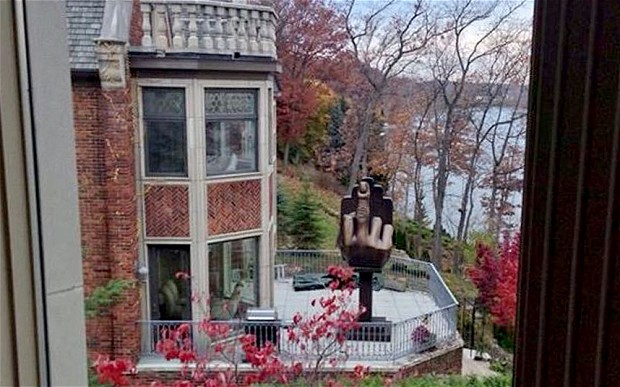
Lea Tuohy is suing her ex-husband, a wealthy Detroit strip club entrepreneur named Alan Markovitz, to force him to remove his idea of “karma.” This would be his 12-foot bronze statue of a hand with its middle finger extended, which he bought specifically so it could be positioned on his backyard balcony  to face the neighboring mansion where Tuohy lives with the man who (according to Markovitz) broke up their marriage.

Markovitz seems to have deftly avoided the specifics of Michigan’s public nuisance law, which  law professor Jonathan Turley discusses here. The artwork is carefully positioned so that nobody else in the neighborhood has to see it, just his hated next door neighbors, when they look out their window. It is quiet art, not obtrusive noise, or even a giant sign that says “Fuck you, Lea, and the guy you moved in with!” But in all honesty, there really is no question that this is the message he intends to convey, and is conveying, in a clever, under-stated, expensive and fanatical way. This, in itself, makes the message–which could also be translated as “I really, really hate you people!”—even more intense. Imagine buying a lakefront mansion and a $7000 bronze middle-digit just to make someone else miserable. Now that’s a grudge.* Continue reading