Today is June 6, the anniversary of the Allies’ invasion of Normandy, the audacious military strike that changed the course of history. I’ll be interested in seeing how it’s commemorated this year, 71 years later, especially by the news media. A lot of Americans under the age of 40 know almost nothing about it, or worse, the values it represents to the United States.
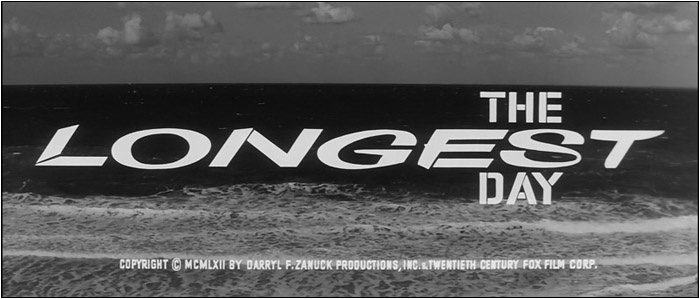
Fortunately, there is an easy and entertaining way to teach a young American about what happened on this day 71 years ago. That is to have him or her watch “The Longest Day,” producer Darryl F. Zanuck’s epic film based closely on historian (and sole credited screenwriter) Cornelius Ryan’s 1959 book. (You can get it at Amazon, here.)I usually find understanding military battles nearly impossible; written accounts completely confound me, and few movies about any battle make a serious effort to explain the tactics and strategy without reducing the facts to pablum. (I remember how much my father, who fought in the Battle of the Bulge, detested the big budget movie of the same name, which he found outrageously sloppy, and which he summarized as “Henry Fonda won the war.”)
Not “The Longest Day,” however. Since seeing the movie with my father as a kid, I have learned a lot about what was left out, but the movie is remarkably clear and accurate about what happened and why without being either too detailed or too simplistic. It’s also just a great, inspiring movie.
That we have “The Longest Day” is entirely due to the courage of one of Hollywood’s most dynamic, flamboyant and successful studio moguls, Darryl F. Zanuck. The original producer of the adaptation of Ryan’s book (which is terrific ) gave up on the project when 20th Century Fox refused to allow him an adequate budget. Zanuck, who was still producing films but no longer ran the studio he had built, bought the rights, and was determined to do the story, the event, and the men who fought the battle justice by mounting a production almost as ambitious as the invasion itself. Continue reading


 Ethics Alarms