Ethics Quote of the Week: Charles Krauthammer

Let's see...nope! Still too good for Gaddafi!

“Under the normal rule of law, truth is only a means for achieving justice, not an end in itself. The real end is determining guilt and assigning punishment. But in war and revolution one cannot have everything. Justice might threaten peace. Therefore peace trumps full justice. Gaddafi could have had such a peace-over-justice compromise. He chose instead to fight to the death. He got what he chose. That fateful decision to fight — and kill — is the prism through which to judge the cruel treatment Gaddafi received in his last hours. It is his refusal to forgo those final crimes, those final shellings of civilians, those final executions of prisoners that justifies his rotten death.”

—- Charles Krauthammer, revered conservative columnist and pundit, in his column rebutting the complaints of human rights activists regarding the rebel execution that took Moammar Gaddafi’s life.

Krauthammer is right, and he is wrong. He is right that no one should feel any pity for Gaddafi, a brutal and inhuman despot who had it entirely within his own power to both save his own life and refrain from killing even more of his countrymen than he had killed already. He is wrong that Gaddafi’s crimes and cruelty suspend civilization’s principles of justice and ethics. Continue reading


Ethics Quiz: Should A High School Football Team Be Punished For THINKING About Being Unethical?

Beware of unethical thoughts!!

Talk about strict!

Officials at Omaha, Nebraska’s Creighton Prep were horrified to learn learned that about fifty members of the school’s football team had planned an ethically offensive scavenger hunt that included “a group photo with a topless chick,” “a pic with a fat chick,” “steal a yarmulke from a Jewish synagogue” and “get into a yelling fight with a stranger in public,”along with more harmless challenges.

In fact, the players, divided into groups, lost their nerve. Administrators learned that the players vetoed the most objectionable activities in favor of those that were harmless and silly.

“I’m disappointed in their plan because their plan is inconsistent with the mission of their school,” said Rev. Thomas Merkel, president of the all-boys Catholic school. “I’m proud of the fact that they didn’t follow through on their plan.” Not too proud, though:  the students involved received in-school suspensions and were barred from extracurricular activities, including football practice. None of the students were expelled.

The hunt came to the school’s attention when one of the scavenger teams lost its list, which was subsequently found by a student who turned it in to the brass. The administrators determined that the plan “promoted hazing, exploitation of women, theft and other conduct unbecoming of a Creighton Prep student.”
None of which, apparently, the students actually did.

Your Ethics Quiz Question: Is it fair and appropriate to punish the football team members for including offensive tasks on the list, even if none of them were actually performed? Continue reading

The Michigan Saloon Legislator Lock-Out: Not Quite “Here Comes The Bride” Unethical, But Wrong All The Same

Michigan saloon, bar and restaurant owners are upset that the legislature passed a workplace smoking ban, so the advocacy group Protect Private Property Rights is fighting back  by organizing 500 bars statewide to ban state lawmakers from their premises, beginning September. 1.

This isn’t bigotry or gratuitous cruelty, like the New Jersey bridal shop refusing to sell a gown to a gay customer. It’s not illegal, either: state legislators aren’t a protected class, and discriminating against them isn’t invidious, since, well, they probably are hated with some justification.

No, excluding the lawmakers is unethical for other reasons. To being with, it’s un-American. Continue reading

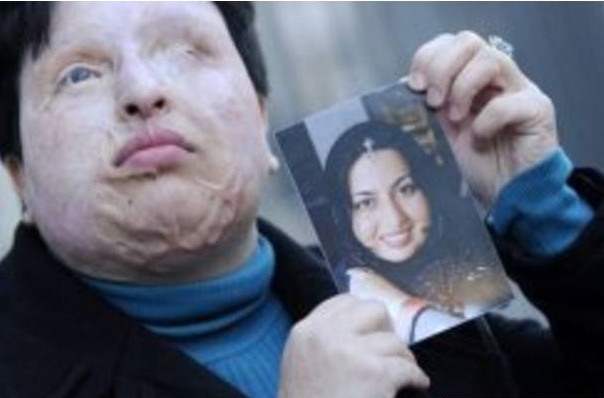
Ethics Hero: Ameneh Bahrami

Ameneh Bahrami, now, and then

Ameneh Bahrami, the Iranian woman whom a spurned suitor blinded and hideously disfigured with acid,  had her long-awaited opportunity for both revenge and culturally-sanctioned justice today.  She watched a doctor prepare to put several drops of acid in one of Majid Movahedi’s eyes as his court-ordered punishment for maiming her. Then, at the last moment, she waived her right to have him blinded, as Movahedi, who had repeatedly asked her to marry him before responding to her rejections by throwing acid the young woman’s face, wept in gratitude.

The story of Banrani’s insistence on the full retribution available to her under Islamic law had spurred human rights protests around the globe. In the end, with all of Iran watching on live television, she decided on mercy instead of revenge. Continue reading

Ethics Dunce: Bernie Madoff, Now and Forever

Would I rather have Charlie or Bernie on the loose? Tough call...

Bernie Madoff, reports the New York Times, is feeling mistreated.

Two years into his 150 year sentence for defrauding hundreds of investors, destroying dozens of charities, and crushing the financial security of people who trusted him with their future, Madoff thinks it was unfair for Judge Denny Chin, who sentenced him, to make certain that he would die in prison. Accusing Chin of having “zero understanding of the industry”—meaning what, I wonder; that it was normal for the investment industry to set out to ruin people?—-and saying that he was being made a scapegoat while Wall Street firms and government officials “walk away free,” Madoff told reporter Ben Weiser, “Remember, they caused the recession, not me.”

Yes, and the Crusades started the chain of events that led to 9-11, and Teddy Roosevelt’s Asian policies lit the fuse for Pearl Harbor. Continue reading

Comment of the Day: “The Atheist, the Graduation, and the Prayer”

Tgt, the Ethics Alarms resident atheist, backs graduating high school senior Damon Fowler, voting for “hero” rather than the jerk-in-training assessment of my original posts on the topic, to be found here and here.

“I think impeding the encroachment of religion into schools is important, especially when it is unpopular to do so. While Damon is not actually hurt from school backed prayer, some of the other listeners will be: anyone who gets the impression that the school and government back Christianity, anyone who feels they must believe to fit in.

“The danger in this prayer isn’t that Damon will be hurt or his rights violated. The danger is to the weaker people unwilling or unable to stand up against this behavior. The danger is to the children not yet graduated, that they will learn in an environment that sees a place for superstition and pandering at a ceremony that should be celebratory.”

More on “The Atheist, the Graduation, and the Prayer”

Damon Fowler, School Adminstrator-In-Training?

Either by design, bias, or because I was not sufficiently clear (always a distinct possibility), a lot of readers seem to have misunderstood the central principle in my post about Damon Fowler, the Louisiana high school senior who singled-handedly bluffed his school out of including a prayer in his graduation ceremonies. Let me clarify.

The post is only incidentally about atheism vs. religion. The ethical issue arose in that context, but it just as easily could have been raised in other circumstances. The ethical values involved here were prudence, tolerance, self-restraint, proportionality, consideration, generosity, and empathy. Fowler’s actions assumed that preventing what he believed was a violation of the Constitution’s prohibition on the government favoring one religious belief over another justified ignoring all of these. They don’t, and the same conclusion applies whether we are discussing a technical legal violation, a breaching of organizational rules, or personal misconduct.

Anyone who reads Ethics Alarms knows that I believe that the culture only becomes and stays ethical if all its participants accept the responsibility of flagging and, when necessary, condemning and stopping harmful societal conduct, as well as unethical personal conduct that will be toxic to society if it becomes the norm. Nevertheless, society becomes oppressive and intolerable if every single misstep, offense, violation, possible violation, arguable violation or mistaken judgment is cause for confrontation, conflict and policing, without regard for context and consequences. Indeed, much of the challenge in ethical analysis involves deciding what kind of misconduct matters, even once the question of whether something is misconduct has been settled. Continue reading

Comment of the Day: “Ethics Dunce: Guitarist Carlos Santana”

Michael has posted the Comment of the Day regarding my post of Carlos Santana’s criticism of Georgia’s new anti- illegal immigration law. The post expresses my continuing amazement and dismay at the strong support for illegal immigrants in the media and in segments of the public, which I view as both irrational and impossible to defend without recourse to rationalizations and dishonesty. In his comment, Michael is less critical of these defenders as he explores the factors that could make reasonable people oppose efforts to crack down on illegals.

“I can understand why reasonable people are against laws that punish illegal immigrants. I understand your conviction that a law should be either enforced or repealed, but sometimes a law is a bad law that, for whatever reason, legislators cannot or will not turn into a good law (given your frequent posts criticizing Congress, you can understand why some bad laws are not changed). When such a bad law is in place, there is often sympathy for those who break it because reasonable people conclude that, if they were in the same position as those who break the law, they would break the law as well. Continue reading

Ethics Dunce: Guitarist Carlos Santana

Legendary rock guitarist Carlos Santana thought it was appropriate to lecture a ballpark full of Atlantans when he was  honored with a “Beacon of Change” award at Sunday’s MLB Civil Rights Game at Turner Field. Pronouncing Georgia’s  new immigration law just signed into law by Georgia Gov. Nathan Deal “anti-American,” the Mexican-born Carlos Santana said,“I represent the human race. The people of Arizona, the people of Atlanta, Georgia, you should be ashamed of yourselves.”

Dear Carlos: If you can't say something responsible about immigration, please just shut up and play.

Later, he told reporters , “This is about fear, that people are going to steal my job. No we ain’t. You don’t clean toilets and clean sheets, stop shucking and jiving.”

Santana is entitled to express his opinion; he is even entitled to express stupid and ignorant opinions. But when he uses his fame, name recognition and a forum given to him as an honor to express a stupid, ignorant and irresponsible opinion, that is intolerable. Continue reading

The Saga of the Racist Juror and the Angry Judge, Chapter Two: “Never Mind!”


"Oh! You're REALLY a racist? That's OK then...I thought you were LYING about being a racist, and I just hate that!"

When we last left Federal Judge Nicholas Garaufis, he had just sentenced a potential juror to jury duty for life because of her racist and anti-police answers on a jury questionnaire. Then many commentators, including Ethics Alarms, pointed out that punishing a woman for her views, however offensive, was an abuse of judicial power. I wrote:


“This was outrageous abuse of power by a judge, and a slam dunk First Amendment violation. Her opinions are ugly, but there is nothing illegal about having ugly opinions, and  government punishment based on a citizen’s opinion is a dangerous Constitutional breach. A judge can’t dictate how a potential juror thinks or what she believes. He can’t take vengeance on a woman who is hateful, either. She has a right to her hate.”

Today the judge released the woman from the lifetime sentence, saying that it really wasn’t her racist views that angered him, but rather that she had made an obvious attempt to get out of jury duty by putting offensive answers on the jury questionnaire. “My ruling was not based in any way upon whether or not you held any racist views. It was apparent you did not tell the truth,” Judge Garaufis told the woman. “You were the only juror who indicated that you had every form of bias imaginable. You were lying to the court in order to be excused.”

Ah, It wasn’t that she was a racist, but that she pretended to be a racist.

What a minute..huh? Continue reading